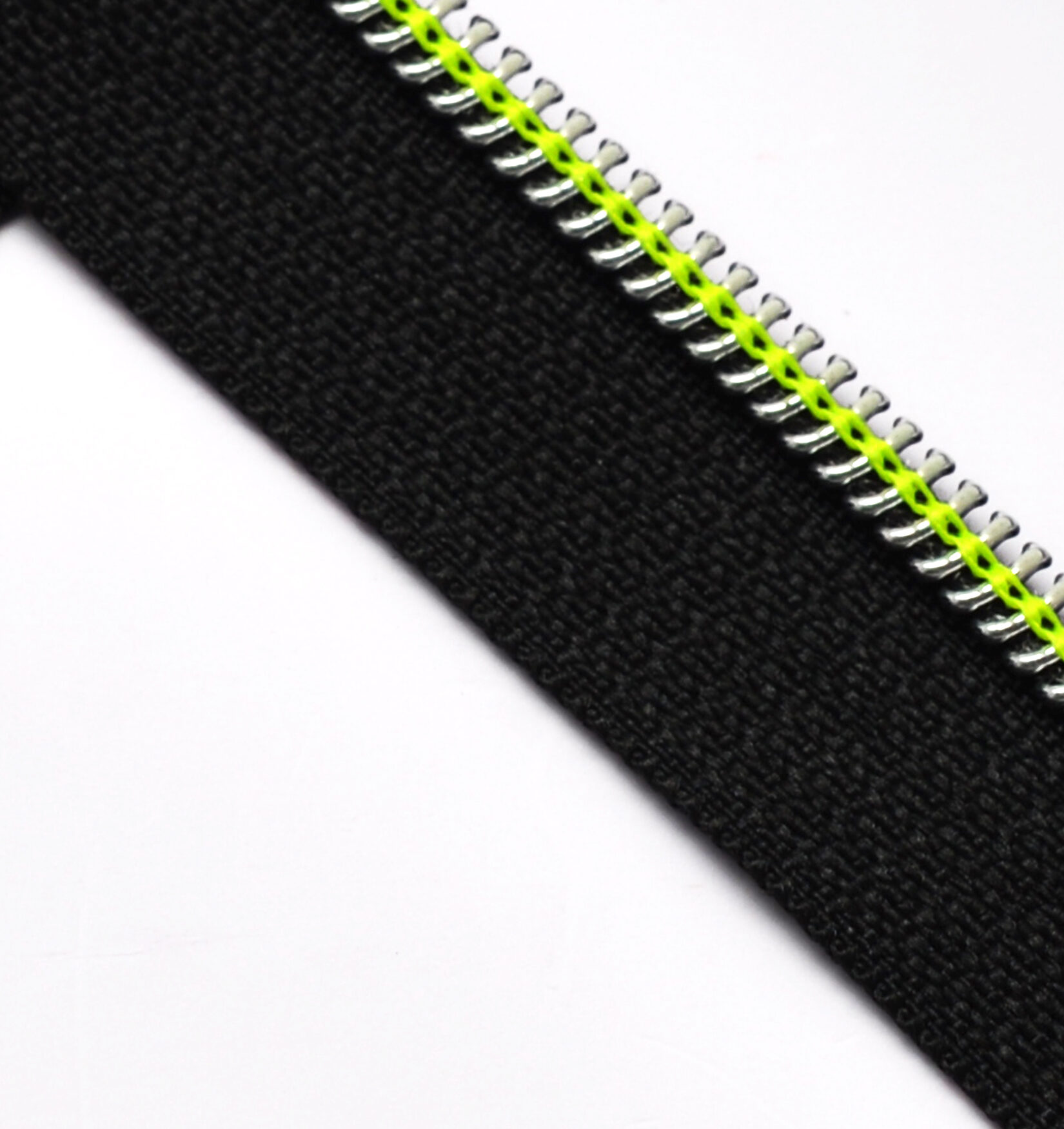
A size 7 nylon zipper with plated teeth and contrast stitching combines two decorative treatments in one component. The coil itself is nylon, so it remains light and flexible, while a plating process gives the teeth a metallic silver or gold appearance. A stitching thread in a contrasting color runs along the tape edge to outline the placket. The result appears on jackets, sportswear, workwear, and bags, where the zipper is expected to perform as a closure and to contribute to the garment's detailing.
Construction and Process Features
The chain is formed from nylon monofilament wound into a continuous coil and sewn onto a polyester tape, producing a flexible tooth row. Plating is applied to the tooth area rather than to the whole zipper: the surface is prepared, plated, and then protected with a top layer. Cleaning and activation before plating determine adhesion, while coating thickness and sealing affect abrasion resistance and color stability. Plated teeth are slightly larger than unplated ones, so the slider must be matched to the same production lot instead of being carried over from a standard version.
Contrast stitching depends on position and tension. The visible stitch normally runs along the tape at a set distance from the tooth root, flattening the tape edge, limiting curl, and creating a clear color line on the placket. Stitch length, thread size, and thread type must suit the tape thickness: an overly heavy thread lifts the tape, while a very fine thread can be cut by repeated slider movement.

Tape construction and shrinkage also influence how flat the placket stays. When dyed tape and contrast thread come from different lots, the shade difference is amplified by the visible seam, so samples should be compared under standardized lighting.
Specifications and Applications
Size 7 sits in the wider range, with a strong visual presence, and suits medium-weight materials such as denim, canvas, fleece, coated fabrics, and laminates. Typical positions include the center-front placket, hood opening, large pocket mouths, removable-liner connections, and bag compartments. A larger size means a wider chain and a larger bending radius; on lightweight silk or close-fitting knits it can look stiff and may lift at curves.
Closed-end versions suit pockets and inner bags, open-end versions suit center-front openings, and two-way versions suit long coats and hooded styles. Plating colors are usually selected together with sliders, buckles, and eyelets. If the garment uses matte hardware, bright plated teeth can look out of place, and the reverse is equally true.
Selection Guidelines
- Fix the color family before the order: Compare plated teeth, slider color, and garment hardware on a single color card so that separately placed orders do not create shade differences.
- Request plating information: Ask about the plating type, the protective top layer, and the conditions used to verify abrasion, perspiration, and laundering resistance rather than judging appearance alone.
- Check the matched set: Because plating changes tooth dimensions, sliders and end stops must be matched to the same lot; mixing parts can cause jamming or a loose closure.
- Match tape shrinkage: Tape shrinkage should be close to that of the shell fabric so that the placket does not wave after washing or pressing.
- Specify the thread: Thread size, fiber, and colorfastness belong in the technical file, especially for high-contrast combinations such as a dark tape with a light stitch.
Sewing and Use Precautions
Use a presser foot that clears the chain so the teeth pass through the channel and the needle lands only on the tape, never on the teeth or plating. Feed both tapes evenly and avoid stretching the tape to force a straight placket; the recovery after stretching is what produces waves in the finished garment. Keep the start and finish of the seam outside the slider travel and reinforce the ends as the construction requires.
When pressing, do not place the iron directly on plated teeth or the contrast stitch. Use a cloth and a lower temperature for a short time, because heat dulls the plating. Turn garments inside out and use a laundry bag to reduce rubbing against rough linings and hard trims. If slider resistance suddenly increases, check for loose thread or tape edges caught in the channel instead of pulling harder.
Common Questions
Will plated teeth lose their color over time
It depends on the plating process, the protective layer, and the conditions of use. Frequent abrasion, prolonged contact with perspiration, and high-temperature pressing all accelerate visible change. Ask for the corresponding abrasion and laundering verification rather than relying on a new sample.
Can contrast stitching bleed or shrink
With dark tape and light thread, bleeding is mainly a question of dye fastness and washing conditions. If the thread shrinks differently from the tape, the seam may pucker. Run a full test using the garment's intended wash method.
Can size 7 plated teeth be used on lightweight fabric
They can be used for a decorative local opening, but the fabric must be able to carry the weight and stiffness of the chain. On light fabric a wide chain tends to arch the placket and requires a wider seam allowance; a smaller size or an unplated version is often the better choice for a light garment.