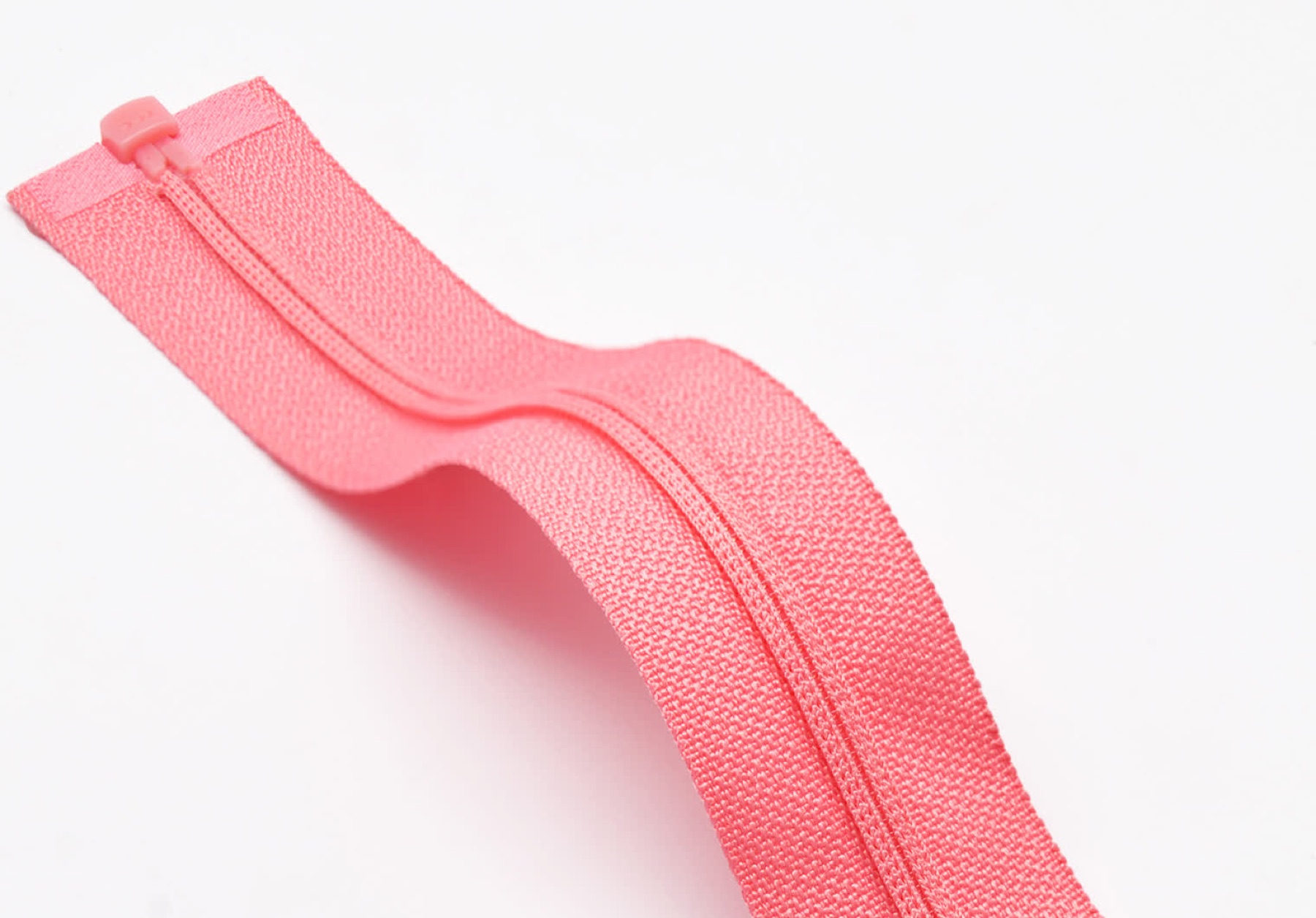
The point of an invisible zipper is that once the placket is closed, no zipper is visible, only a flat seam line. A mini invisible nylon zipper reduces the tooth cross-section and slider bulk further, which suits dresses, skirts and light jackets whose silhouette should not be interrupted by hardware. Sizes 3, 4 and 7 cover the range from light to heavy fabric, and choosing the wrong size damages the finished appearance more than choosing the wrong colour.
Structure and Construction
On an invisible zipper the tape is folded back over one side of the chain, forming a narrow channel that encloses the teeth. The two chains mesh inside that channel, so the face shows no teeth, only a closely set seam line; closed, the tape sits almost flat instead of standing proud as on a conventional zipper.
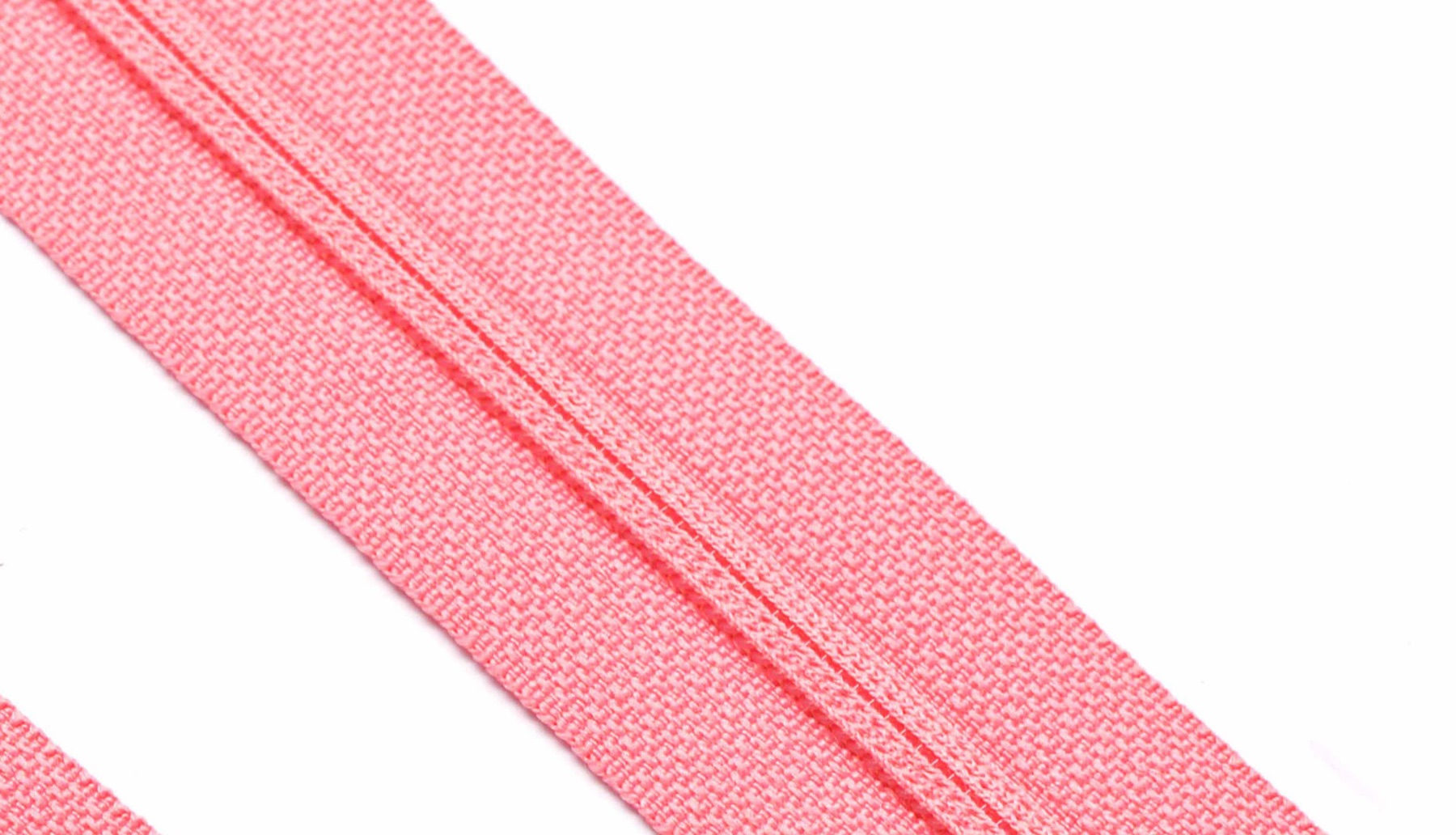
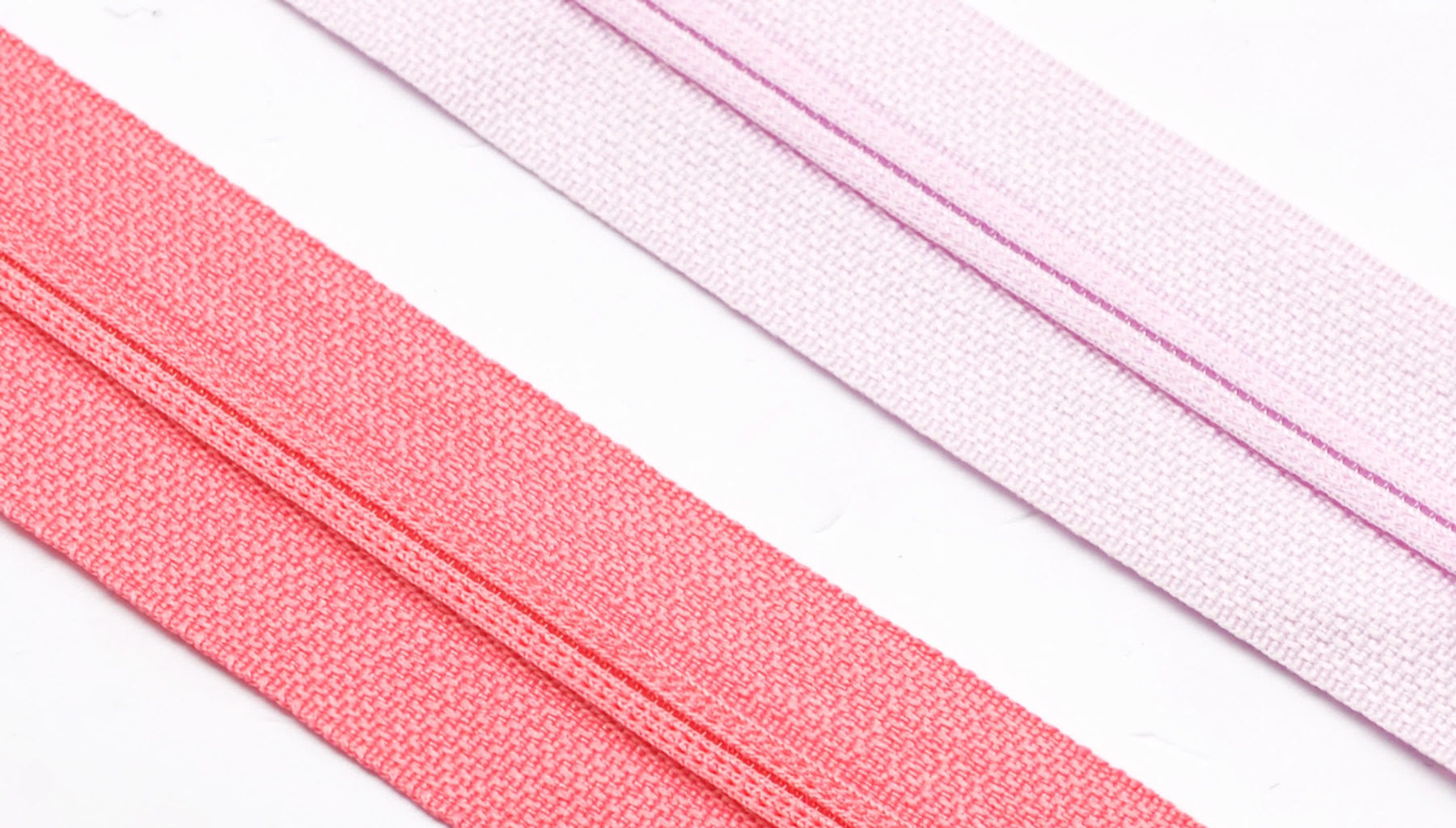
The "mini" part is about scale: a finer monofilament, a narrower and flatter slider designed to sit tight against the seam allowance. Sizes 3 and 4 are close in chain width, differing mainly in filament thickness and tape width; size 7 is the coarser option, with a larger chain and slider, yet still an invisible construction whose face is covered by the folded tape. The larger the size, the greater the lateral load it can carry, and the more seam allowance and cornering space it needs.
Invisibility is not decided by the zipper alone. Tape softness, the set of the fold line, slider narrowness and whether the seam hugs the chain all affect the face. On the same zipper, a one-millimetre shift in sewing can expose tooth tips.
Sizes and Applications
Sizes 3 and 4 suit dresses, skirts, jumpsuits, childrenswear and light jackets; the soft tape follows curves well, making them suitable for short and curved openings. Size 7 is better for long openings in heavier fabric, such as heavy dresses, jacket linings, work skirts and areas needing higher pull strength.
Size should be judged together with fabric weight and opening length. A coarse zipper on light fabric bulges; a fine zipper on heavy fabric raises closing resistance and reduces durability. The way the opening base is reinforced, whether the lining needs a vent, and the waistband position all change the invisible effect and should be settled at pattern stage.
Selection Checklist
- Match size to fabric: prefer 3 or 4 for light fabric and 4 or 7 for medium to heavy fabric, confirming flatness on a hand sample.
- Check slider width: the narrower the slider, the closer it sits to the seam allowance; request slider dimensions and verify by sewing.
- Confirm tape softness: too soft and the tape deforms with the seam; too stiff and corners kink.
- Inspect the fold line: it should be straight and even, with the two tapes not pressing into each other when closed.
- Allow length for the ends: both ends need a fixed length for finishing, and a shortened zipper must be re-sealed and reinforced.
Sewing and Use Notes
- Use an invisible zipper foot so the stitch runs tight against the chain and never catches the teeth.
- Press the fold line flat before sewing, and never press directly on the chain at high temperature.
- Keep seam allowances equal on both sides and slow down at the base corner so the tape is not stretched.
- Backstitch at both ends of the opening to prevent it splitting in use.
- Use a press cloth and keep the iron off the seam line, with temperature set for the fabric and tape.
FAQ
Why can teeth still be seen from the face when closed
Most often the seam has drifted away from the chain, or the fold line was never set. Unpick a short section, check the distance between stitch and fold, then reposition the foot and sew again.
Is there much difference between size 3 and size 4
Chain width is similar; the main differences are filament thickness, tape width and slider size. Size 3 feels lighter on very light fabric, while size 4 gives a steadier pull on medium-light fabric. Decide by the face appearance after sewing a sample.
Can an invisible zipper take a heavy load
The folded tape carries most of the lateral load together with the seam. Size 7 takes more than size 3, but load-bearing areas should still share stress through lining, interlining and reinforced stitching instead of relying on the zipper alone.