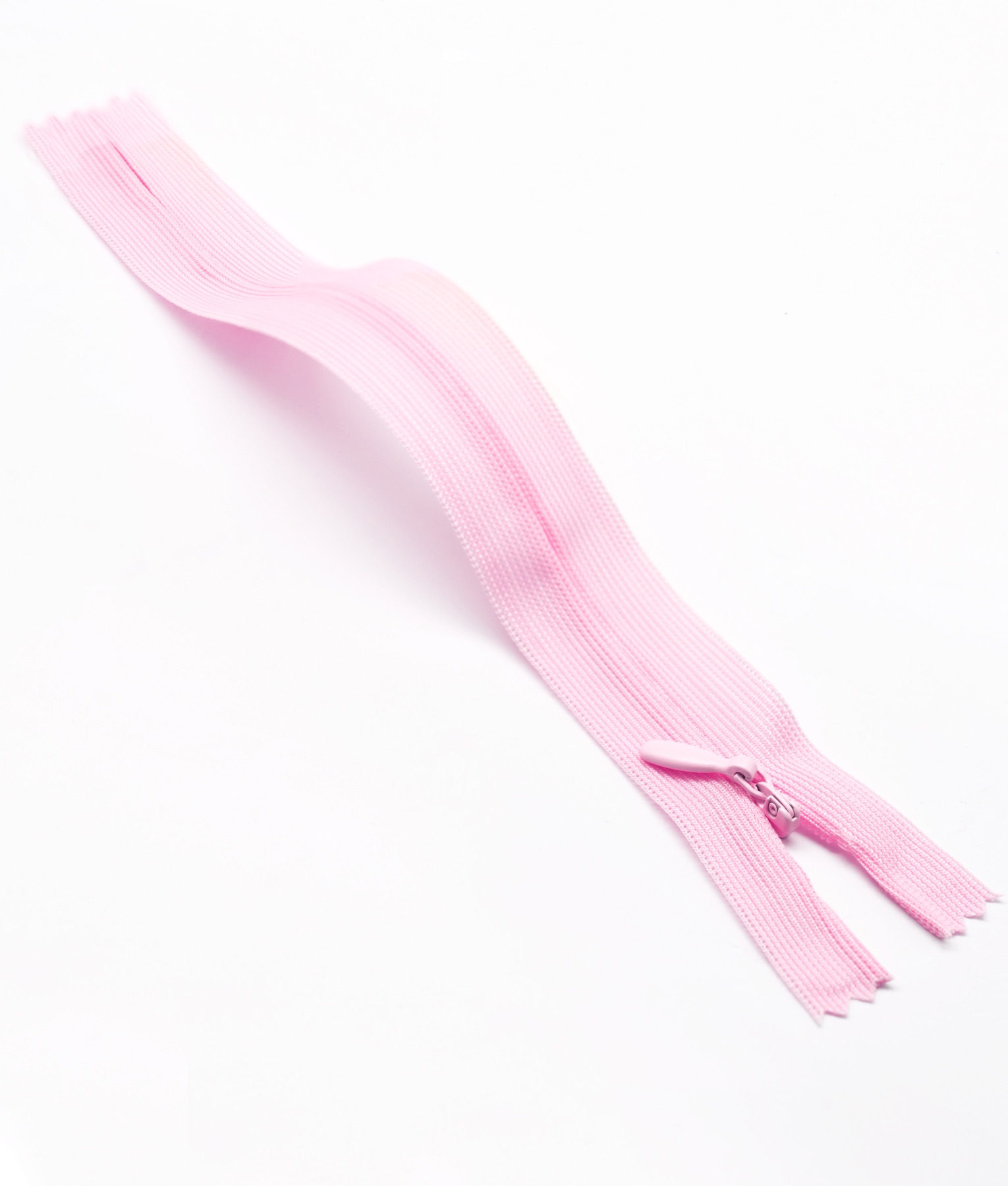
A size 3 invisible zipper with lace tape pairs a fine hidden chain with a light, soft tape. Its value is not simply a smaller zipper: when closed, the teeth sit inside the folded tape edge and the face shows only a narrow seam that reads like a natural fabric join. The lace tape further reduces stiffness, and its scalloped edge avoids a hard line against the skin. This is why the product appears in dress, gown, skirt, and lightweight top openings at center back, side seams, and plackets.
Structure and Construction
An invisible zipper consists of a chain, tape, slider, and end fittings. The teeth are sewn inside the folded tape edge. When the zipper closes, both tapes roll in the same direction, the teeth engage, and the folded tape covers them, so the continuous chain visible on a conventional zipper disappears from the face. Size 3 is a fine specification with a small chain and a narrow fold, which allows the zipper to be hidden within a limited seam allowance.
Lace tape is thin, soft, and open in structure. Compared with the plain tape of a standard invisible zipper, it feels closer to lining or mesh, and its edge is cut into a continuous small scallop. Such tape follows body curves and the drape of lightweight fabric, reducing the stiff spine that often appears on both sides of a zipper. The thinner the tape, however, the more the result depends on handling: uneven feeding, excessive tension, or a shifted needle position can roll the fold outward and destroy the concealed effect.
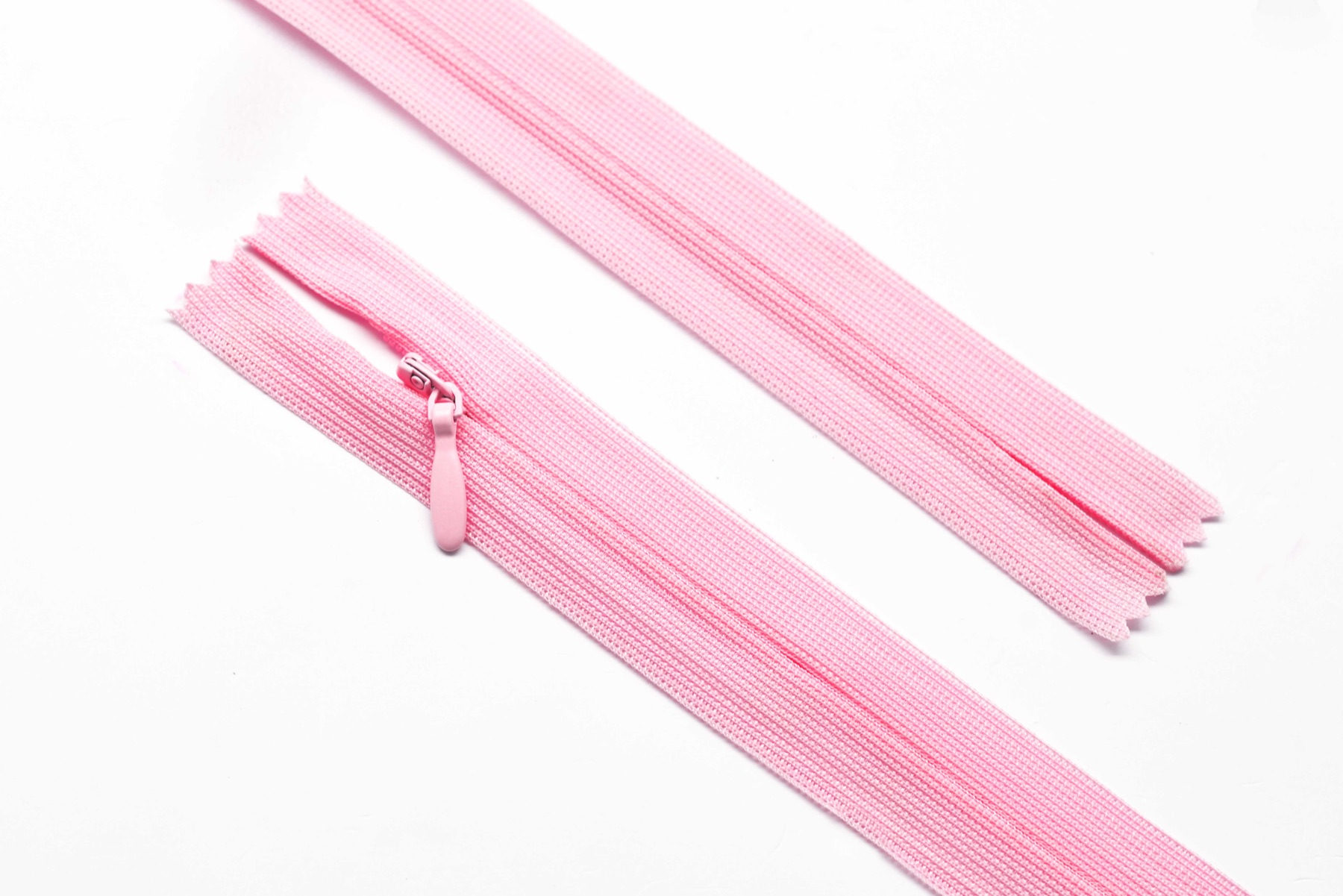
The sample shows a very fine chain, a scalloped tape edge, and a correspondingly small slider. When closed, the result is closer to a seam than to a trim. The concealed effect comes from the assembly rather than from one part: tape fold, tooth thickness, slider envelope, and stitch position must all work together.
Sizes and Applications
Size 3 invisible zippers suit light to medium-weight fabrics such as chiffon, silk, fine knits, shirting, lining, and some stretch materials. Typical positions include center back on dresses, side seams, skirt openings below the waist, gown back openings, lightweight jacket plackets, and front openings on loungewear. Because the chain is fine and the tape soft, the zipper stays flat on close-fitting garments and reduces the sensation of a hard trim against the body.
The product is less suitable for heavy denim, coarse wool, thick coated fabrics, or areas that repeatedly carry lateral tension. Thick fabric compresses the tape fold and exposes the teeth, while load-bearing areas concentrate stress on a fine chain and a thin tape, affecting smooth operation. For a long opening, confirm zipper length, end treatment, and fabric shrinkage through the pattern and a sample rather than ordering from a finished garment measurement alone.
Selection Checklist
- Check fabric opacity first: On sheer fabric, review tape color, thickness, and scalloped edge together so the zipper does not show as a dark outline from the face.
- Confirm chain and slider: Size 3 is only a nominal size. Check tooth pitch, tooth thickness, and the envelope of the dedicated invisible slider so the fabric is not pushed up when closed.
- Match the opening type: Closed-end, open-end, and separable constructions use different end fittings. For a long center-back opening, confirm the bottom stop and pin treatment.
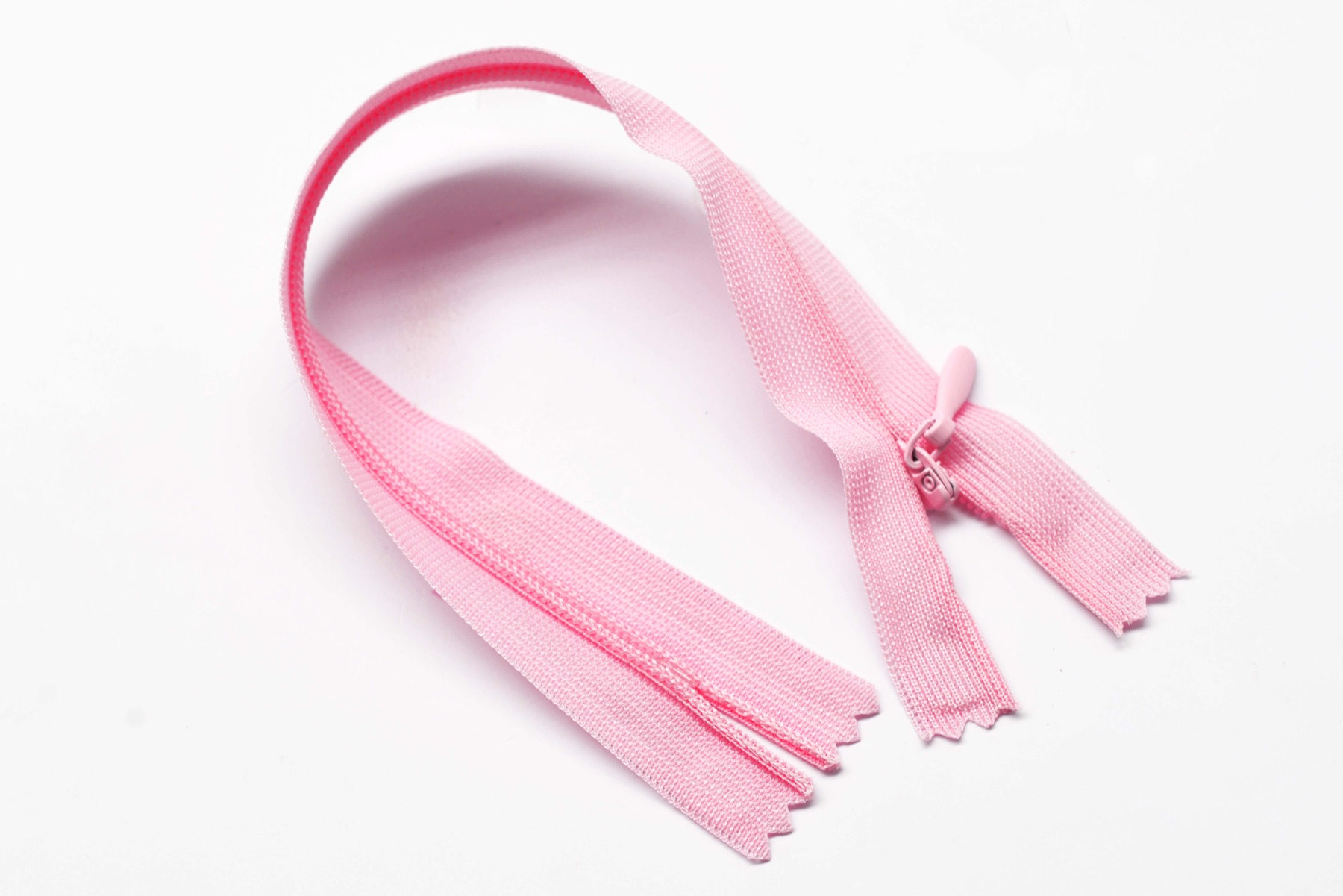
- Inspect the scalloped edge: The more decorative the tape edge, the more important it is to confirm a clean cut without loose yarns, and to verify on a sample that the edge does not curl after sewing.
- Sew a trial with the actual fabric: Test the real fabric and seam allowance, observe whether tooth shadows appear on the face and whether the tape puckers, and only then set bulk requirements.
Sewing and Use Precautions
- Use an invisible zipper foot so the chain runs through the guide groove and the needle stays within the stitchable tape without piercing the teeth.
- Press the tape fold lightly before sewing to help it lie flat. Keep the temperature moderate so the thin tape and chain do not deform.
- Feed both sides evenly. Stop before the slider, lift the foot to pass over it, and then continue so the needle does not strike the slider.
- Set thread tension slightly lower than for a normal seam to prevent the thin tape from stretching. After sewing, check the face for waves, bulk, or exposed teeth.
- During pressing, avoid holding a hot iron against the chain for a long time, and do not scrub the scalloped edge with a stiff brush during cleaning.
Common Questions
Can a lace-tape invisible zipper replace a standard invisible zipper
In most cases it can, provided that fabric weight, opening position, and seam allowance all match. Lace tape is thinner and softer, giving a better concealed result while demanding more stable sewing. Test on the same fabric before replacement to confirm that the tape does not distort under tension.
Is a size 3 invisible zipper suitable for heavy fabric
Usually not. Thick fabric and its seam allowance take up more space, a fine chain is difficult to conceal completely, and the slider can be obstructed by the fabric. If it must be used on medium-weight material, increase the seam allowance, adjust the foot, and validate the complete garment sample.
Will the scalloped tape edge fray
The scalloped edge is a decorative cut, and its stability depends on the tape structure and cutting process. Inspect incoming goods for loose yarns, fuzzy edges, and visible skew, and confirm on a sample that the edge does not continue to fray after sewing. Reinforce within the seam allowance where necessary.