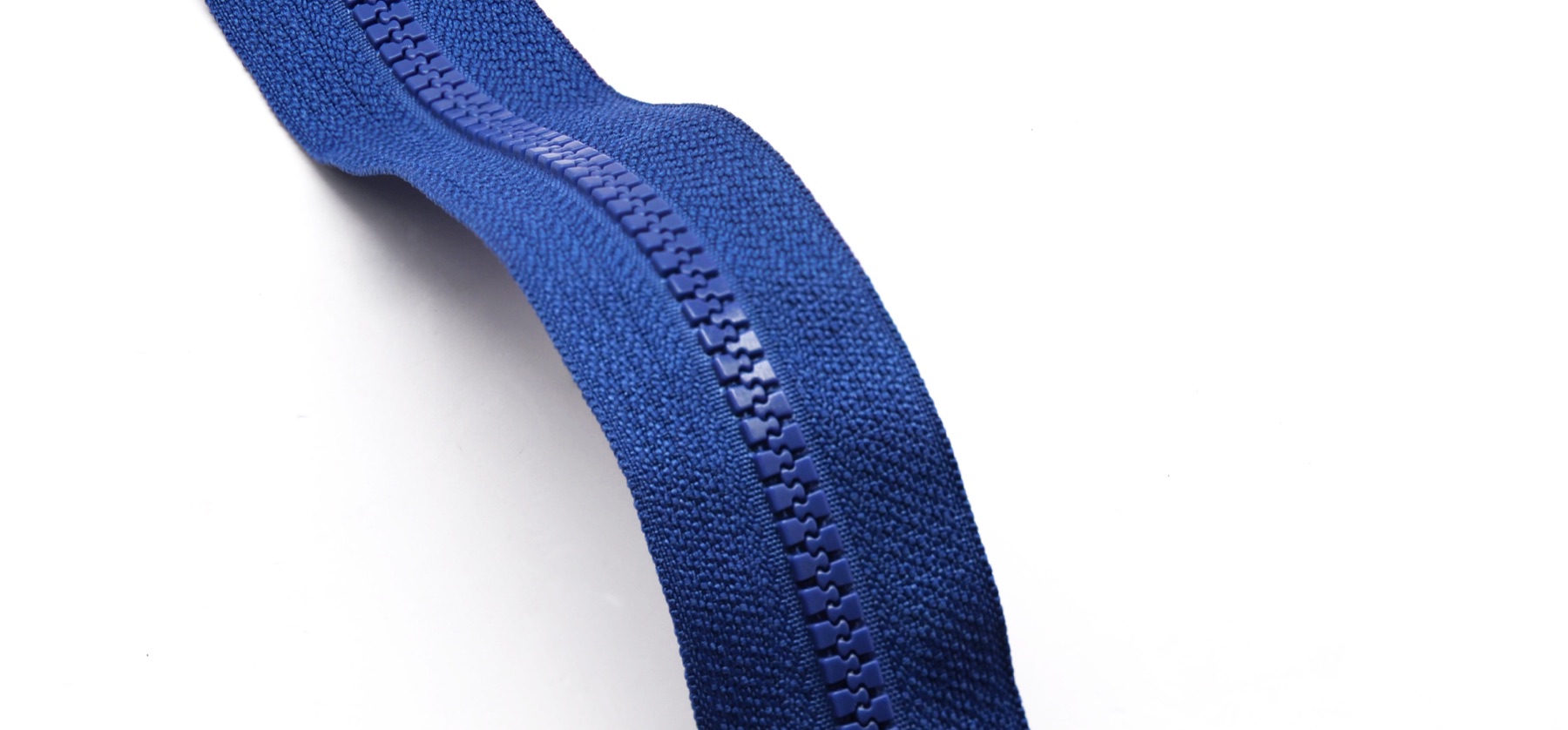
A size 5 anti-static molded zipper is intended for garment designs that require attention to static charge in addition to ordinary closure performance. The term anti-static is not a universal performance grade that can be verified from tooth shape or color. It also does not automatically mean conductive, insulating, or flame resistant. A meaningful specification must identify the use environment, test method, acceptance criteria, and garment construction before the sample is approved.
Construction and Functional Boundaries
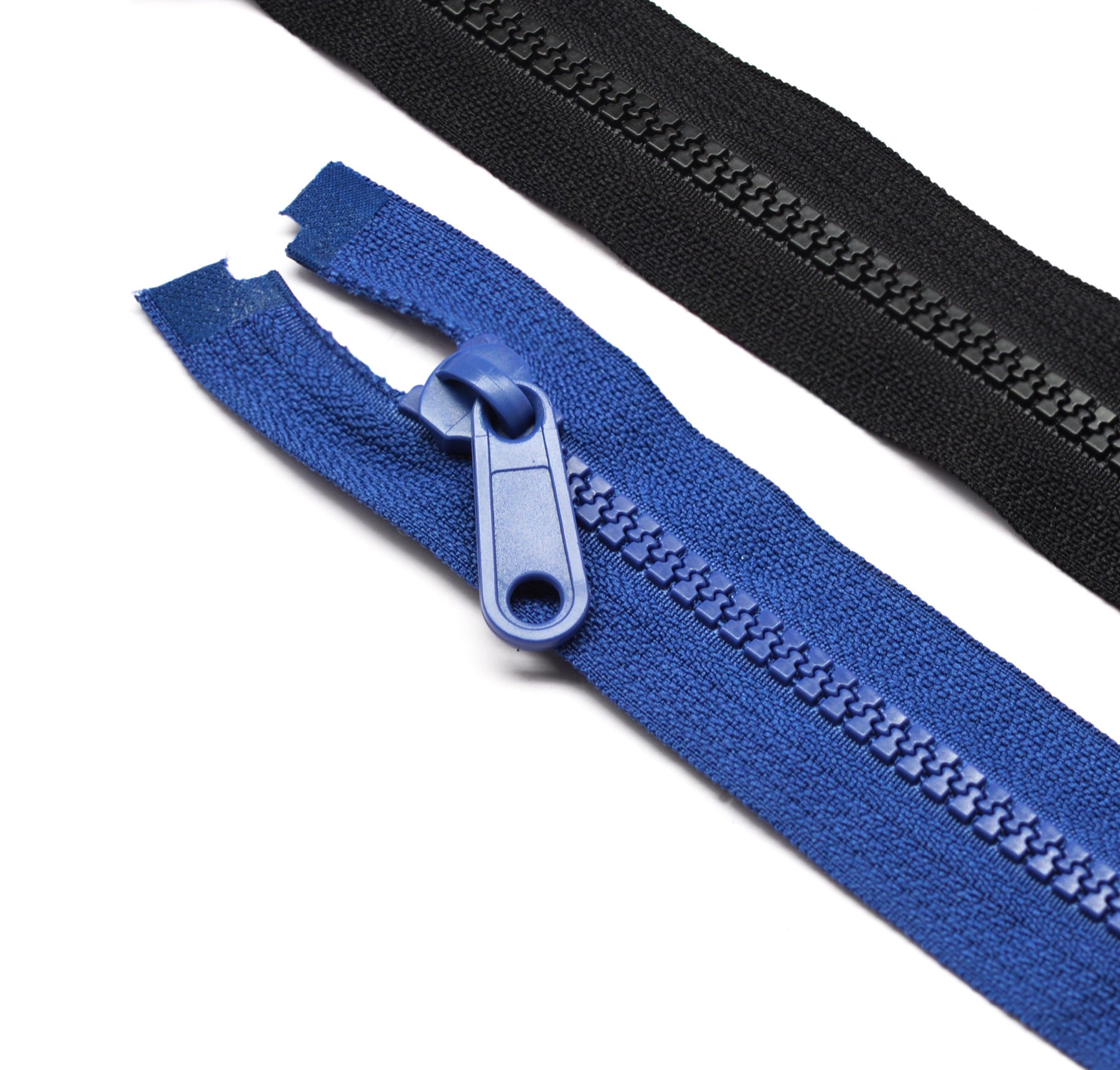
Molded teeth are attached to textile tapes and operated by a slider, with closed-end stops or open-end components completing the closure. The samples look similar to other molded-tooth zippers, which demonstrates why electrostatic behavior cannot be judged from a photograph. Tooth profile, nominal size, color, termination, and electrostatic requirements should be stated separately in the purchasing document.
Static control involves charge generation, accumulation, and dissipation. A zipper is only one component within that system. Shell fabric, lining, sewing thread, humidity, contact materials, the wearer, and garment movement can all affect the result. A zipper that meets one component test does not prove that a complete garment will behave identically in every environment. Where a continuous conductive path or grounding arrangement is required, it must be designed and verified at the whole-garment level.
Checking Size 5 and the Application
Size 5 may be considered where a visible molded chain and a substantial closure are appropriate, including workwear-style openings. This is not a blanket recommendation. Measure chain width, tape width, slider envelope, and end fittings before allocating seam allowance. A front opening that separates completely and a pocket joined at one end require different constructions.
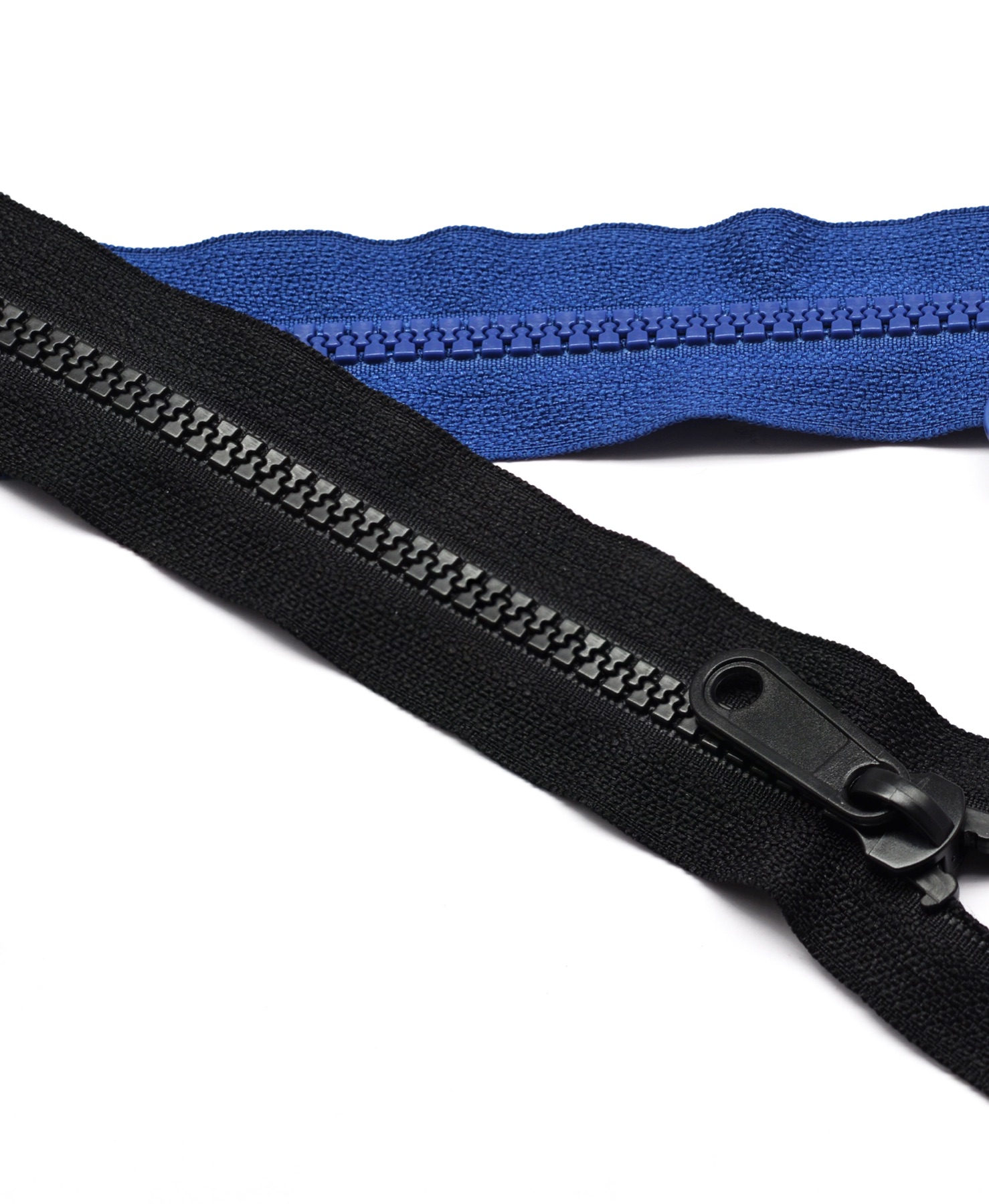
Slider and pull geometry affect grip, lining clearance, and possible snagging. A larger pull may be easier to grasp with gloves, but its movement and contact with nearby components should be checked. A lower-profile shape may suit a flatter placket. Blue and black options can support visual garment coding, but color does not establish anti-static performance and must not be used as a substitute for testing.
Selection and Testing Priorities
- Define the environment: Record relevant temperature, humidity, contact materials, movement, and the object or process sensitive to static.
- Specify measurable criteria: Agree on the test method, sampling positions, conditioning, and acceptance limits with the responsible technical personnel.
- Check mechanical operation: Inspect full-travel movement, end fittings, slider fit, and behavior in a curve in addition to electrostatic testing.
- Test a sewn assembly: Stabilizers, shell fabric, lining, and stitches can change contact and charge behavior, so component results should be rechecked after sewing.
- Validate the garment and care process: Include other trims and the intended cleaning method, and examine the condition after the required maintenance cycles.
Sewing and Use Precautions
Confirm zipper direction, termination, and slider clearance before stitching. Use a presser foot that clears the molded teeth, keep the needle within the stitchable tape, and avoid stretching the tape to force a flatter placket. Feed both sides evenly and leave sufficient lining ease to prevent fabric from entering the slider. If the garment specification requires particular thread materials or construction details, follow that document rather than making unreviewed substitutions.
Pressing, cleaning, and maintenance conditions should match those used during validation. Heat, chemical finishing, or repeated dry-cleaning may change material behavior, so a new-sample result alone is not sufficient for a controlled application. Users should not fit an unmatched slider, add arbitrary metal attachments, or apply lubricants without review. Such changes may affect both mechanical operation and the intended electrostatic system.
Common Questions
Does anti-static mean the zipper is conductive
The terms are not interchangeable. Required electrical behavior depends on the design and test definition. State the necessary property and whole-garment requirement explicitly instead of inferring conductivity from the product name.
Can the garment fabric be ignored once this zipper is selected
No. Shell, lining, thread, environment, and wear conditions all contribute to garment electrostatic behavior. Replacing only the zipper cannot guarantee that the complete garment meets its target.
Do blue and black versions have different anti-static performance
Color alone provides no evidence of a performance difference. Compare technical information and test results under equivalent conditions, and confirm whether color variants use identical materials and processes.
Is revalidation needed after cleaning
Where static control is a defined requirement, evaluate samples after the planned cleaning method and number of cycles. Cleaning can affect several garment materials, so visual appearance and slider operation alone are not enough.