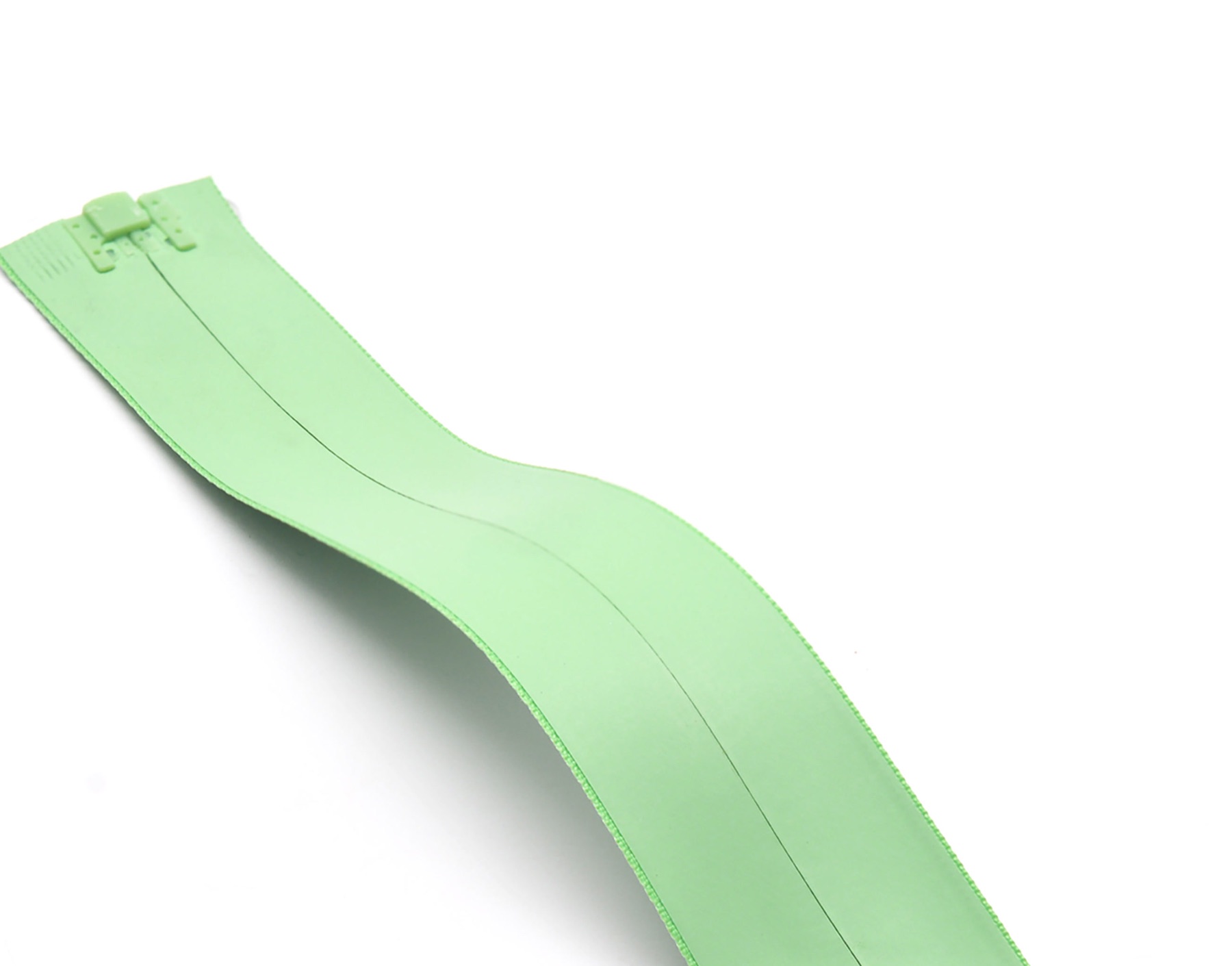
A waterproof Korean-film zipper has a continuous film-like surface on its tape. This topic covers sizes 3 and 7. The smooth face reduces the visibility of the woven texture and gives the closure a clean line, making it suitable for garments and accessories that combine appearance with a water-shedding design intent. Here, “waterproof” describes a product and construction direction; it does not mean that a finished garment is absolutely impermeable or that it has an untested protection rating. “Korean film” is a process and appearance description rather than a uniform performance standard. Selection must therefore be based on physical samples, mating components, and actual conditions of use.
Structure and Process Characteristics
The film covers the outer face of the tape, changing its appearance from a woven texture to a smoother surface. The elements, slider, and end components still perform the opening and closing action, while the film contributes to the surface appearance and the way the closure area sits. Assessment should go beyond gloss: inspect element engagement, slider travel, end joints, and film edges along the entire zipper.
The film and the flexible textile tape respond differently to bending. At pocket corners, curved hems, or frequently folded areas, local creasing may affect both feel and appearance. Sampling should reproduce the finished garment in wear and folding, checking whether operation is obstructed or unusual creases develop, rather than evaluating only a zipper laid flat.
Sizes and Applications
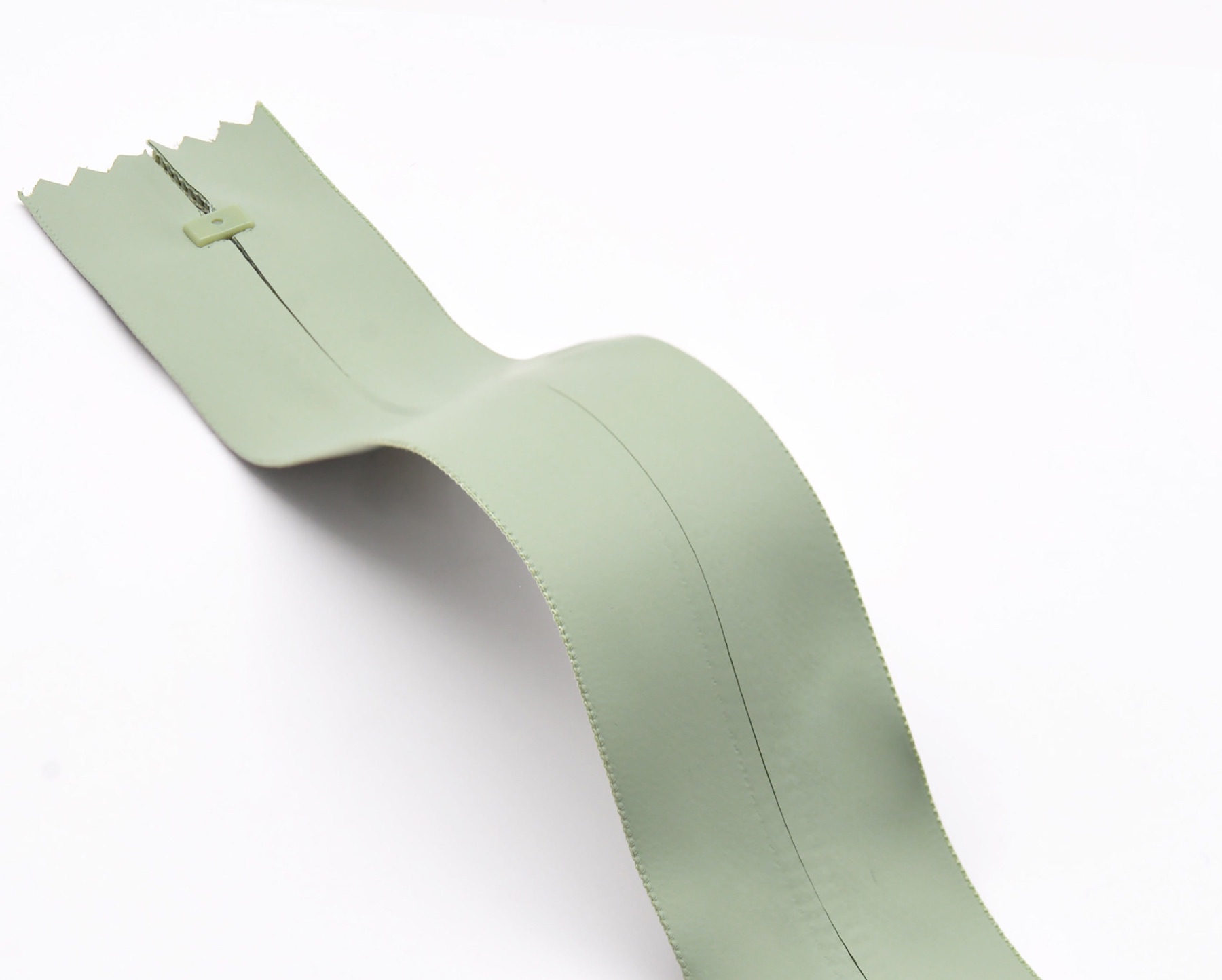
Size 3 suits locations where a lower visual profile and compact space are important. Depending on fabric thickness, it can be considered for lightweight jackets, pockets, or accessory openings. Size 7 has more visually prominent elements and operating components, so it can become a design feature on jacket fronts, casual garments, or bag openings. Size is only a starting point and does not by itself establish load capacity or water resistance. Tape width, slider type, length, and open-end or closed-end construction should all be confirmed against the pattern and intended use.
Selection Checklist
- Define the location first: Confirm whether the front, pocket, or bag opening requires an open-end or closed-end zipper, together with effective length, closing direction, and left- or right-hand operation.
- Check film and color: Review color difference, gloss, texture, and edge condition under natural and working light, and assess whether the hand feel coordinates with the fabric.
- Match elements and slider: Test the full travel of the corresponding size, especially near the starting end and curved areas, and check operation after repeated cycles.
- Validate on a sample garment: Run bending, opening, closing, and appropriately controlled splash or spray exposure for the intended scenario. Do not state a specific waterproof rating without relevant testing.
- Confirm ends and delivery details: Record the open-end or closed-end format, stops, pull orientation, color, and acceptable appearance variation in the approved-sample documentation.
Sewing and Use Precautions
- Sew a trial with the actual fabric and trims. Select the needle, stitch length, and presser foot accordingly, keeping stitches in the designated tape sewing area and away from elements and critical film surfaces.
- Control the feeding of both layers. Do not stretch the tape or force the filmed surface forward; if waviness occurs, investigate tension, stitch length, and fabric shrinkage first.
- Test heat tolerance before pressing. Use a press cloth and avoid direct high heat on the film, elements, and slider; determine suitable conditions through material trials.
- Keep the film away from rough tables, sharp clamps, and tight creasing. Store work in progress flat or use a folding method already validated on samples.
- Check the cleaning tolerance of both fabric and film. Avoid unverified strong solvents or high-temperature drying, keep the zipper dry after use, and never force the slider.
Frequently Asked Questions
Does a film-covered zipper make the whole garment completely waterproof?
No such claim follows from the zipper alone. Fabric, needle holes, seams, pocket construction, and garment openings all affect possible water-entry paths. The finished article should be tested against its design and intended conditions.
What should drive the choice between sizes 3 and 7?
Start with available space, fabric thickness, visual proportion, and operating needs. Then confirm the length, slider, and end construction on the corresponding sample. Size alone does not establish strength or water-shedding performance.
Can a creased film surface be restored with direct high heat?
Direct treatment is not recommended. Heat tolerance varies between films and tapes, and surrounding fabrics may also be affected. Test low-temperature pressing through a protective cloth on a waste sample first; do not keep ironing if the crease does not recover.