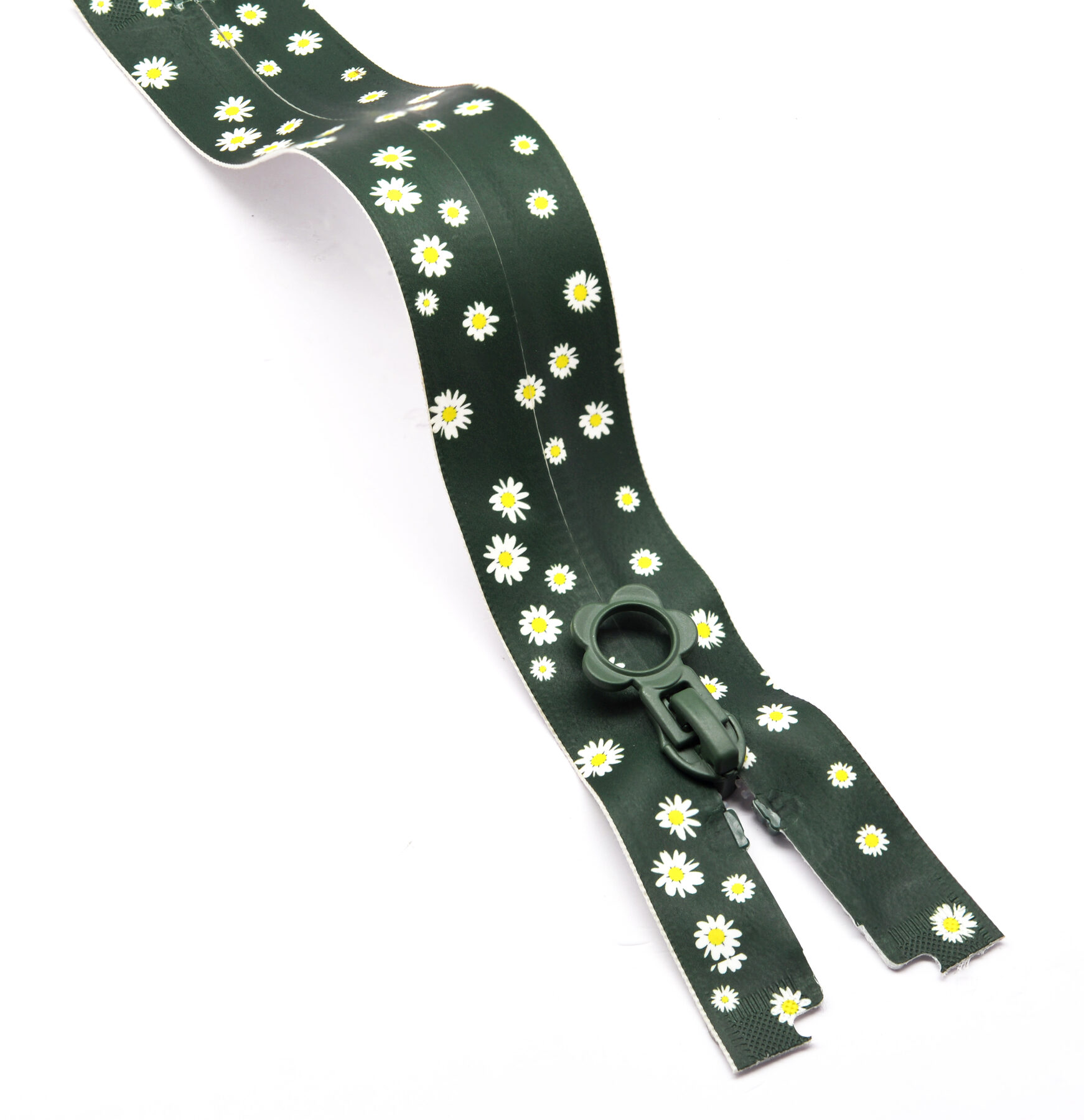
A waterproof printed zipper serves two purposes at once. A continuous film on the tape and a sealed closure reduce water penetration through the placket, while a printed pattern turns a functional part into a visible design element. Size 7 is one of the more common specifications for this combination, balancing a substantial chain with enough flexibility to follow a placket, and it appears frequently in outdoor and activewear.
Construction and Process Features
The core of a waterproof zipper is the tape treatment. A polyester tape is coated with a continuous polyurethane film that covers both the tape and the tooth-root area, so the two tapes meet as a barrier when closed. Sliders and ends are usually combined with sealing components to limit water entry at the slider opening and the end stops.
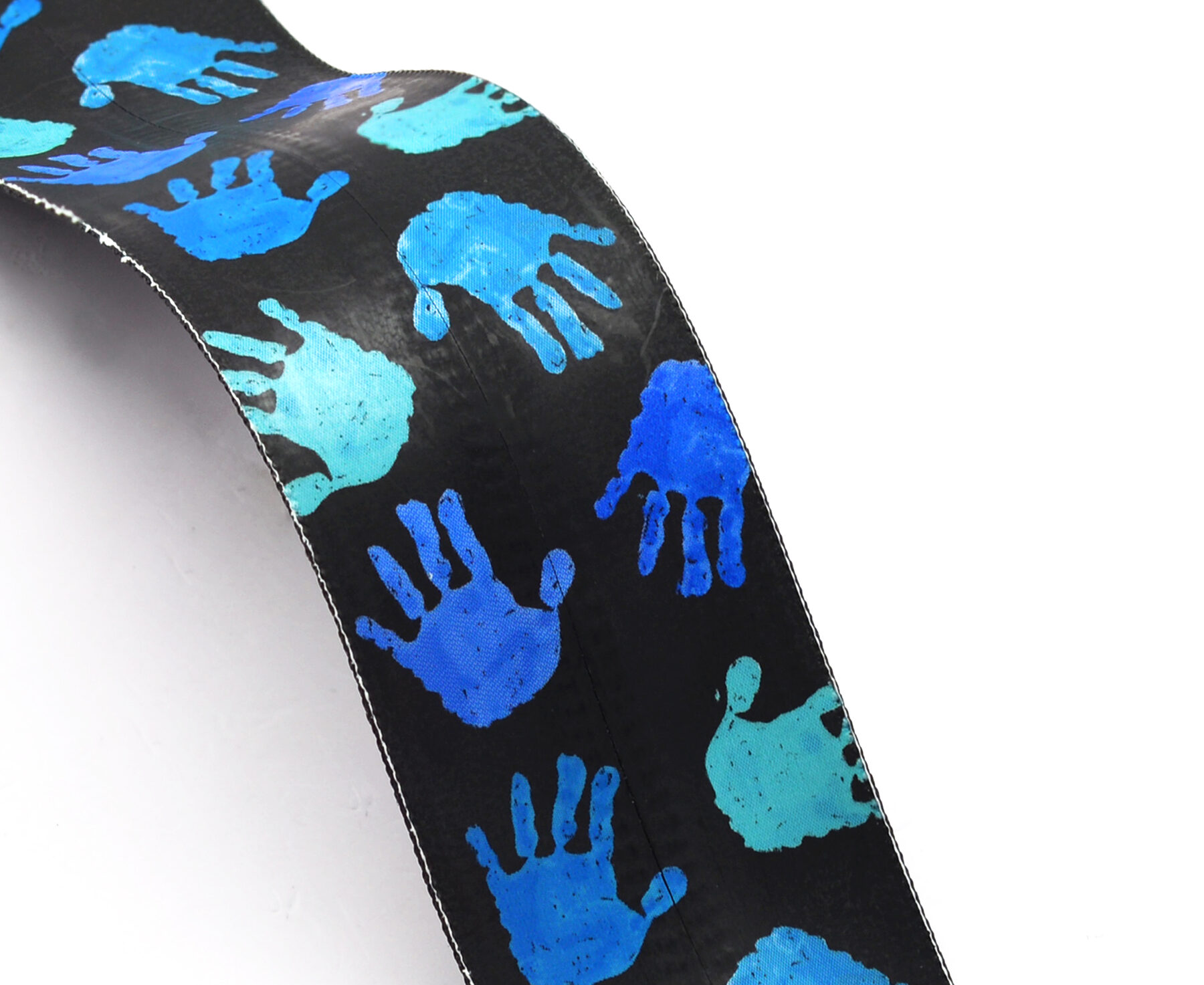
Printing is applied over the film. Processes fall into two groups: printing before film lamination, where the pattern is protected by the film and tends to be more abrasion resistant, and printing after lamination, where the pattern sits directly on the surface with more direct color. In both cases, adhesion matters: whether the print cracks or lifts after repeated flexing, abrasion, and washing is a key indicator of process quality.
Waterproofing is a system property. The zipper, shell fabric, seam tape, and slider sealing together determine whether water enters at the placket. A film that is intact on a single zipper does not guarantee that the finished jacket will stay dry in prolonged rain.
Specifications and Applications
Size 7 is a medium-to-large chain specification suited to shell jackets, ski wear, rainwear, cycling apparel, and bags or tent components that require a stronger opening. The placket, chest pockets, and underarm vents are typical locations. Closed-end versions are common for pockets, open-end versions for center fronts, and two-way versions for long coats.
Thicker fabrics and multi-layer laminates can carry the bending stiffness of size 7 more easily. On light fabric, a size 7 chain can make the placket feel rigid and concentrate film stress at folds. Print density also affects hand: large solid areas usually feel stiffer than small scattered motifs.
Selection Guidelines
- Define the water resistance target first: State the hydrostatic requirement, test method, and sampling positions, and evaluate the zipper together with fabric and seam tape.
- Verify print durability: Ask for the conditions used to test abrasion, flexing, and laundering, paying particular attention to pattern integrity along folds.
- Check slider sealing: Evaluate the seal and the opening force together, since a seal that is too tight adds noticeable resistance in use.
- Match bending stiffness: Trial the zipper on the actual placket curvature and confirm smooth travel with no lifting of the tape.
- Confirm the end solution: Waterproof zippers usually need dedicated end treatment, so length and end style should be fixed before ordering rather than modified later.
Sewing and Use Precautions
Use a dedicated presser foot so the chain and film pass smoothly, and avoid an excessively dense stitch length that multiplies needle holes. Select thread compatible with the waterproof finish, then apply seam tape or sealing as designed, with temperature and pressure matched to the film; excessive heat deforms the surface. Avoid repeatedly unpicking seams on the film, because the resulting needle holes are difficult to reseal.
Press with a cloth at low temperature for a short time and do not direct steam at the film or print for long periods. Wash with a mild detergent, avoid fabric softener and chlorine bleach, and either hang dry or tumble at the low temperature permitted by the fabric. Frequent high-temperature drying accelerates aging of both film and print.
Common Questions
Does printing affect waterproof performance
Printing does not change the barrier of the film itself, but a poor process can damage the surface or adhere weakly, and fine cracks at folds become water paths. Print durability and water resistance should therefore be verified together.
Can I shorten the zipper myself
It is not recommended. Waterproof zippers usually have a sealed end construction, and cutting the chain destroys the end seal, which then requires dedicated equipment to restore. Fix the length from the pattern before ordering.
How should it be cleaned and maintained
Wash separately with a mild detergent and avoid softener, bleach, and aggressive agitation. Tumble at low temperature or dry in the shade, and avoid prolonged direct sun. If the print lifts or the film turns cloudy, stop high-temperature treatment and assess whether replacement is needed.