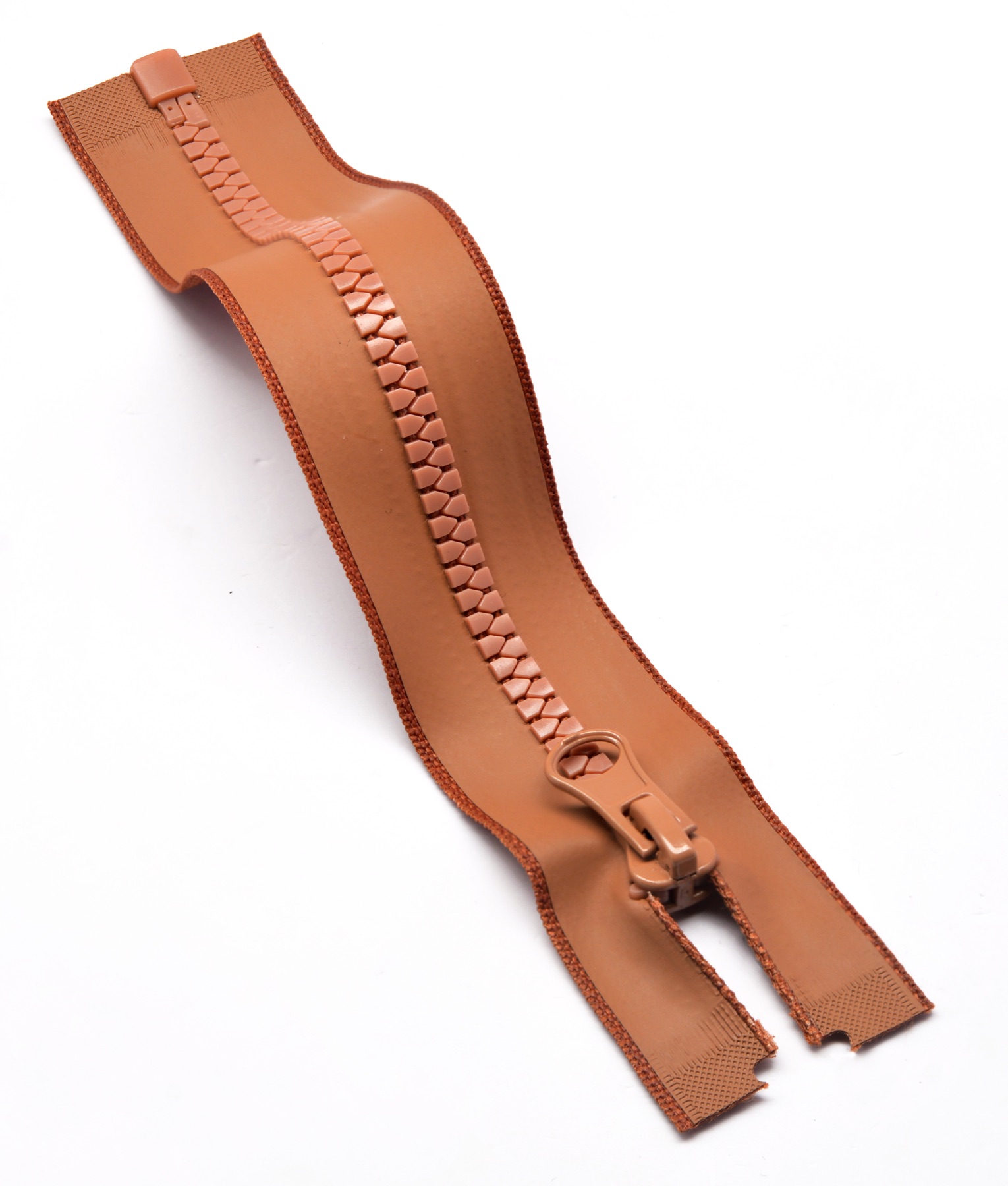
A size 5 plastic-tooth water-resistant zipper combines a dimensional molded chain with tape that has a water-resistant surface appearance. It suits garments and bags where a clearly defined tooth profile is desired alongside protection from rain splashes. Here, water-resistant describes a design direction, not an assurance that the zipper or finished article will block all water under every condition. Tooth engagement, end fittings, needle holes, shell fabric, and placket construction all affect the result, so sewn samples and complete articles should be evaluated for the intended use.
Construction and Surface Characteristics
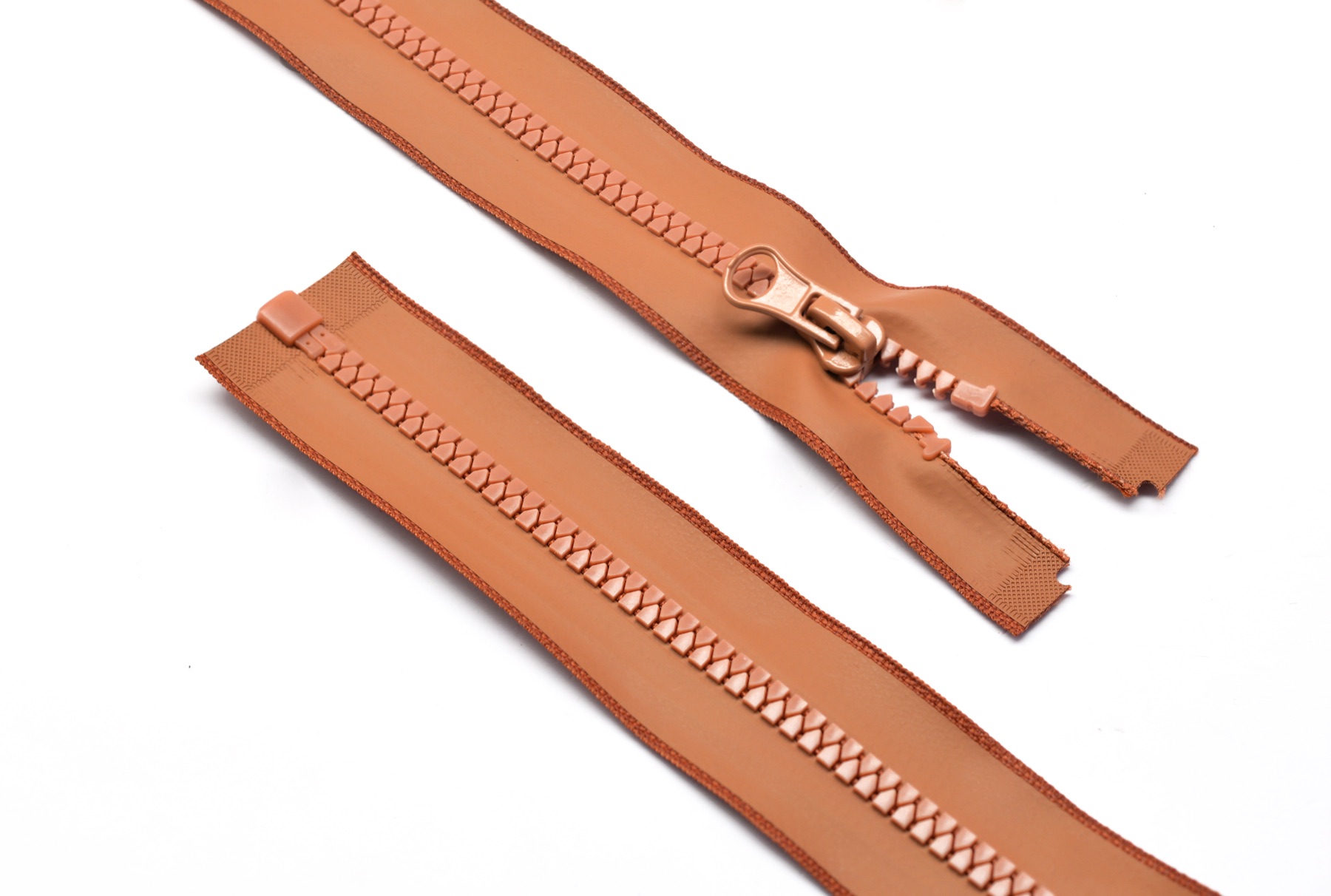
Individual molded teeth are attached along the tape edges, while the slider guides the two sides into engagement or separates them. Compared with a fine coil chain, molded teeth create a more pronounced outline and can become a visual feature on an exposed placket. The water-resistant appearance is commonly provided by a film or coating on the tape. The exact material, number of layers, and bonding method cannot be established from a photograph and should be confirmed on physical samples and in technical specifications.
Mechanical engagement between larger teeth does not by itself create a seal. Inspect tooth tips, roots, tape edges, and the slider channel together. When closed, the chain should show no abnormal misalignment, and the surface finish should not lift, tear, or interfere with operation. Include stops, insertion components, and the box area in the review because these regions may behave differently from the main chain.
Size 5 and Suitable Applications
Size 5 is a specification category, not a substitute for actual measurements. Measure chain width, tape width, slider profile, and end-component dimensions before checking seam allowances and lining clearance on the pattern. This construction may be considered for casual jackets, outerwear, and bag openings where a distinct chain is appropriate. Its suitability for curves, lightweight fabrics, or repeatedly flexed areas must still be established with a sewn sample.
A front opening that separates completely requires compatible open-end components, while a pocket or opening fixed at one end generally needs a closed-end construction. Confirm slider face, pull direction, and insertion-side preference with the garment design. Similar colors do not make sliders and chains interchangeable, so replacement parts must be checked as a complete operating system.
Selection Checklist
- Define the protection goal: Distinguish everyday splash resistance, short rain exposure, or another use requirement, and agree on the relevant evaluation method instead of relying on the product name.
- Specify the complete construction: Record size, length, open-end or closed-end format, slider type, end direction, and color, and retain an approved sample.
- Inspect the surface and chain: Check finish continuity and look for wrinkles, cracks, delamination, or unusual resistance after opening and closing.
- Assess fabric compatibility: Include shell thickness, stretch, stabilizer, and lining in the sample so that excessive tape width or a tight placket does not distort the closure.
- Evaluate the complete article: Review needle holes, end sealing, placket overlap, and changes after care rather than testing only an unattached zipper.
Sewing and Use Precautions
Identify the permitted stitching zone before sewing. Use a presser foot that clears the molded-tooth profile and feed both sides evenly. Do not stretch the tape to remove puckering, and keep lining outside the slider path. If taping, pressing, or another finishing process is planned, establish temperature, pressure, and contact method on a sample first to reduce the chance of pressure marks, sticking, or discoloration.
- Remove loose threads and trapped fabric before operating the slider, and never pull forcefully against an obstruction.
- Clean with a gentle method compatible with both the shell fabric and surface finish; avoid stiff brushes and sharp tools.
- After the planned care process, recheck appearance, operation, and end fittings, and reassess splash protection when required.
Common Questions
Do larger plastic teeth provide better water resistance
There is no direct relationship. Tooth size mainly affects visual scale, construction, and handling. Protection depends on the complete closure and garment system, not tooth dimensions alone.
Does an intact surface film guarantee that the garment will not leak
No. Stitch holes, zipper ends, fabric seams, and the placket opening can all influence water entry. A sewn sample or finished garment should be tested under agreed conditions before suitability is decided.
Can a water-resistant tape surface change sewing behavior
Yes. It may alter feeding friction, presser-foot clearance, and tolerance to pressing. Make samples with the intended production fabric, thread, needle, and processes before finalizing stitch density and finishing conditions.