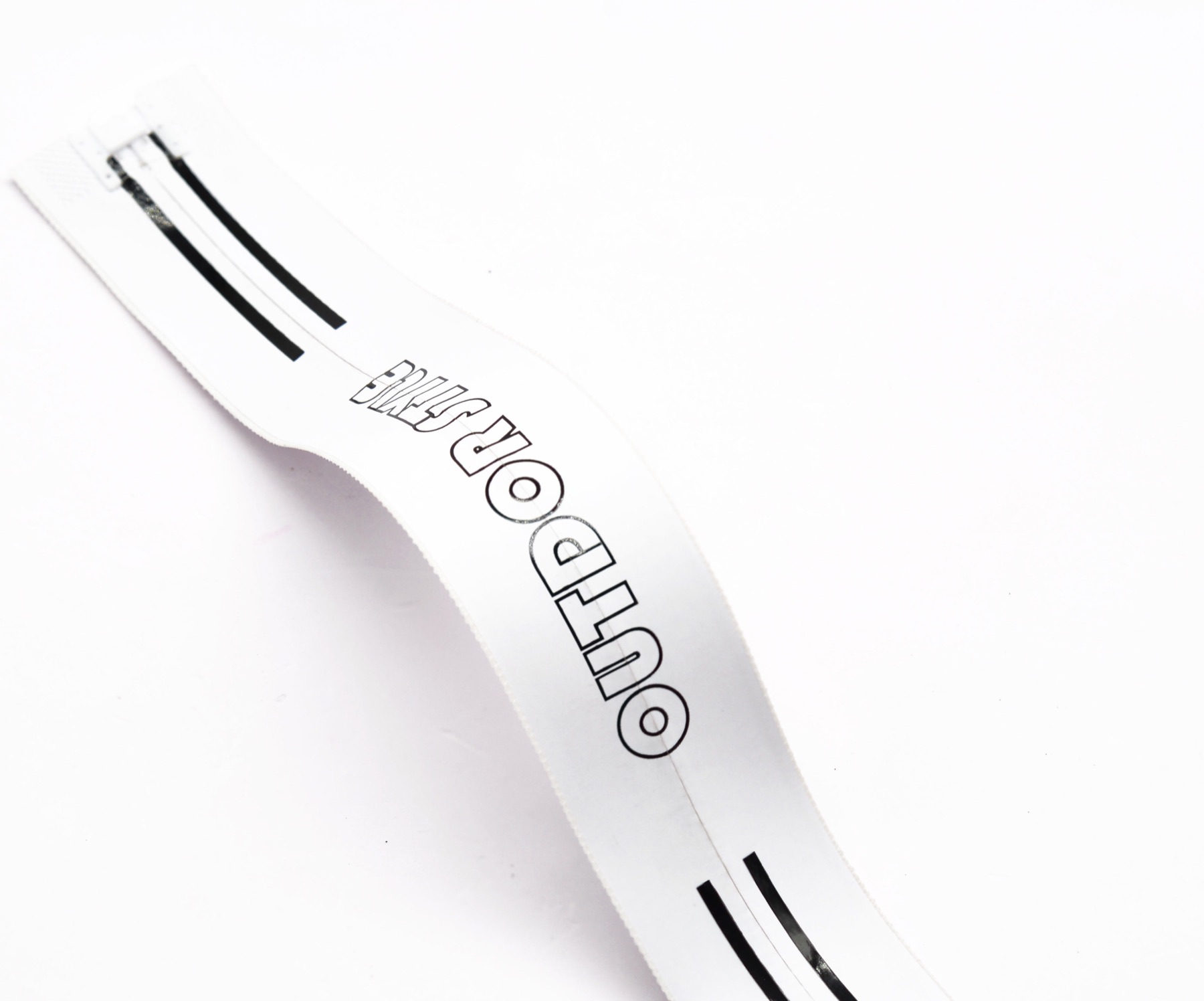
A waterproof printed zipper adds graphics or text to a smooth film face, turning the closure into part of the visual design of a garment or bag. This topic concerns size 3 and suits designs requiring fine lines and custom graphics or text. Customization does not remove the need to coordinate elements, slider, and sewing, nor can every artwork file be reproduced as a clear and durable finished article. The film, printed layer, and tape must withstand bending and abrasion together, so the final result requires physical sampling. Likewise, “waterproof” does not mean absolute impermeability or an untested protection rating.
Structure and Process Characteristics
This zipper combines a flexible tape, surface film, graphic layer, elements, and slider. The film provides a relatively even background for graphics, while text outlines, line spacing, and color-block boundaries directly affect the overall appearance. Inspect samples both flat and naturally curved, paying particular attention to continuity near the elements, areas traversed by the slider, and trimmed end positions.
Adhesion of the graphic layer to the film, flex resistance, and abrasion resistance cannot be established by sight alone. Sampling can include moderate bending, operating cycles, surface rubbing, and cleaning trials appropriate to the intended use. Record color, edges, and surface condition before and after each procedure. Without supporting tests, do not promise permanent colorfastness or adhesion, and do not infer a waterproof rating from a single splash observation.
Size and Applications
Size 3 suits locations where compact components are preferred. Depending on fabric and pattern, it can be considered for lightweight garment pockets, small bag openings, organizers, or decorative closure lines. A smaller size leaves limited visible design space on the tape, so fine text, very thin lines, and complex gradients must be assessed at actual size rather than only in enlarged artwork. Confirm open-end or closed-end construction, effective length, pull orientation, and end components according to the way the article will be used.
Selection Checklist
- Define finished dimensions first: Supply artwork at the intended display size, identifying text, graphic outlines, repeat units, direction, and placement. Do not substitute an enlarged screen view for a physical sample.
- Control graphic complexity: Prioritize the legibility of essential text and main lines, and check whether the visual information remains complete after allowance for the slider, stitches, and garment-panel obstruction.
- Confirm colors and base: Review the film base color, graphic colors, and garment fabric under the same lighting, recording acceptable color variation and edge appearance.
- Validate combined performance: Check full slider travel on samples and conduct bending, rubbing, and appropriately controlled splash or spray exposure for the intended scenario, without assuming an unverified rating.
- Create an approval reference: Keep the artwork version, dimensions, direction, opening format, length, slider configuration, and acceptance condition in one record to avoid undocumented verbal changes.
Sewing and Use Precautions
- Sew a trial with the actual fabric. Keep stitches within the designated tape area, away from elements, principal graphics, and slider clearance; adjust the presser foot and feeding method if needed.
- Do not overstretch the tape or twist the filmed face at corners. If puckering occurs, first check tension, stitch length, panel curvature, and feeding of the two layers.
- Test heat tolerance on a waste sample before ironing or heat pressing. Use a press cloth and protect the printed film and slider instead of applying high-temperature settings for ordinary webbing.
- Keep work in progress away from rough tables, sharp clamps, and heavy rubbing. Protect the graphic surface when stacking or handling to reduce dents and scratches.
- Verify the cleaning tolerance of the film, graphic layer, and fabric. Avoid unverified strong solvents, stiff brushes, or high-temperature drying; clean only by a validated method and dry thoroughly.
Frequently Asked Questions
Do finer graphics or text always indicate greater precision?
Not necessarily. Precision should mean clear, complete, and repeatable presentation at actual size. Very fine lines may become difficult to read after bending, sewing, or ordinary abrasion and should be adjusted through sampling.
Can waterproof performance still be promised after graphics are customized?
No automatic promise is justified. The graphic process, film, elements, needle holes, and garment seams can all affect finished performance. Validate against the intended conditions instead of using the product name as a substitute for testing.
Is a physical sample still necessary after electronic artwork is approved?
Yes. Electronic artwork cannot fully represent film gloss, base-color variation, bending, or obstruction by the slider. The physical sample should also be reviewed with the intended fabric and sewing method.