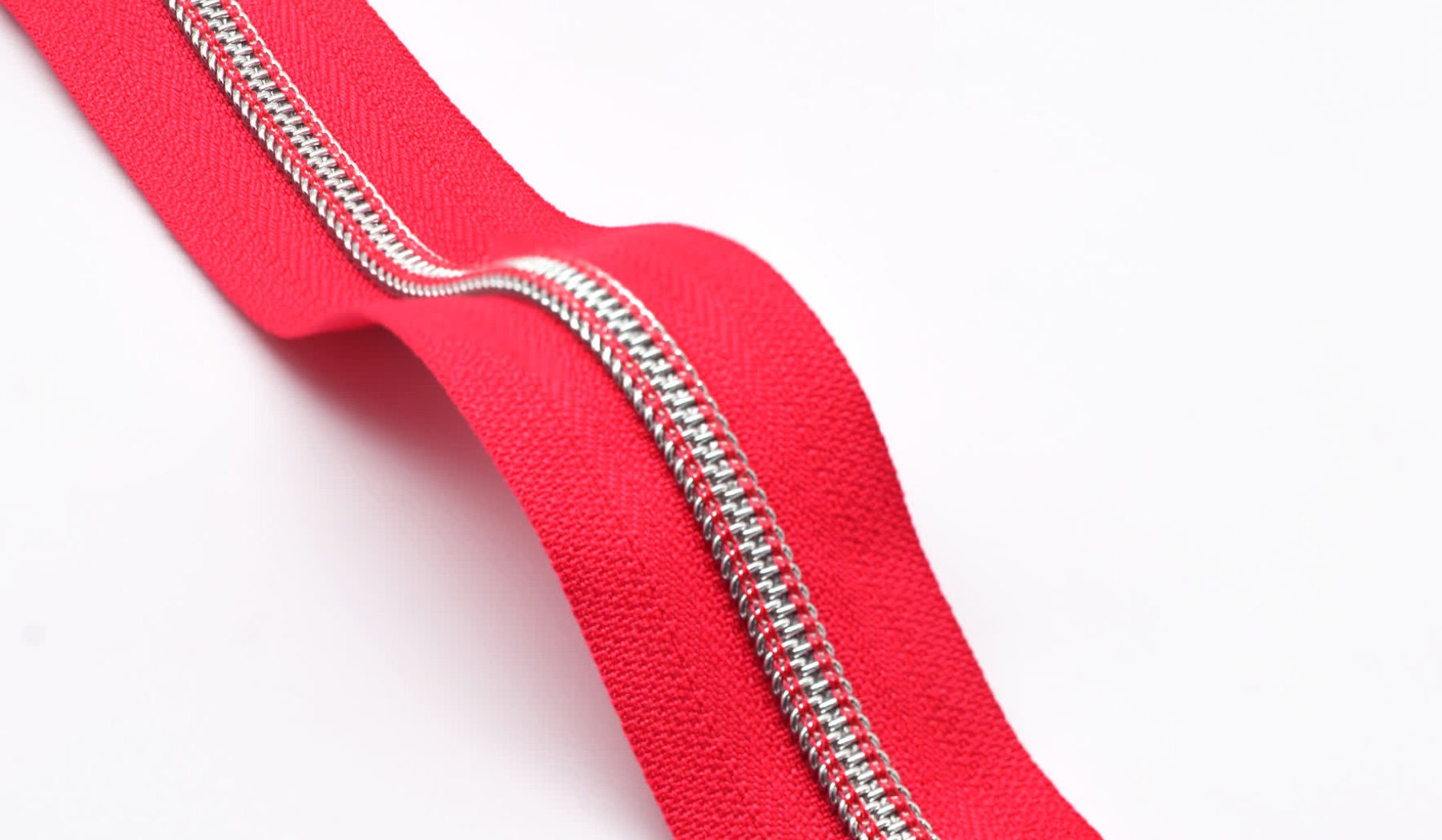
A silver chain on dark fabric draws a thin bright line that works as decoration as much as a closure. The size 7 silver-plated nylon teeth zipper adds a metallic coating to a nylon chain, keeping the softness and flex of a nylon zipper while approaching the reflectivity of a metal one. The selection question is not how bright it is, but how even the coating is, how it wears, and whether the line survives garment finishing intact.
Structure and Construction
A nylon chain is a monofilament coil sewn onto the tape. Silver plating applies a metallic layer over the formed chain so the tooth face, flanks and edges all reflect light. Because size 7 teeth are relatively large, each tooth offers more reflective area and the closed zipper shows a more continuous sheen.
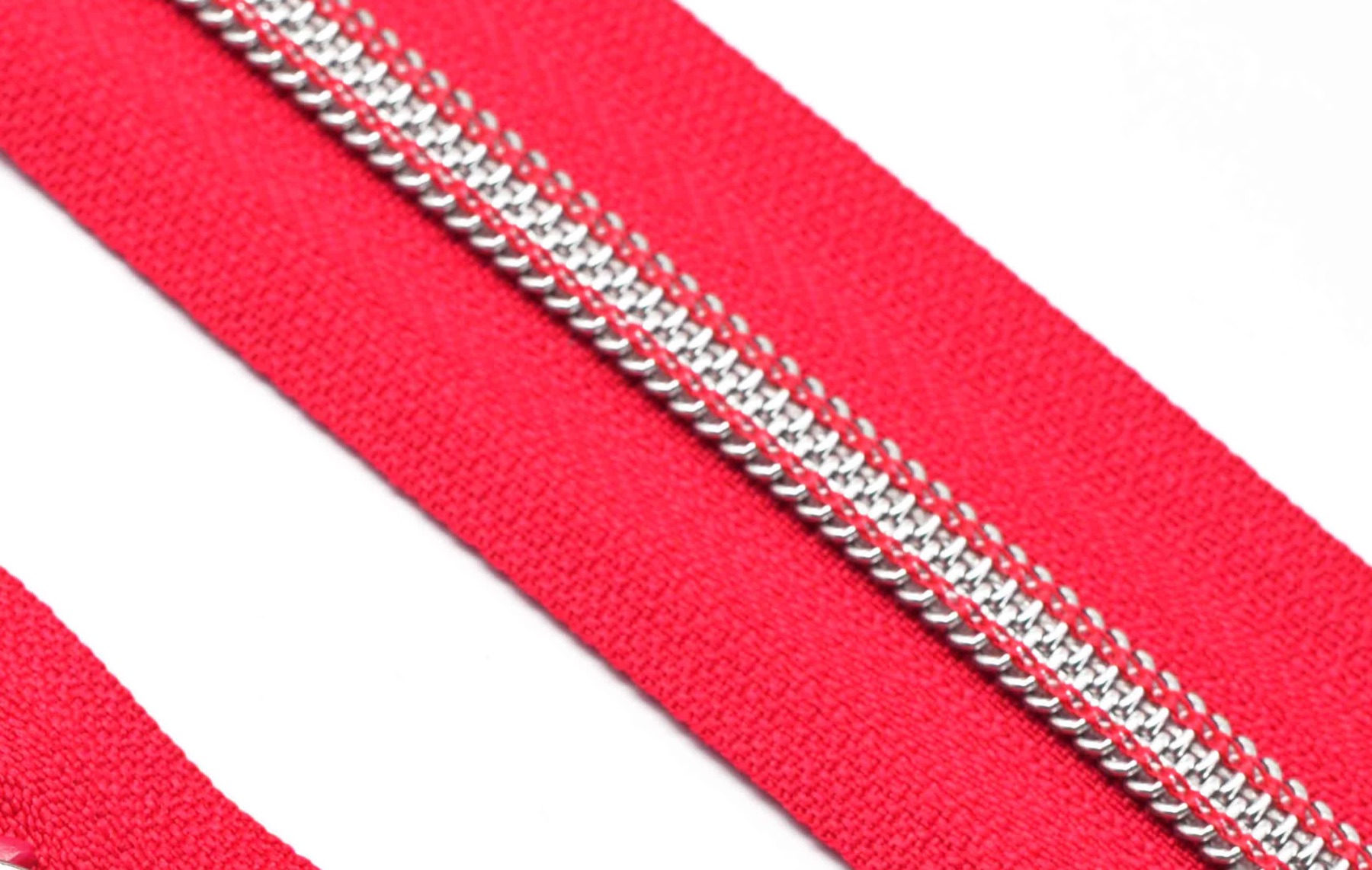
Coating quality shows in three places: evenness of colour, complete coverage at the tooth root and flanks, and whether any bare substrate or sharp edge is left. A thin coating exposes the base colour at the tooth tips first under repeated friction; an uneven coating creates patches of different brightness along one length. Since the tooth face is curved, the appearance shifts strongly with light angle, so inspect under both direct and diffuse light.
Silver is not the same as cold white. Different coating lots may lean cool, warm or slightly grey, which becomes obvious beside metal sliders and fasteners. For that reason the plated chain is usually matched to the hardware family rather than approved on its own.
Sizes and Applications
Size 7 suits the medium-weight plackets and pockets of jackets, down garments, work coats, padded outerwear and bags; the coarse teeth give a strong metallic reflection that can act as a visual focus. Finer sizes such as 3 and 5 can also be silver-plated, but the reflective area is smaller and reads more like a pale grey line, suitable for shirts, dresses and light jackets.
Dark fabric gives the strongest contrast, so black, navy and dark brown make the metal line look crisp; on light fabric the silver sits closer to a tonal nuance and suits understated designs. If the fabric itself is glossy or coated, place the zipper against it to check that the two reflections do not compete.
Selection Checklist
- Confirm coating process and shade: request a shade code and a physical sample, stating whether it reads cool or warm.
- Check coverage: inspect tooth roots, flanks and ends for bare substrate, excess build-up or sharp burrs.
- Unify the hardware family: slider and stop finishes should match the plated teeth, or the detailing will clash.
- Assess friction exposure: for frequently used or exposed openings, favour lots with better abrasion performance.
- Choose size by purpose: size 7 for strong reflection and visual emphasis, smaller sizes for a finer line.
Sewing and Use Notes
- Keep the needle from scraping the tooth faces, and keep the presser foot and feed dogs clean so the coating is not scratched.
- Never press directly on the chain; heat alters coating lustre, so use a press cloth and work around the seam.
- Turn garments inside out and use a laundry bag to reduce direct rubbing against zippers and buttons.
- Avoid prolonged contact with strong acidic or alkaline cleaners, and rinse and dry promptly after use.
- If a spot dulls, wipe it with a soft cloth rather than polishing compound, which can wear through the coating.
FAQ
Does a silver chain darken with use
Lustre gradually changes under prolonged friction, perspiration and washing, which is normal wear. Reducing hard contact, washing inside out and drying promptly all slow the change.
How does plated silver differ from a metal zipper
The base is nylon, so it flexes more softly and the tooth form is rounder with a more continuous reflection; a metal zipper has harder tooth geometry, sharper highlights and more weight. Choose by style and weight requirement.
Why do different lots look different in silver
Coating thickness, bath condition and substrate surface all influence final tone and reflection. Keep an approved sample, compare under one light source, and write the acceptable tolerance into the inspection standard.