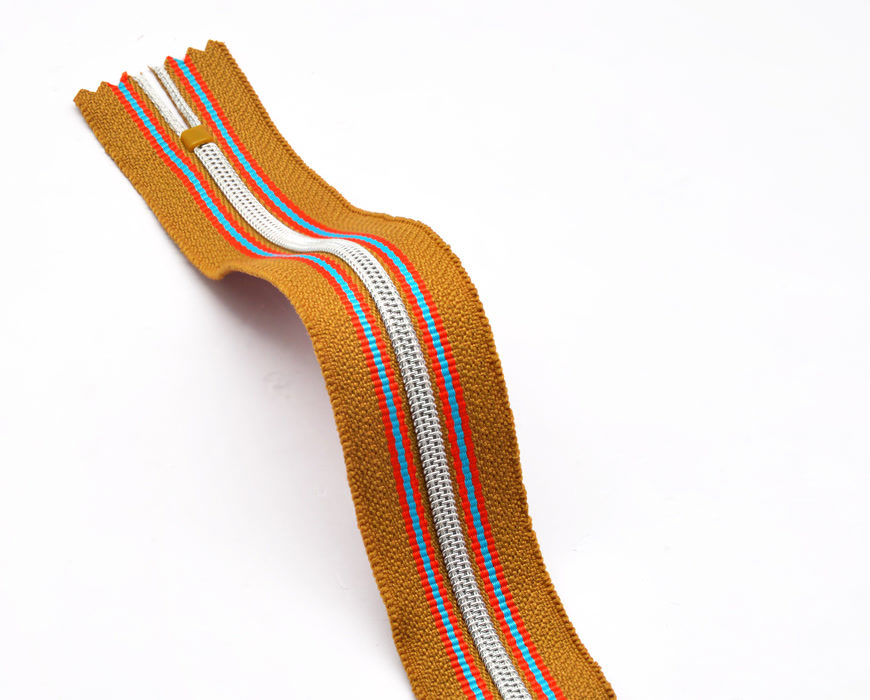
A colored plated nylon zipper uses a nylon tooth chain as its base and adds decorative color to the tooth surface. This product group includes size 3 and size 7. The samples show metallic-looking chains combined with different tape grounds and colored edges, but color, size, and end construction must still be matched individually. A metallic-looking surface does not mean that the entire tooth is metal, and brightness alone cannot establish abrasion resistance, colorfastness, or service life. Appearance, operation, sewing, and care therefore need to be evaluated together.
Chain Construction and Surface Appearance
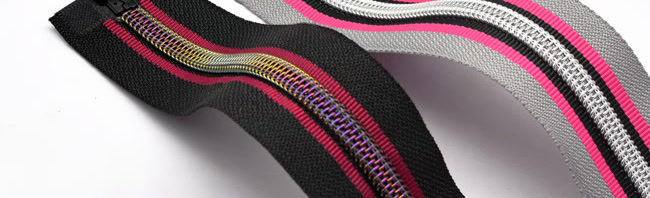
When the nylon teeth engage, the colored plated finish forms a continuous decorative line. From a distance, it can read as a subtle outline or a prominent feature on a placket or pocket. At close range, inspect color continuity, chain alignment, and whether the tape edge obscures any part of the tooth surface. The pictured samples include silvery and iridescent-looking effects on different tape colors. They illustrate coordination options rather than defining the complete available color range.
Approval should include operation as well as static appearance. Lay the closed zipper flat and examine the chain, then move the slider slowly through its full length to identify localized resistance. Gently curve the chain into a shape likely to occur in the finished article, operate it again, and inspect for unusual scratches, color loss, or abrupt changes in appearance. The exact surface construction, color references, and acceptable variation should be established through an approved physical sample and supporting technical information.
Choosing Between Size 3 and Size 7
Size 3 is generally considered when a lighter visual line is desired, while size 7 gives the exposed chain a stronger presence. These are design tendencies, not rules for determining fabric thickness or load capacity. A number alone cannot establish suitability for a placket, pocket, or bag. Measure the chain, tape, slider, and end fittings against the actual pattern, and verify the available clearance around every moving component.
Specify open-end, closed-end, or another required termination before approval, including the points from which length is measured. For a fully separating front, check pin and box orientation together with garment left and right. For a pocket, verify stop positions and the resulting usable opening. Light tape emphasizes the chain outline, dark tape increases contrast, and colored edges can either echo or visually soften the tooth finish. Make the final color decision beside the actual shell fabric, lining, and nearby hardware.
Selection and Sample Approval Checklist
- Approve the complete combination: Record size, tooth color, tape ground, edge color, slider appearance, and end construction on one identified sample rather than approving an isolated tooth color.
- Measure the real components: Check chain, tape, slider, and termination dimensions instead of using size nomenclature as a substitute for seam allowances and pattern clearances.
- Operate straight and curved chains: Run the slider through the full length in both conditions, then inspect the tooth surfaces instead of judging only the effort required to pull.
- Simulate intended use: Prepare sewn samples for rubbing, washing, cleaning, pressing, and repeated-operation checks relevant to the finished article.
- Review the assembled article: Examine placket flatness, exposed chain width, lining clearance, and coordination with neighboring components before final approval.
Sewing and Care Precautions
Use a zipper foot that clears both the tooth profile and the slider. Keep the needle within the stitchable tape so that it does not strike teeth or scratch the finish. Feed both tapes evenly without stretching them to force a temporarily flat result. Stop before repositioning the slider, and keep lining, binding, and decorative threads outside its path. A smooth appearance after sewing should not come at the expense of restricted slider movement.
Test pressing on a sample made with the same materials and avoid prolonged direct contact between a hot presser and the tooth surface. Do not use unverified solvents, stiff brushes, or abrasive cleaners. The metallic appearance does not justify applying assumptions associated with solid metal teeth. If resistance occurs during use, check for trapped fabric, loose threads, and debris before gently moving the slider back. Forceful pulling may damage the finish, tape, teeth, or slider.
Common Questions
Are colored plated teeth the same as colored metal teeth
No. The product name identifies a nylon zipper with a colored tooth-surface effect. It does not establish that the complete tooth is metal. Tooth material, surface process, and color range should be confirmed separately in the product information.
Can size 3 and size 7 share the same pattern
They should not be substituted without a new trial. Their chains, sliders, and end fittings may occupy different amounts of space, affecting seam allowance, opening length, and placket appearance. Even when the nominal length is unchanged, measure and sew a new sample and check lining clearance.
Does a brighter tooth finish indicate greater durability
No. Brightness describes immediate appearance, not long-term performance. Durability requires defined rubbing, operation, washing, and pressing conditions, together with comparison against an unused reference. A gloss comparison without those controls cannot support a durability claim.