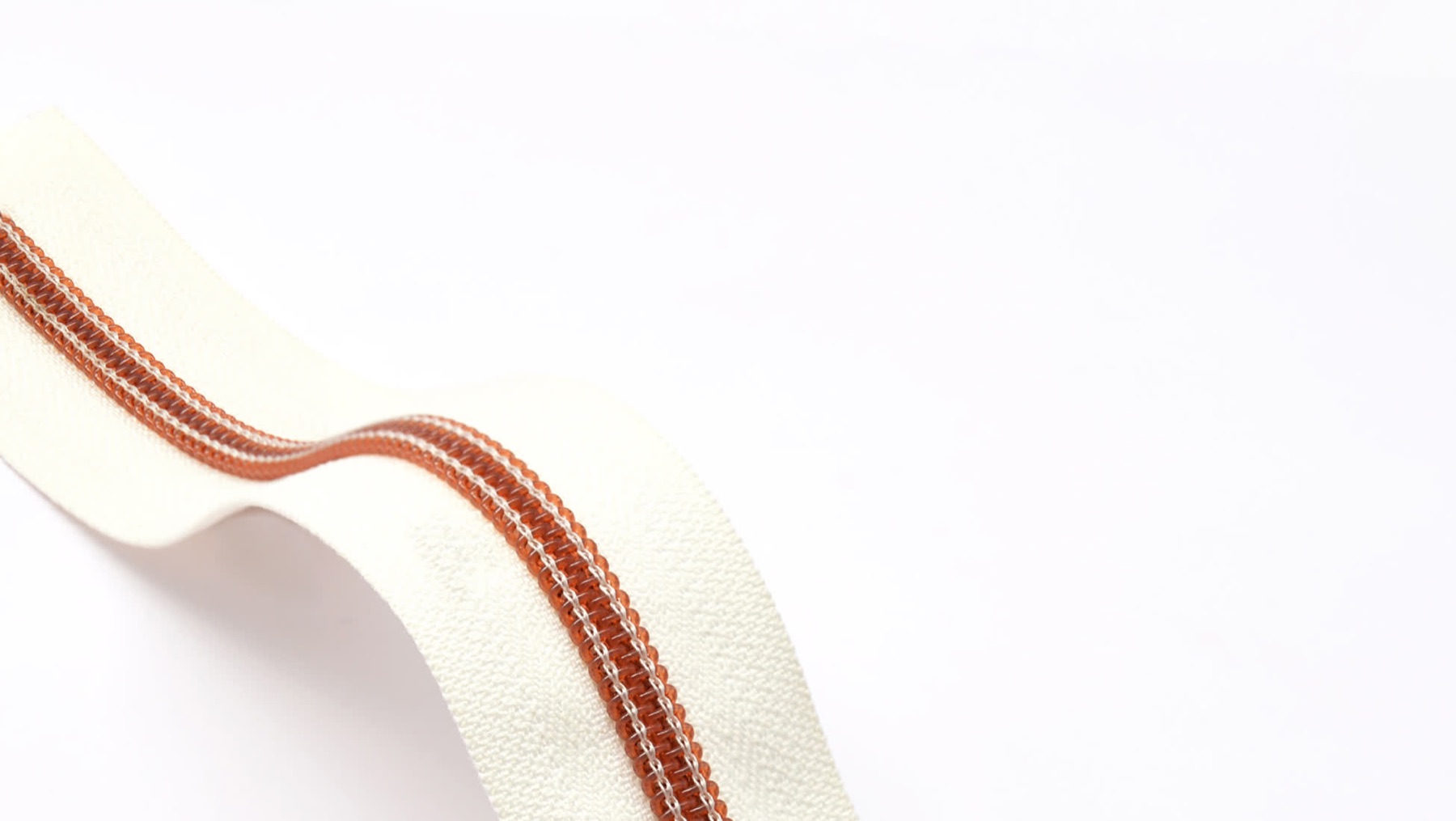
The teeth of a nylon zipper are held on the tape by a row of stitching that normally goes unnoticed. A contrast-stitch zipper replaces that thread with a colour different from the tape and the teeth, turning a hidden construction detail into a fine line running along the zipper on plackets, pockets and side seams. Size 7, with its fuller chain and wider tape, is a common choice for making this line read clearly.
Structure and Construction
The coil of a nylon zipper is formed from monofilament and then sewn onto the tape. A typical zipper has two stitch rows: an inner row close to the teeth that secures the coil, and an outer row near the tape edge that reinforces and stabilises it. Contrast stitching changes one or both rows to a contrasting colour so the thread forms a continuous line on the tape surface.
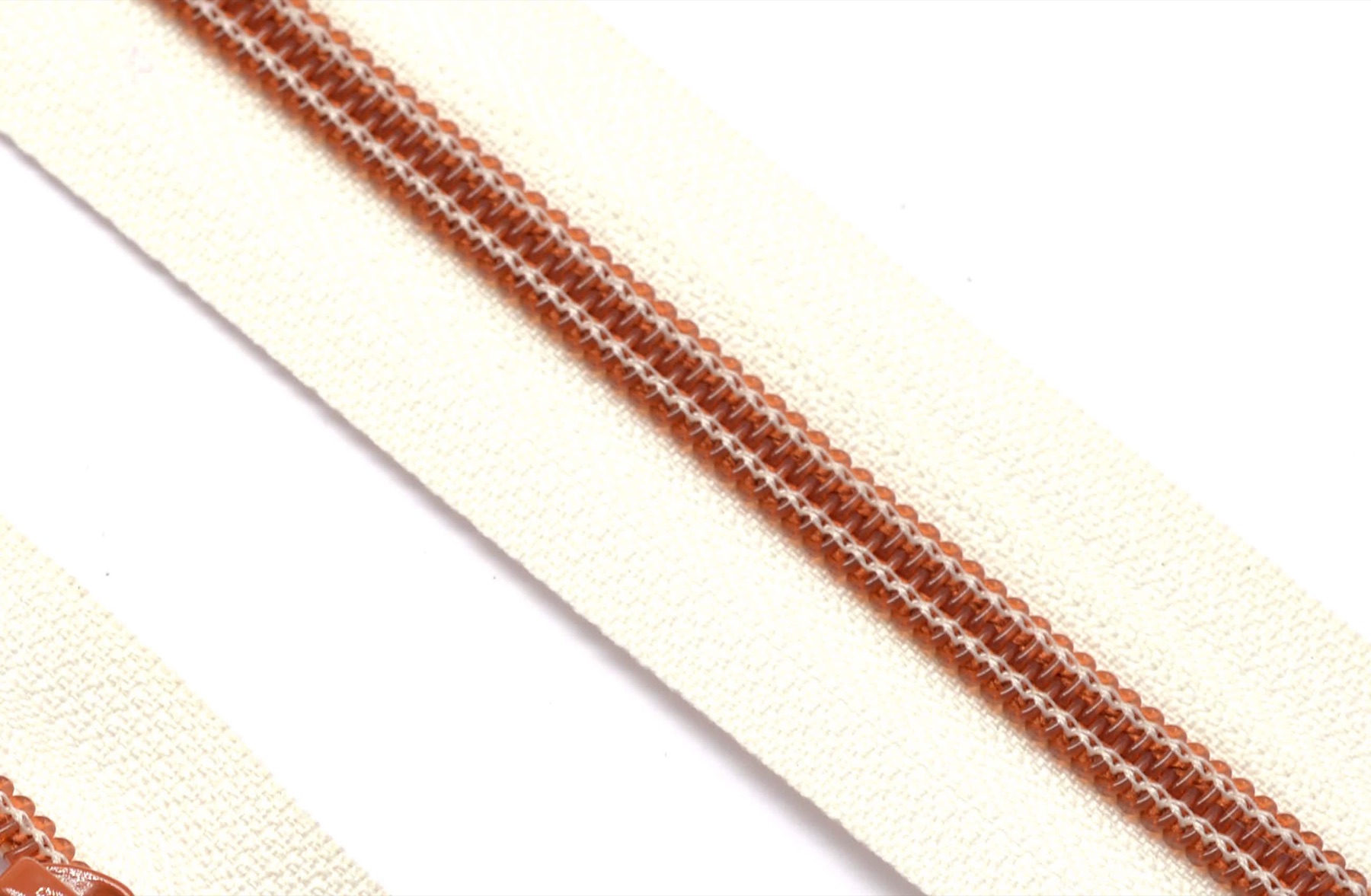
The size 7 tooth scale makes the stitch position easier to see and keeps a contrast colour from disappearing because the thread is too fine. Thread thickness, stitch length and tension all affect the result: too fine a thread and the contrast vanishes at garment scale; too long a stitch and the coloured line looks broken; too loose a tension and floating thread appears on the tape, becoming more obvious after washing.
Contrast does not mean the brighter the better. The larger the hue difference between thread and tape, the more the line dominates; a light-dark shift within one colour family behaves more like a subtle textural detail. Because a garment usually has several stitch lines, the thread colour also has to relate to topstitching, fasteners and slider finish, or it will look isolated.
Sizes and Applications
Size 7 nylon zippers suit the front placket, chest pockets, side pockets and hoods of medium-weight fabrics, and are common on jackets, shell garments, work jackets and mid-sized bags. Finer sizes such as 3 and 5 can also carry contrast stitching, but the thread takes up a larger share of the tape, giving a more delicate look for shirts, dresses and light jackets.
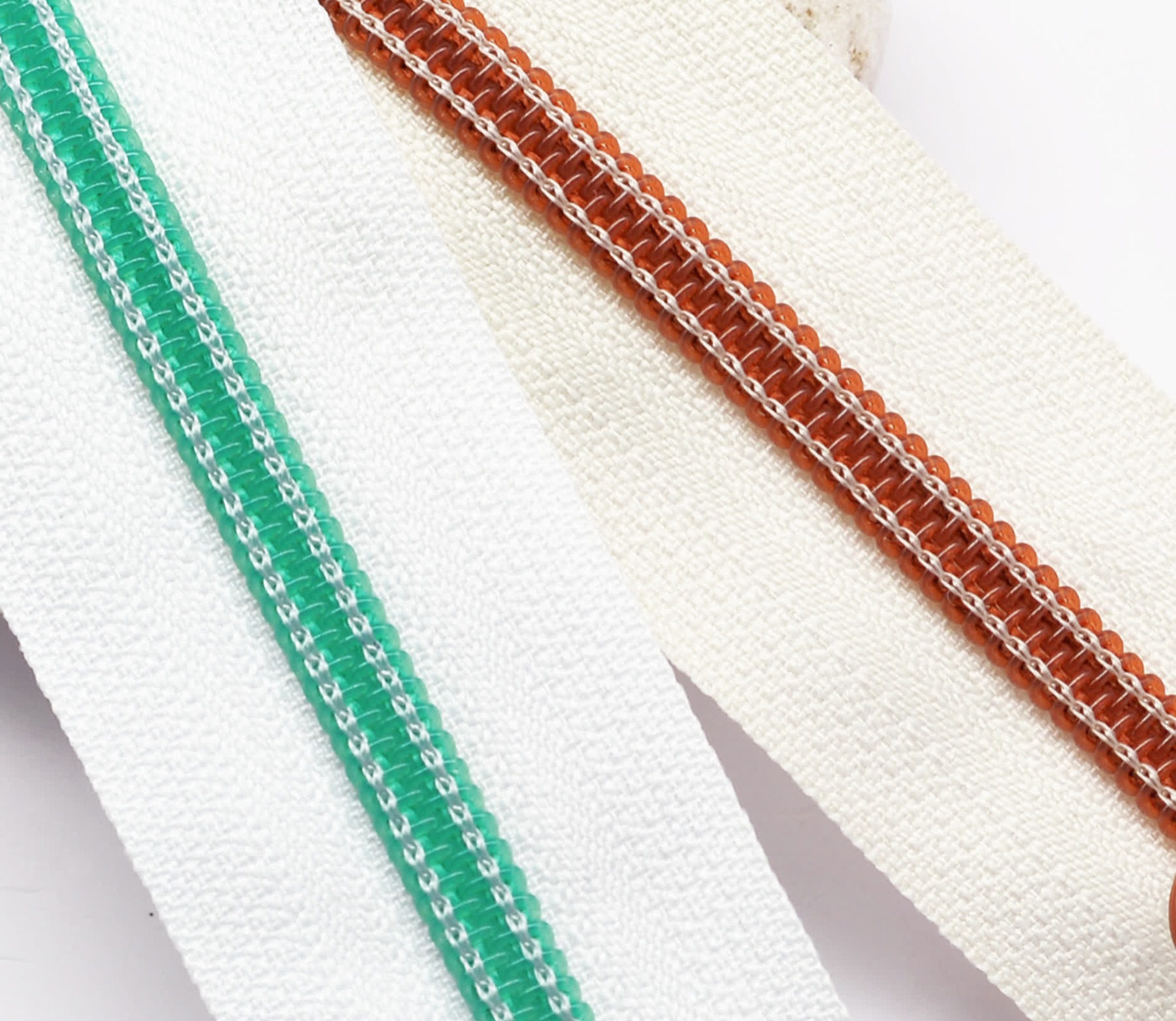
In colour planning, a dark tape with light thread gives the most direct contrast, such as black tape with white or silver thread; a light tape with dark thread produces a crisper line; tone-on-tone pairings suit more restrained styles. Judge the thread colour within the whole colour scheme, because on the garment the stitching is surrounded by fabric and hardware.
Selection Checklist
- Define which row contrasts: confirm whether the inner securing row, the outer reinforcing row or both carry the contrast colour.
- Check thread colour in real light: view it in daylight and under indoor light so the shade does not turn grey or too bright on the garment.
- Match thread size and stitch length: ask for thread count and stitch density so the line reads consistently with garment topstitching.
- Inspect tape shade uniformity: contrast stitching amplifies tape shade variation and weave irregularity, so unroll the full length when sampling.
- Align slider and ends: slider finish and stop colours should sit well with the contrast thread rather than compete with it.
Sewing and Use Notes
- Avoid adding a second topstitch over the zipper's own stitching, or the contrast turns into a confused double line.
- Keep feed tension consistent; if the thread is pulled too tight the tape puckers and the coloured line curves with it.
- Match needle size to fabric thickness so oversized needle holes do not break the continuity of the line.
- Use a press cloth and keep the iron off the chain; heat changes thread lustre and weakens the contrast effect.
- If slight floating thread appears after washing, smooth it in the direction of the stitch with a soft cloth instead of cutting it, which risks unraveling.
FAQ
Will contrast thread fade after washing
Thread colour fastness depends on its dyeing and on washing conditions, and high-contrast pairings show change soonest. Run a small wash test using the garment's care method during sampling and record the acceptable tolerance.
Why does the thread look different from the sample card on the garment
Tape shade, fabric colour and viewing light all affect how thread colour is perceived. A short piece of zipper on its own reads differently, so compare it beside the actual fabric under one light source.
Can contrast stitching be used on light fabric
Yes, but the tape is narrower on light fabric, so the thread occupies more of the visible width. Prefer a tone-on-tone shift or a finer thread there.