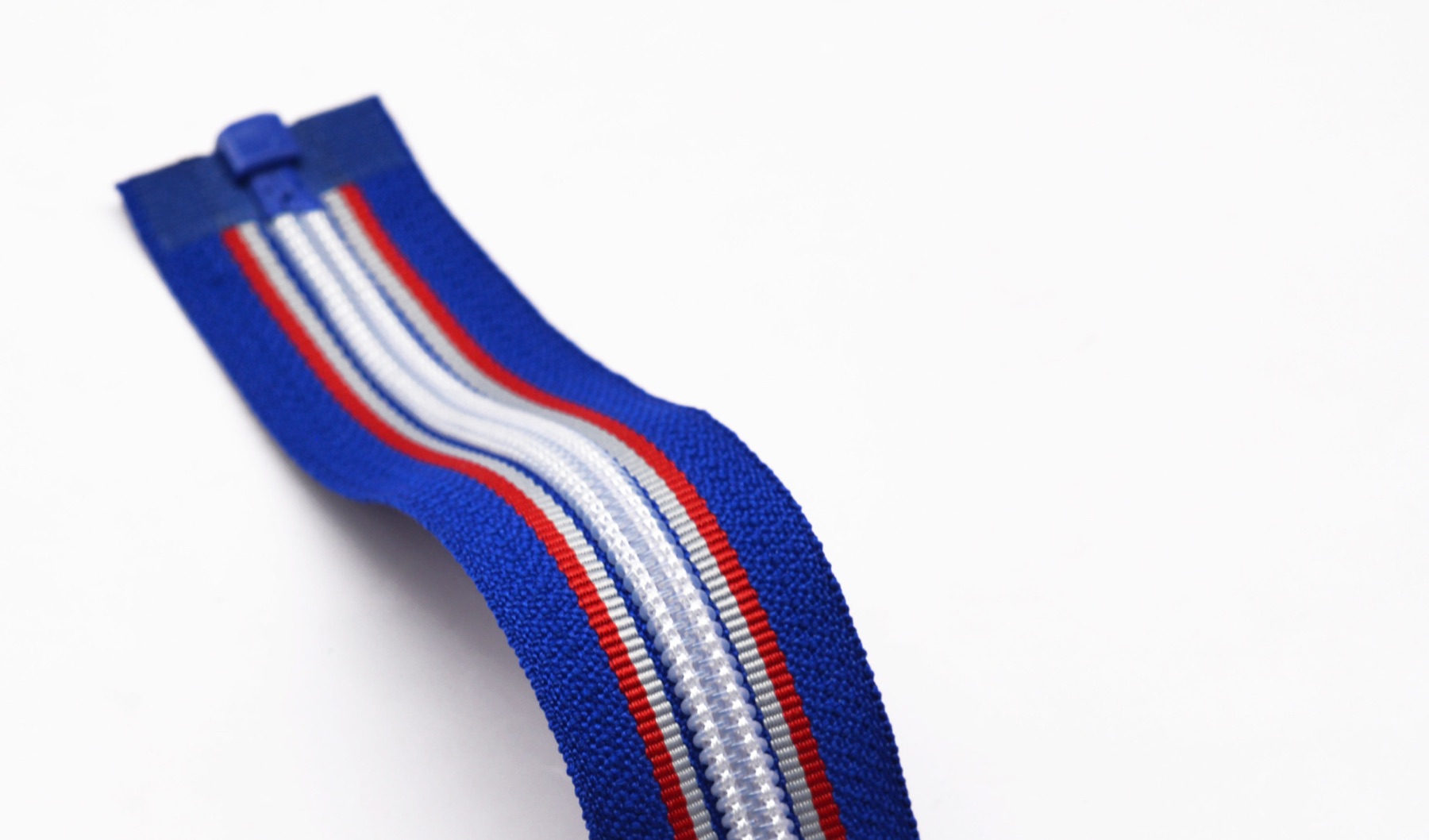
A size 7 yarn-dyed tape nylon zipper incorporates stripes or color blocks created by colored yarns within the woven tape. The pattern is therefore closely related to the tape structure rather than being understood only as an image placed on a finished surface. This construction can suit sportswear, casual garments, bags, and other designs with a strong linear detail. However, yarn-dyed does not automatically guarantee superior colorfastness or wash durability. Yarn, dyeing, finishing, and actual care conditions still require evaluation.
Structure of Yarn-Dyed Tape
Colored yarns are arranged to create lengthwise stripes, spaced bands, or other woven effects. To inspect the construction, gently open the tape and examine whether the stripes extend through stitchable areas, how the edges are formed, and how the face differs from the reverse. Once the chain is attached, some yarns are covered by the teeth, so the exposed tape edge alone does not represent the complete zipper appearance.
Stripe width, color order, and distance from the chain all affect the result. Broad bands are conspicuous at a distance, while fine stripes provide more detailed layering at close range. Sample approval should include both a full-length view and a chain close-up, supported by a physical color reference. Because colors change under different illumination, bulk approval should use agreed viewing conditions.
Size 7 and Design Applications
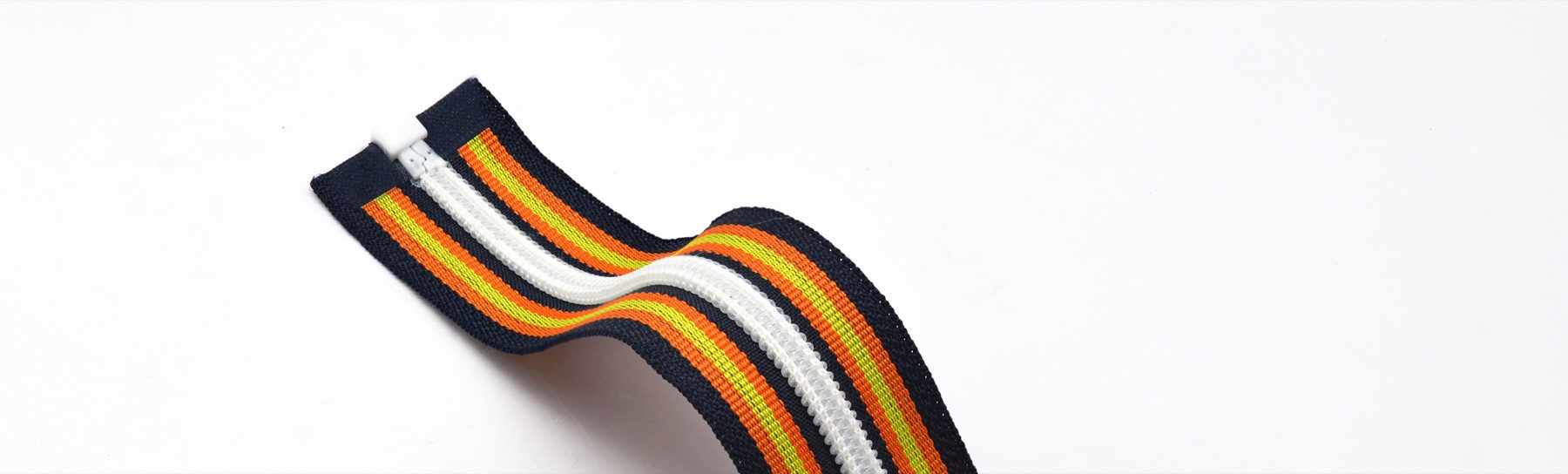
A size 7 nylon chain has a noticeable visual presence. Combined with multicolored tape, it can become a central feature of a garment or bag. For a quieter result, coordinate the teeth with the main tape color and use limited stripes to echo the shell fabric. For a more decorative result, use contrasting bands and coordinate the slider and pull accordingly. Make these decisions beside the actual materials rather than from separate screen images.
Beyond the size designation, confirm total tape width, stitchable area, chain width, slider fit, and end construction. An open-end zipper is appropriate where the two sides must separate completely; a closed-end zipper suits openings that remain joined at one end. Measure length according to the actual fittings and opening, not merely the paper pattern line, so that end components do not unexpectedly reduce usable travel.
Yarn-Dyed Stripes and Surface Patterns
Yarn-dyed stripes result from the arrangement of colored yarns and are directly connected with the tape weave. Printing or transfer processes instead create a pattern on an existing tape surface. The approaches may differ in edge detail, reverse-side appearance, bending behavior, and response to abrasion, but neither should be judged superior without considering its specific materials and process. A specification that merely says colored striped tape leaves room for misunderstanding; state the yarn-dyed requirement and attach an approved sample.
Clarify whether stripes must remain continuous, how the reverse should look, and whether woven transitions at color boundaries are acceptable. Keep tape yarn colors separate from tooth finish, slider color, and pull color during approval. These elements may coordinate visually but still require their own references and acceptance criteria.
Testing and Acceptance Checklist
- Approve stripe geometry: Define color order, individual band widths, position relative to the chain, and direction along the zipper.
- Check basic operation: Move the slider through the full chain in straight and gently curved positions and inspect for tape-related interference.
- Evaluate color stability: Test washing, dry and wet rubbing, and light exposure where relevant, recording both color change and staining.
- Assess dimensional behavior: Process the zipper with the intended shell and lining, then compare length, flatness, and stripe distortion.
- Retain control samples: Keep unwashed and unabraded references and make comparisons under consistent viewing conditions.
If the garment will receive a special wash, coating, or high-temperature finish, include the actual process in testing. A simple water soak does not reproduce the full chemistry and mechanical action of production care. One trial also cannot establish that every color combination will behave identically.
Sewing and Care Recommendations
Confirm stripe direction before cutting and sewing, especially for matched left and right components. Without a clear reference, paired garments may show unintended mirror images or mismatched bands. Use a zipper foot that clears the chain and keep stitches within the tape without damaging its woven edges. Feed both sides naturally and evenly; do not stretch one tape excessively just to force stripe alignment. Inspect the sewn sample for puckering, seam shrinkage, and lining clearance.
Use a sewn sample to establish pressing temperature, pressure, and contact time. Avoid unacceptable heat-related changes to either chain or tape. Follow the care requirements of the complete garment rather than assuming that yarn-dyed tape removes the need to evaluate detergent, rubbing, and drying conditions. If the slider sticks, check for trapped fabric and thread before applying force.
Common Questions
Is yarn-dyed tape guaranteed not to bleed
No. Yarn-dyed describes how the pattern is formed, not a colorfastness rating. Stability depends on yarn, dyeing, finishing, and use conditions. Test relevant colors for dry rubbing, wet rubbing, washing, staining, and other required exposures.
Can every garment have exactly the same stripe position
Color order, width, and nominal position can be specified, but practical tolerances must account for weaving, cutting, and sewing. Where precise placement or pattern matching matters, approve cutting samples and finished articles to establish what is achievable.
How can yarn-dyed tape be distinguished from a surface print
Examine the face, reverse, edges, weave, and magnified yarn details, supported by process information from the supplier. A distant photograph or product name alone is not reliable evidence. When necessary, inspect a small sacrificed section of the sample tape.