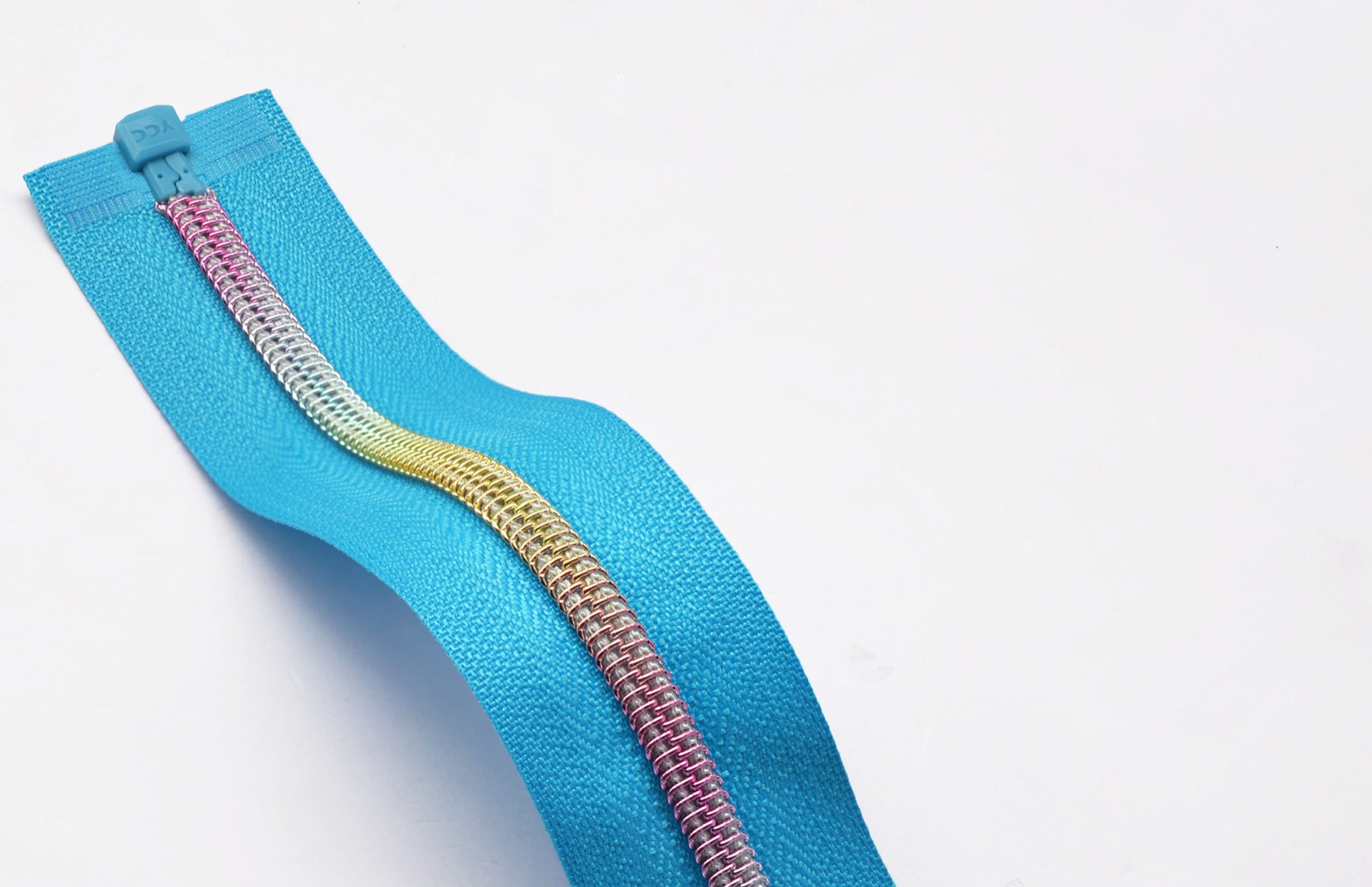
A size 7 rainbow-plated nylon zipper uses multicolored surface tones on nylon teeth to turn the closed chain into a decorative feature. It can add a distinctive line to garments and bags, but the rainbow description does not mean that every tooth follows a fixed color sequence, nor does it mean that the chain is made of metal. Color appearance, chain dimensions, slider fit, and durability should therefore be approved as separate requirements rather than inferred from one attractive image.
Appearance and Chain Construction
Once the nylon teeth engage, their surface colors form a continuous visual chain. Colors may appear in gradual transitions or more distinct sections, depending on the sample. Viewing angle, illumination, tooth geometry, and chain curvature can all change the effect. A specification should retain an approved physical sample or detailed photographs and identify the principal color family, tape color, and reference orientation.
Begin inspection with the zipper closed and flat. Check chain alignment and the continuity of the colored areas, then move the slider slowly from one end to the other. A color transition does not necessarily affect operation, but repeated resistance in one area calls for closer examination of the tooth surface, slider, and tape. Decorative appeal should not be allowed to conceal a basic functional problem.
Size and Design Coordination
The prominent appearance of a size 7 chain suits exposed plackets, pocket openings, and designs that deliberately emphasize the zipper line. A size designation does not replace measurement. Check chain width, tape width, slider outline, length, and end fittings during sampling. For a fully separating application, approve the pin, box, and handing as well; for a closed-end application, verify the bottom stop and finished opening length.
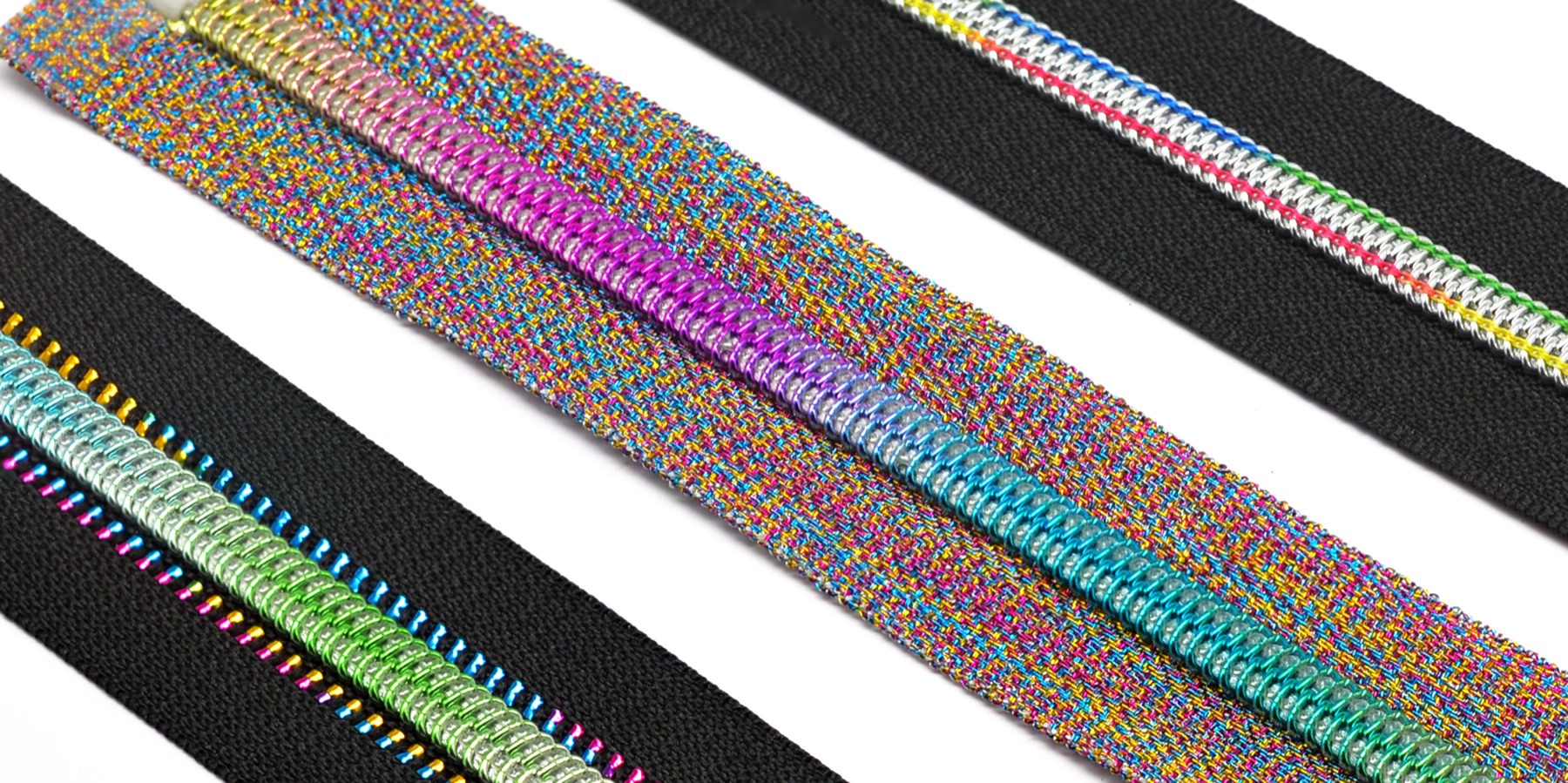
Tape coordination can follow two approaches. A single quiet ground color allows the multicolored teeth to dominate, while a tape drawn from one of the tooth colors can connect the zipper with the garment fabric. Saturated tape creates a more expressive result, and neutral tape usually gives the chain greater visual separation. Review the slider, pull, and nearby hardware together so that the complete assembly remains coherent. Judge the final combination beside the actual shell and lining materials.
Sampling and Acceptance Checklist
- Define the color reference: Record the approved sample, viewing light, and acceptable variation instead of relying only on the word rainbow.
- Measure the construction: Document chain, tape, slider, and end-fitting dimensions together with open-end or closed-end construction.
- Operate the full chain: Test in straight and gently curved positions and note any unusual resistance around color transitions.
- Test the visible surface: Apply relevant rubbing, repeated-operation, washing, and pressing trials to sewn samples and compare them with an unused reference.
- Inspect the sewn article: Verify exposed chain width, tape flatness, lining clearance, and space for pull movement.
Keep visual and functional acceptance records distinct. If natural multicolor variation is part of the design, avoid imposing an unrealistic fixed position for every hue. If a particular sequence is essential, establish its feasibility during sampling. Do not make unconditional abrasion, wash, or lightfastness claims without relevant test evidence.
Sewing and Care
Make a sample with the intended shell, lining, and interlining before production. Use a zipper foot that clears the teeth and keep the needle within the stitchable tape. Feed both sides evenly without stretching the tape to remove puckering. Stop and move the slider when it reaches the sewing area rather than forcing the foot or needle past it. After stitching, remove loose threads and confirm that lining and seam allowances cannot enter the slider path.
Establish pressing temperature and contact time on a sample, and avoid prolonged direct contact between a hot presser foot and the tooth surface. Confirm that both fabric and finish tolerate the intended cleaning process. Untested solvents, stiff brushes, and abrasive cleaners may damage the appearance. If the slider becomes difficult to move, look for trapped fabric, thread, or debris before applying more force. Repeated hard pulling can damage the slider, teeth, and visible finish together.
Common Questions
How does a rainbow chain differ from a two-tone chain
Rainbow usually describes a broader multicolor or graduated appearance, while two-tone emphasizes a more recognizable alternation between colors. The names alone are not universal process specifications. The approved sample should define the actual sequence, colored areas, and acceptable repeat.
Does the metallic-looking finish indicate a stronger chain
No. Surface reflectance does not establish tooth material, chain strength, or slider compatibility. Those characteristics require construction information and appropriate tests, independent of the decorative finish.
Why can the sewn zipper look different from the original sample
Lighting, viewing angle, tape color, adjacent fabric, and chain curvature all influence perceived color. Review the approved zipper beside the actual garment materials and retain an unused reference for comparison after sewing and care testing.