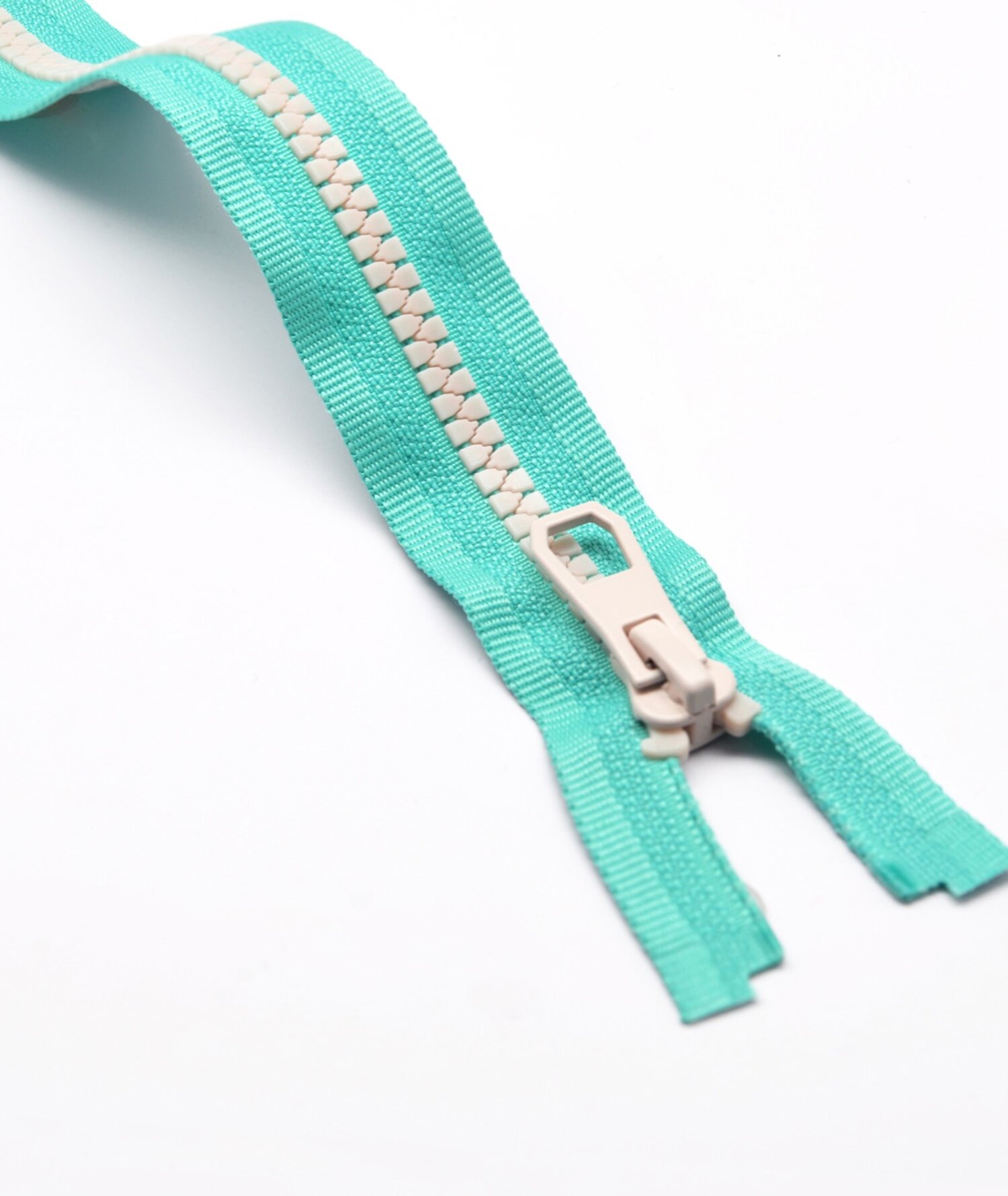
A size 5 bound-edge triangle-tooth plastic zipper combines two visible features in one product: the tape edge is bound, and the chain uses angular triangle teeth. It suits garment and bag openings that need both a clean edge and a tooth profile that contributes to the design. Compared with a standard molded zipper, what draws attention first in a photograph is often not the color but the continuous folded line of the tooth tips and the clear contour along the tape edge.
Structure and Construction
On a molded zipper, teeth are formed individually from thermoplastic material onto the tape, with the tooth root wrapping the tape edge. Tooth color can therefore be controlled independently of tape color or matched to it. The triangle tooth has a front profile close to a triangle or a beveled face, narrowing toward the engagement direction, so adjacent teeth create a regular folded rhythm when closed. Compared with a rounded basic tooth, the triangle has clearer corners and a crisper look, but it is also more sensitive to the slider channel: a slight difference in tooth height quickly makes operation feel uneven.
The bound edge is the other key process. The tape edge is folded in and secured by a bound seam or a binding tape, so the cut edge is not exposed. This reduces fraying and curling and gives a stable visual boundary. Binding width takes up part of the tape and therefore affects the usable seam allowance and the width of the visible line on the garment. A wider binding looks firmer and suits exposed or semi-exposed designs; a narrower binding feels softer and follows curved areas more easily.
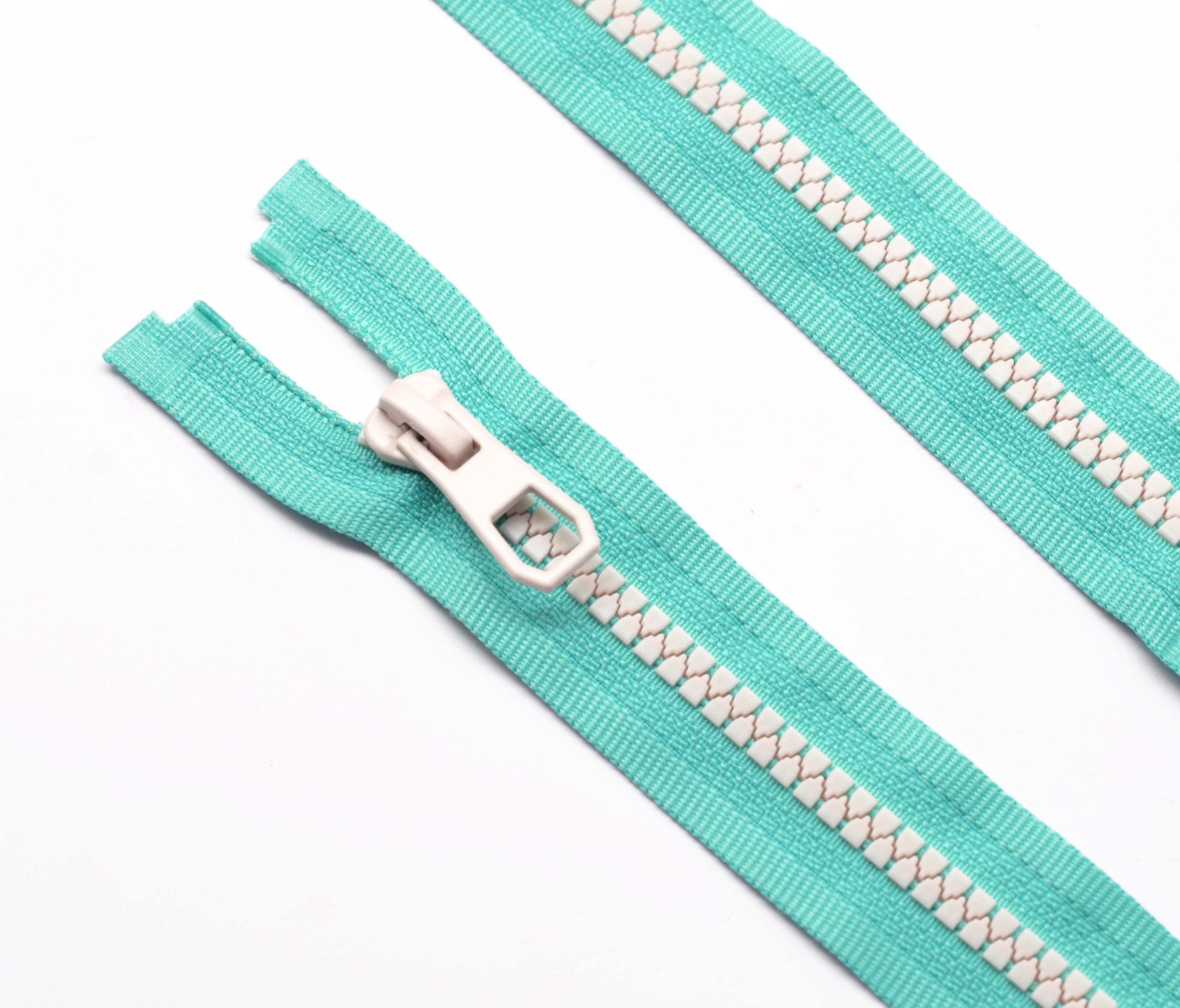
The sample shows a clear stitching band between the chain and the binding, even tooth spacing, and a flat tape surface. This structure gives the needle a defined landing area instead of forcing the operator to sew against the tooth root. The thickness transition at the binding also creates a small step near the ends, where stops and the slider are most likely to hesitate, so this area deserves particular attention during approval.
Sizes and Applications
Size 5 is a medium specification, with a chain and slider envelope suited to medium-weight fabrics. Typical uses include center fronts on jackets and workwear, trench plackets, sports outerwear, one-piece suits, main openings on backpacks and waist bags, and decorative pocket openings where the chain is meant to be seen. A bound tape edge can be left exposed, so the zipper is often used where no placket facing is planned and the trim itself contributes to the styling.
On lightweight fabric, the size 5 chain and binding are visually heavy and can press a hard line. On heavy fabric, confirm that the binding width and seam allowance are sufficient so the stitching does not fall outside the bound edge. For a curved opening, verify on a sample of the same construction that the zipper bends along the curve before deciding length and segmentation. Where the opening is operated frequently, slider type and end fixing matter more than tooth color.
Selection Checklist
- Set the binding width first: Treat the binding as part of the design line, confirm how much of it will show on the face, and adjust the pattern seam allowance accordingly.
- Check tooth orientation: Observe the direction of the tooth tips and the engagement line, and confirm that the left and right tapes are paired correctly so the visual rhythm is not reversed.
- Match slider and pull: The slider channel must pass the triangle teeth and the binding step. Metal or molded pulls affect both hand feel and style.
- Confirm end construction: Closed-end, open-end, and separable designs use different stops and pins. For a long opening, confirm how the bottom stop is secured.
- Keep an appearance sample: Record tooth color, tape color, binding width, and slider finish, and inspect bulk deliveries against the approved sample for color variation and edge alignment.
Sewing and Use Precautions
- Choose a presser foot that crosses the binding step smoothly, keep the needle within the stitchable tape, and do not sew against the tooth root to achieve a narrow seam.
- A slightly longer stitch than for light fabric reduces damage to the binding structure. Backstitch at the start and end for reinforcement.
- Slow down at the end step, and turn the handwheel manually if necessary, so the needle does not bend or break where thickness changes abruptly.
- Feed both sides evenly to prevent one tape from stretching into a wave, and check after sewing that the binding has not been pushed out of line by the stitching.
- Verify pressing temperature and pressure on a sample of the same construction, and avoid holding a hot press against molded teeth or a sharp binding fold for a long time.
Common Questions
Is bound tape more durable than ordinary tape
Binding mainly improves edge integrity and appearance, keeping the cut edge from fraying and defining the sewing boundary. Durability still depends on tape structure, binding quality, chain fit, and conditions of use. Judge from the actual sample and relevant tests rather than from the binding process alone.
Do triangle teeth feel sharp
The corners are more pronounced than on a round tooth, and the feel depends on edge chamfering, surface finish, and slider envelope. For close-to-body or frequently touched areas, operate the actual sample and confirm that the tooth tips have no obvious burrs and that the slider does not scratch skin or fabric.
Can a size 5 triangle-tooth zipper be used on down jackets
It can be used on medium-weight fabrics, but a down jacket also involves loft, seam allowance, and slider operating space. Sew a trial on the actual fabric with representative filling, confirm that the binding step does not obstruct the slider, and check that the loft on both sides does not force the chain outward.