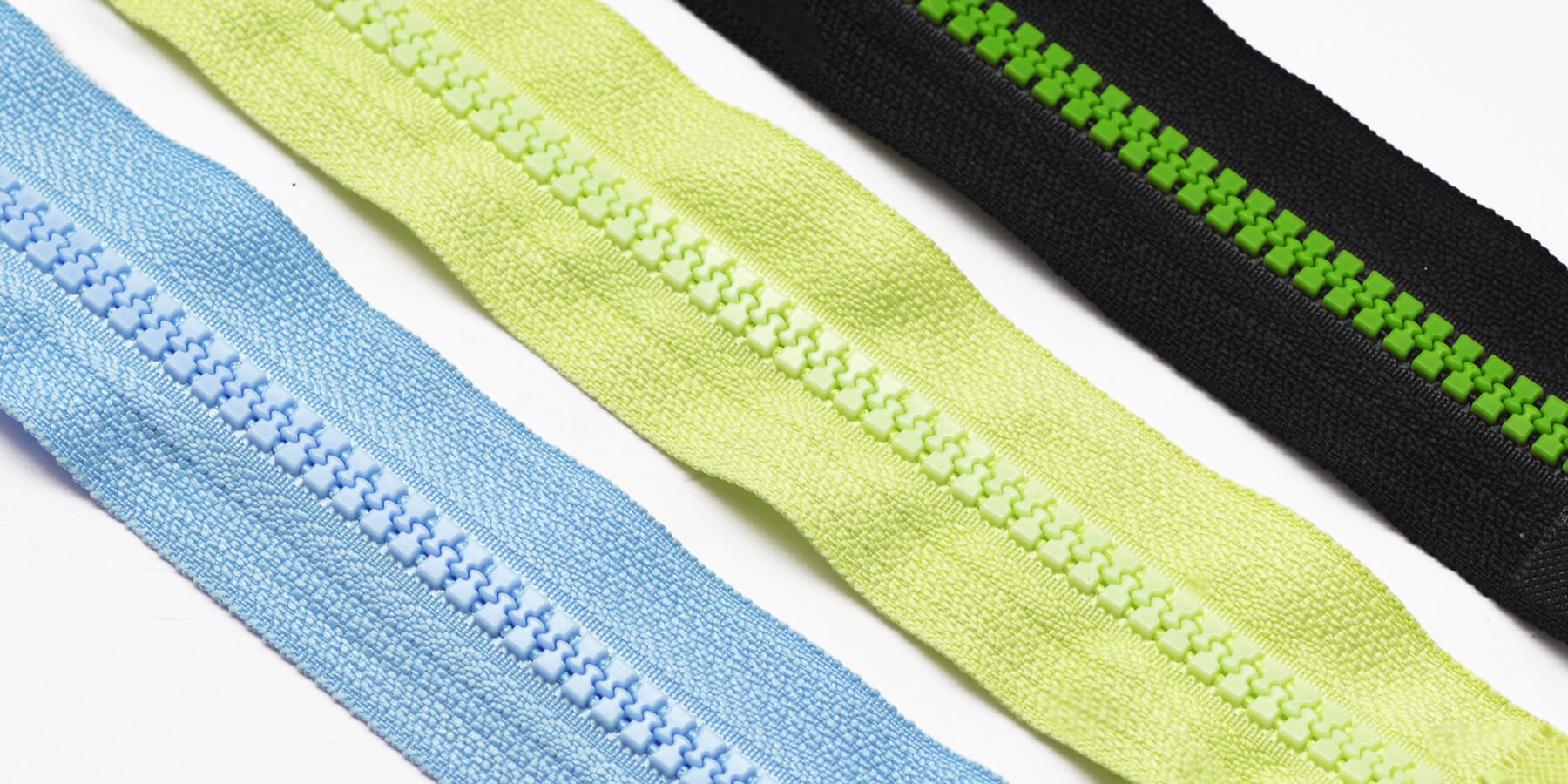
Once an ordinary zipper is sewn into a garment opening, the fabric can feel locked in place. When the wearer bends, crouches, or reaches, the fabric on either side of the zipper cannot follow the body, so the placket tightens, pulls, and deforms locally. The size 5 free-motion molded zipper addresses that restraint: a softer chain and a smoother slider channel allow the closed placket to move with the fabric instead of fighting it.
Construction and Process Features
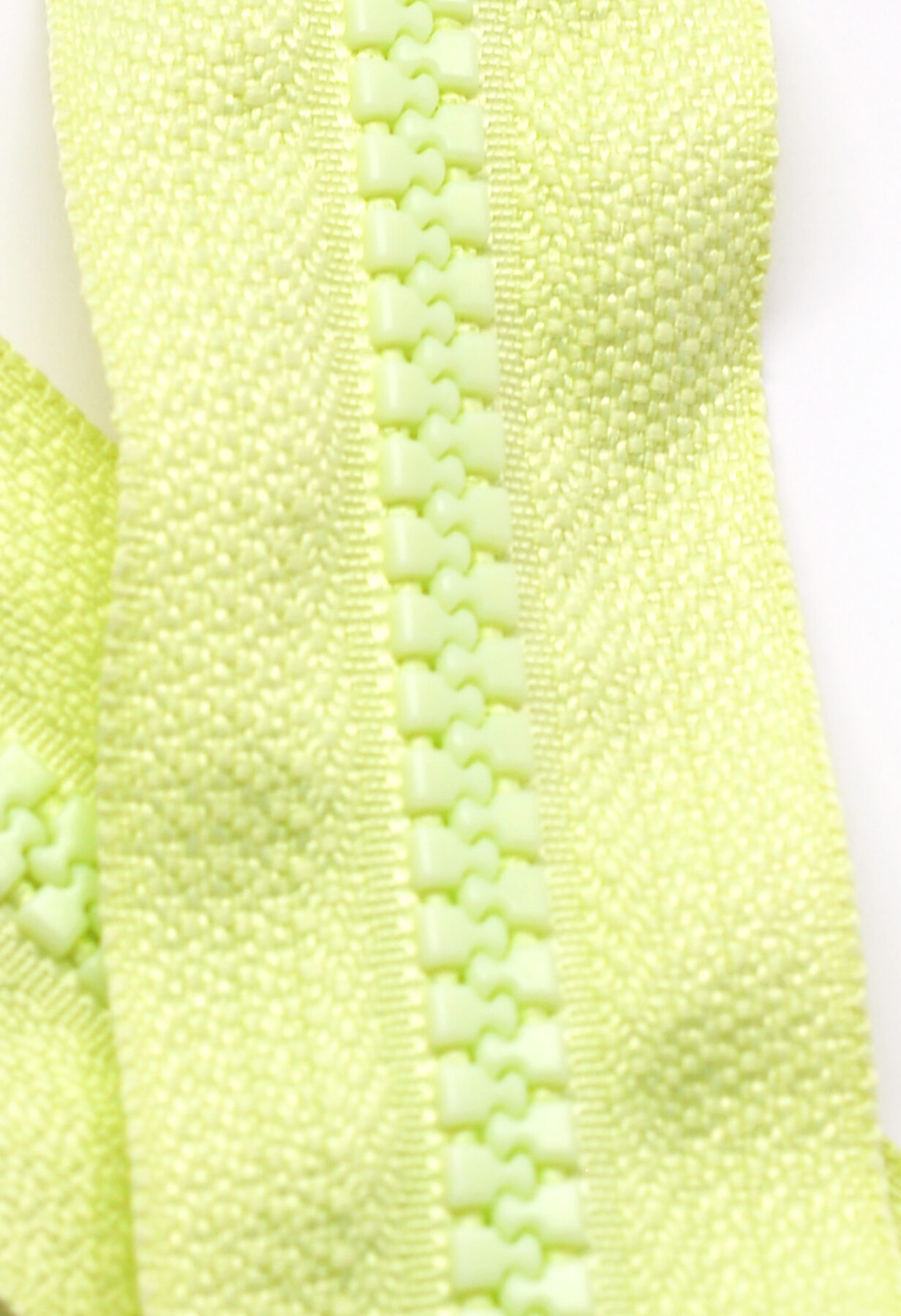
Molded teeth are formed individually on the tape to create a flexible chain. The free-motion approach differs in three areas. The tape is softer and thinner, so bending does not stiffen the placket. The tooth profile and slider channel leave a practical clearance, reducing the force needed to move the slider along the chain. The chain also has a smaller bending radius, so it can follow curved openings and body contours.
The result is a lighter opening action, but it is not an absence of constraint. A zipper is still a relatively rigid connector, and how much freedom it allows depends on chain width, tape softness, seam allowance, and fabric stretch. It is more accurate to treat it as a supportive structure for stretch plackets than as an elastic component.
Specifications and Applications
Size 5 is a medium specification suited to sports jackets, softshells, inner layers of shell jackets, stretch trousers, knit cardigans, childrenswear, and loungewear. It handles a reasonable opening frequency without making the placket feel heavy the way a thicker chain would. Lightweight fabrics and stretch knits can also use it, but a trial should confirm that the placket is not held back by the zipper.
Closed-end versions suit pockets and trouser sides, open-end versions suit center-front plackets, and two-way versions suit long sports coats. Where an opening sits in a frequently flexed area, such as a decorative opening near the knee or elbow, evaluate chain suppleness first rather than nominal size alone.
Selection Guidelines
- Match fabric stretch: Measure fabric elongation and recovery before judging whether the zipper will limit the placket; the more elastic the fabric, the more supple the chain needs to be.
- Run repeated cycling tests: Open and close the zipper for the number of cycles and at the speed required by the project, watching for changes in drag, tooth wear, and tape fuzzing.
- Check bending fit: Place the zipper on the actual curvature of the opening to confirm the chain does not lift and the slider does not stall.
- Confirm the slider type: Locking sliders are more stable in motion, while non-locking sliders open and close more freely; choose according to the use case.
- Define the end construction: Open-end, closed-end, and two-way versions are sewn differently, and end treatment directly affects how the zipper feels in use.
Sewing and Use Precautions
Do not stretch the tape to align the placket. Use a walking foot or a feed-dog foot so both tapes enter the seam in a natural state. On stretch fabric, a stretch thread or an adjusted stitch length helps prevent seam breakage when the placket extends. If the placket needs interlining, choose a soft, thin one, because heavy interlining cancels the suppleness of the chain.
Keep stitches, labels, and folded lining out of the slider travel, since trapped material causes a sudden increase in drag. After washing, check the chain for debris and the tape for distortion. If the action becomes stiff, clean the teeth first rather than applying lubricant, which attracts dust.
Common Questions
Does free-motion mean the zipper is elastic
No. It reduces the restraint the zipper places on the placket and the drag during opening and closing, but it does not provide meaningful stretch. The extension a garment needs must still come from the fabric, seam allowance, and pattern construction.
Can it be used on highly elastic fabric
It can be tried, but a sewn sample is essential. On highly elastic fabric the placket transfers tension into the chain, so confirm that the teeth do not separate and the tape does not elongate, and adjust seam allowance or use a softer chain if needed.
Will repeated stretching change the tooth pitch
Pitch is set during molding and does not change noticeably in normal use. However, sustained overload, forced pulling, or bending at low temperature can deform the teeth. Avoid forcing the slider past an obstruction.