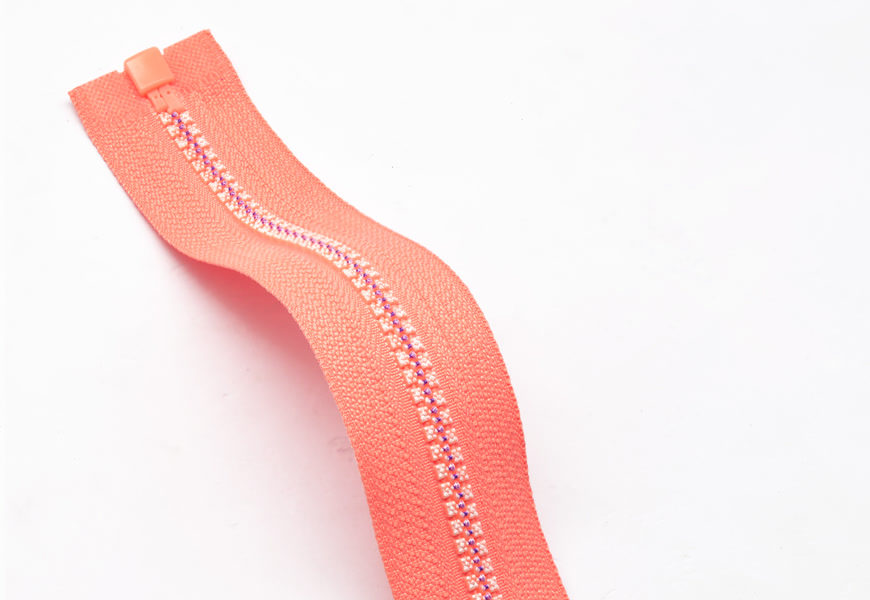
A size 5 crystal-lacquer plastic zipper presents a glossy, refined lacquer effect on the surfaces of injection-molded teeth. The samples combine coral tape with tooth surfaces carrying purple-and-white details, producing a fine decorative line when closed. Crystal lacquer describes a surface treatment and visual style; it does not indicate that the teeth are made from crystal, glass, or gemstones. Nor does the name establish hardness, transparency, or an abrasion rating. Development should consider surface appearance, molded tooth construction, slider fit, and care conditions together.
Construction and Visual Inspection of the Finish
The molded teeth provide the engaging base, while the lacquer effect changes reflection, color, and surface detail. Inspection should go beyond highlights on an individual tooth. Examine the continuity of gloss across the engaged chain, the purple-and-white or other approved details, and the visible area left by the tape edge. The pictured samples illustrate coordination with a related tape color, but lighting, exposure, and display devices affect photographs. An image alone should not serve as the color standard.
Place the sample under lighting relevant to the finished article and observe it from the front and at an angle. Move the slider slowly along the complete chain. Record the location of any localized resistance, surface scratch, or sudden color change, then inspect the tooth geometry and slider for possible causes. Repeat the visual and operation checks after gently curving the chain, which may reveal interference not visible on a flat display. Lacquer formulation, film thickness, and performance values cannot be determined visually and require separate documentation and test methods where relevant.
Size 5 and Garment Coordination
A size 5 chain can serve as a visible detail, but the suitability of a crystal-lacquer finish for a placket, pocket, or other opening depends on the actual pattern and use environment. Measure chain width and height, stitchable tape, slider envelope, and end-fitting dimensions. Confirm open-end or closed-end construction and effective length. A refined appearance is no reason to omit checks of slider movement, lining clearance, or the possibility that a folded edge may hide the decorated tooth surface.
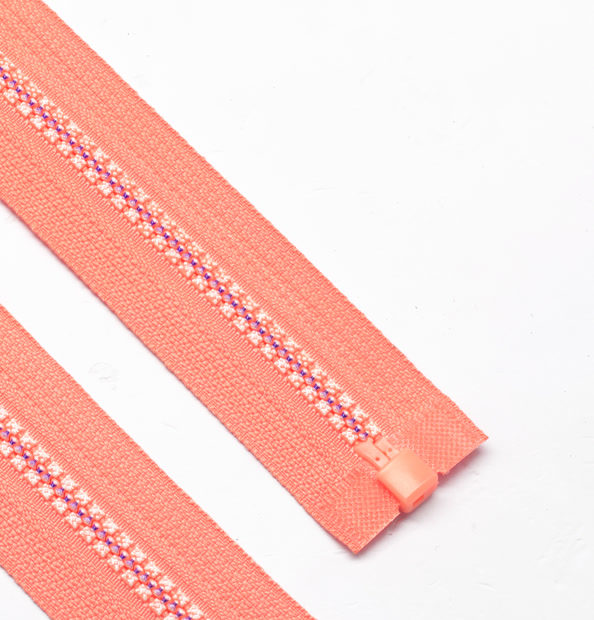
The coral tape and glossy teeth demonstrate that a related color palette need not make the chain disappear; contrast in brightness and small color details can preserve visual definition. A plain or contrasting tape would produce a different result. Place the sample beside the actual shell and lining, and check whether reflections from the teeth, pull, and nearby hardware work together. Pull color coordination is only an exterior requirement. Internal slider compatibility still needs to be verified by operation along the full chain.
Selection and Surface Approval Checklist
- Use consistent approval lighting: Confirm tooth color, gloss, and small decorative details under agreed viewing conditions and retain a physical reference instead of comparing screen images alone.
- Specify construction and dimensions: Identify the size 5 tooth profile, tape color, slider, termination, length, and measurement points so that the finish name does not replace structural specifications.
- Inspect after operation: Run the slider through straight and gently curved chains, then examine scratches, color, and gloss from the same viewing angle.
- Simulate care conditions: Test rubbing, washing, cleaning, and pressing on samples relevant to the article, record the conditions, and compare with an untreated reference.
- Approve the assembled appearance: Check exposed chain width, placket flatness, lining clearance, and pull coordination on the complete article rather than on the zipper alone.
Sewing, Pressing, and Cleaning Precautions
Use a presser foot that clears the chain and slider, and keep the needle within the stitchable tape so that neither needle nor foot scratches the lacquer. Feed both tapes evenly without forceful stretching. Do not stitch excessively close to the teeth merely to expose more decoration. Stop before repositioning the slider, remove loose threads after sewing, and inspect the lining so that fabric or rough edges cannot enter the slider path or rub repeatedly against the tooth finish.
Prepare a sample with the same construction before pressing. Verify temperature, pressure, dwell time, and protective layering, and avoid prolonged direct contact between a hot presser and the lacquer. Do not use unverified solvents, stiff brushes, abrasives, or sharp tools during cleaning. If resistance occurs, inspect for trapped fabric, threads, and debris before gently reversing the slider. Forceful pulling may damage both the visible finish and the mating components.
Common Questions
Do crystal-lacquer teeth contain actual crystal material
That cannot be inferred from the name. Crystal lacquer communicates a surface treatment and appearance, while the underlying zipper belongs to an injection-molded construction. Exact tooth material and lacquer composition should be checked in technical information rather than treating a decorative name as material evidence.
Does a glossier tooth surface indicate better quality
Gloss is only one appearance attribute. Approval also requires checks of engagement, slider operation, color consistency, tape condition, and garment fit, together with use-related surface testing. Strong reflection may also change the intended design, so the glossiest option is not automatically the most suitable.
Can standard plastic zipper pressing conditions be used directly
They should not be adopted without verification. Different lacquer surfaces may respond differently to heat, pressure, and chemicals even when the underlying molded teeth are similar. Make a trial with the actual shell, lining, and zipper, and confirm the conditions before applying them to finished garments.