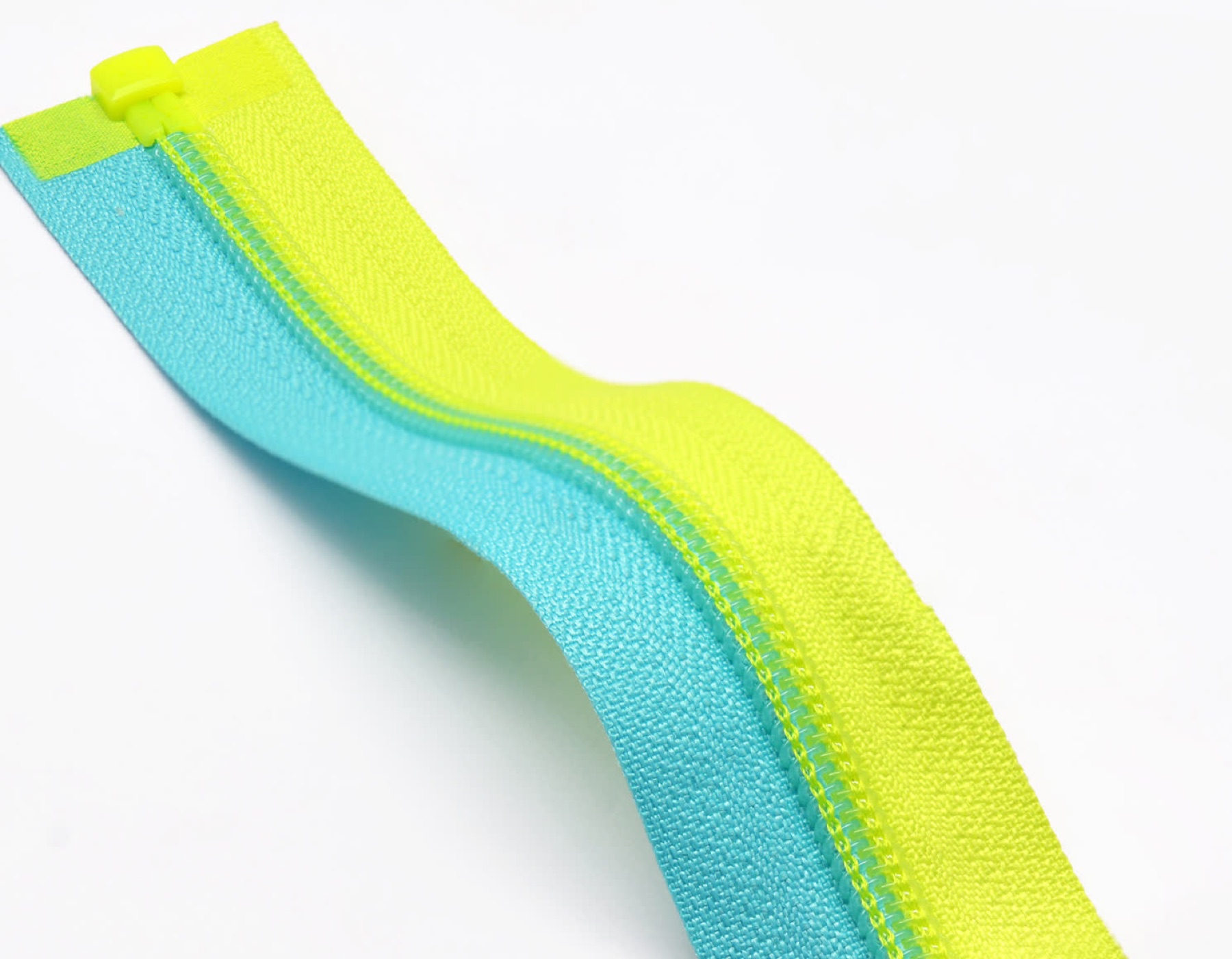
An interlocking zipper combines two colours of tape or teeth on a single zipper, so that closing it produces a clear colour division. It is a familiar decorative treatment on sports jackets, bags and childrenswear. The size 7 nylon interlocking zipper is built on a square-tooth structure, and its two tape sides can be paired in different colours so the zipper becomes a visible line on the placket rather than a purely functional part. The difficulty lies less in making one zipper than in colour registration, smooth running and colour stability after the garment is finished.
Structure and Construction
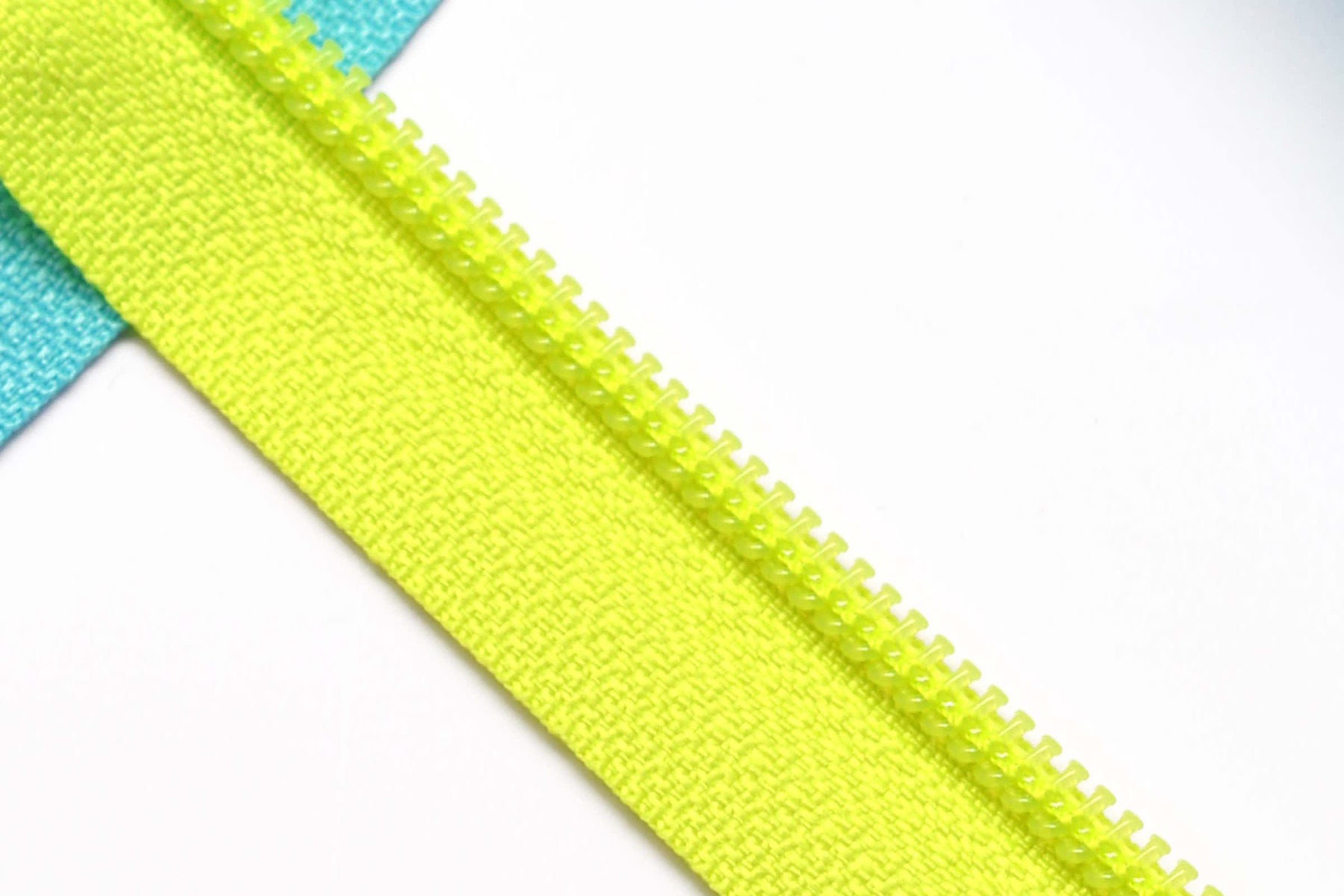
The teeth of a nylon zipper are formed from a monofilament coil that is sewn onto the tape. Size 7 sits in the medium-coarse range, with a larger tooth cross-section, so the closed chain looks fuller. The term square tooth describes a profile that reads as roughly square from the side and from above, with clearly defined corners; when the two chains mesh, the resulting dividing line stays comparatively straight.
The key to an interlocking design is how the two colours are combined. The left and right tapes may differ, the teeth and tape may differ, or both may differ at once. Each combination shows a completely different proportion of colour when the zipper is closed, half open or fully open, so sampling has to be judged at the real opening length and slider position rather than on a short piece of colour card.
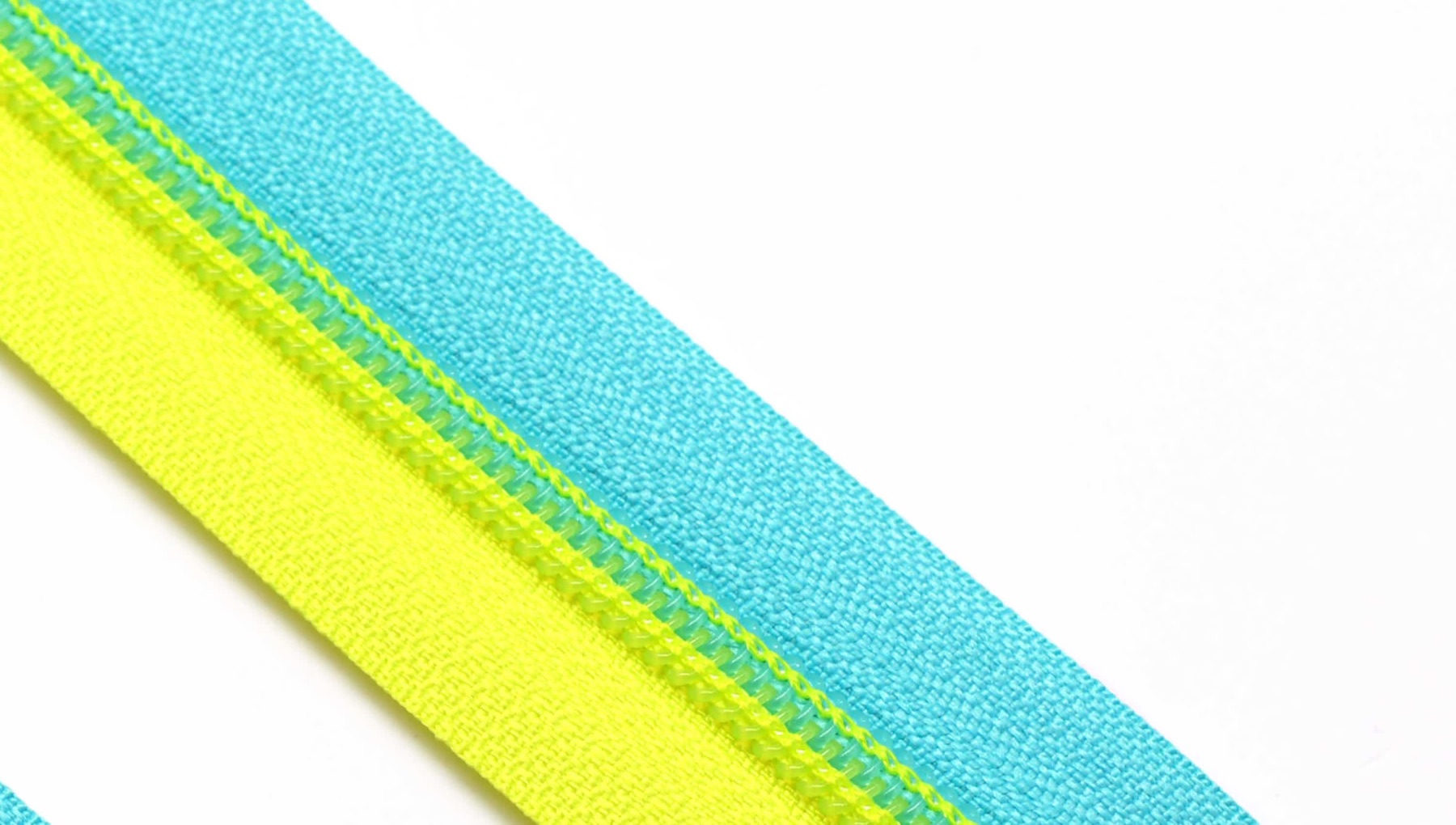
Two-tone assembly is less forgiving of sewing tolerances. If the weaving tension, dye lot or shrinkage of the two tapes differs, the closed zipper may shift slightly or develop a wave, and the colour boundary deforms with it. The two sides should therefore be managed as a matched pair and never replenished separately.
Sizes and Applications
Size 7 is a moderate width suited to the front placket, chest pockets, side pockets and detachable hoods of medium-weight fabrics, and is common on shell jackets, ski wear, work jackets and mid-sized bags. On lightweight shirting or silk it looks heavy, and sizes 3 or 5 are usually preferred.
Two-tone designs are most striking when a dark colour meets a bright one, such as navy with fluorescent yellow or black with orange. If both sides use low-saturation colours, the zipper reads as almost monochrome from a distance and the division appears only up close, which suits restrained styles. Place the zipper on the actual fabric and check it once in daylight and once under indoor light to confirm the direction of the colour difference.
Selection Checklist
- Decide the colour combination first: state whether the tapes, the teeth or both differ, and mark where each colour sits.
- Manage the two tapes as a pair: the two sides for one garment should come from the same lot to avoid shade and shrinkage mismatch.
- Check the closed boundary: close the zipper at garment length and confirm the colour line is straight, untwisted and symmetrical at the slider stop.
- Match slider and ends: slider colour and finish should sit well with the two-tone tapes, and the open-end or closed-end structure must follow the garment opening.
- Fix the length at sampling: shortening an interlocking zipper changes the colour ratio at the ends, so the length should be settled before bulk production.
Sewing and Use Notes
- Mark the allowed needle zone on the tape before sewing so the seam does not press on the chain or enter the slider channel.
- Keep feed tension equal on both sides; once one side of an interlocking zipper is stretched, the closed chain waves and misaligns.
- Use a needle size that matches the fabric so the tape does not end up with oversized needle holes.
- Keep irons away from the chain and slider, and control temperature by tape material to avoid gloss differences between the two colours.
- If the zipper becomes harder to close in use, check for trapped fabric or debris before pulling harder and deforming the teeth.
FAQ
Will the two colours drift apart after repeated washing
Colour change depends on the dyeing process and washing conditions, and pairs with a large light-dark contrast show it soonest. Run a wash test using the garment's care method during sampling and write the acceptable shade tolerance into the approval standard.
Why does the closed boundary look slightly crooked
The usual causes are different tape tension or shrinkage on the two sides, or one side being stretched during sewing. First confirm the tapes come from the same lot, then check feed consistency.
Can a size 7 interlocking zipper be used on light fabric
It can, but light fabric needs a firmer interlining, otherwise the weight of the zipper pulls the placket into a wave. For very light fabric, choose a smaller interlocking size instead.