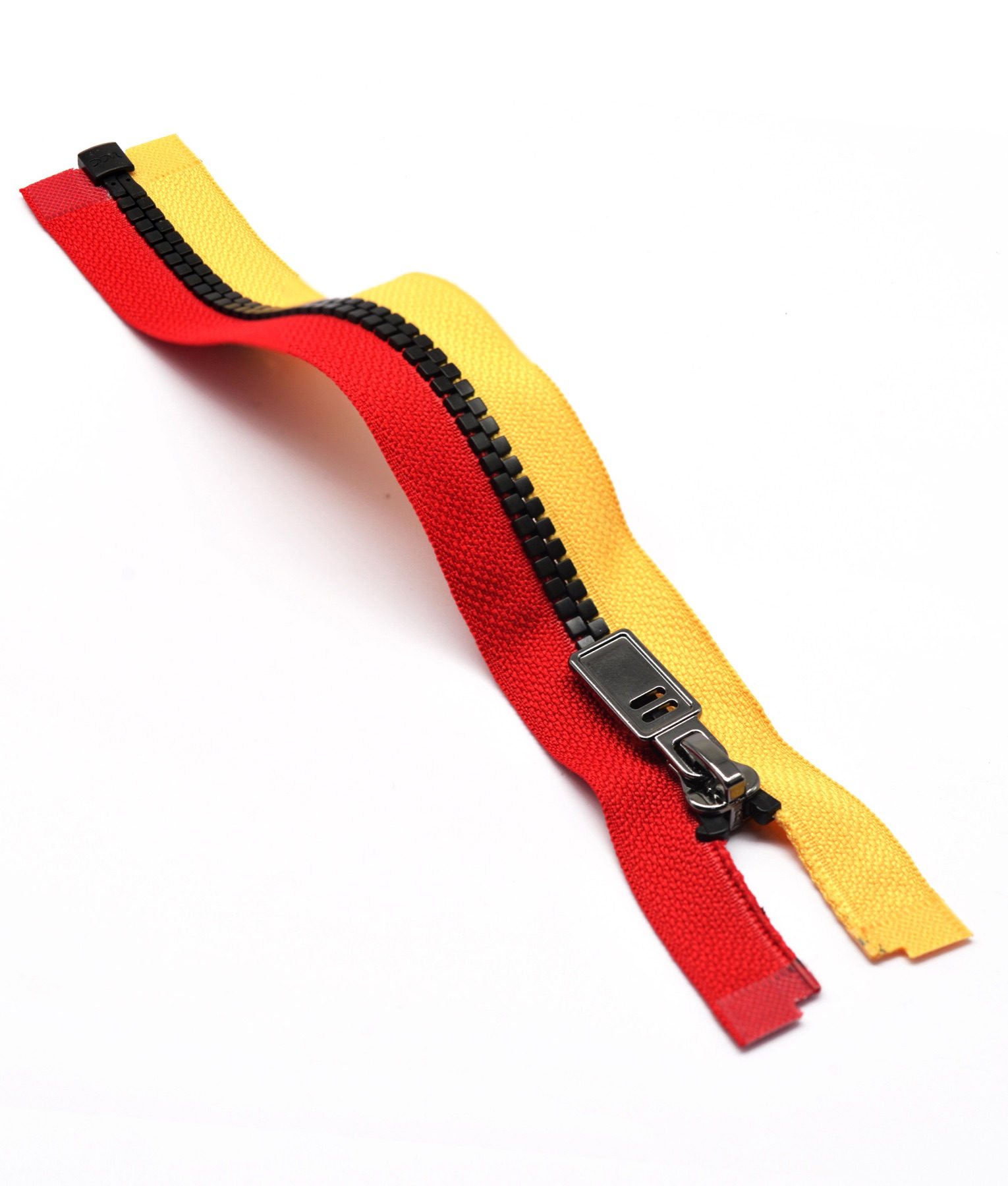
A size 5 interlocking square-tooth plastic zipper is recognized by its chain: each tooth is close to a square, and the two chains interlock to form a regular grid-like line that looks like a string of small blocks when closed. The sample pairs red and yellow tapes with a black chain, which makes left and right pairing easy to observe and demonstrates a color-block option. Its role is often more than closing an opening; it also carries part of the visual identity.
Structure and Construction
The square tooth is one molded profile. Plastic is formed tooth by tooth along the tape edge, the tooth face is relatively flat, the corners are straight, and spacing is stable. When closed, the two chains interlock and the square edges engage, producing a continuous horizontal rhythm. Compared with a rounded basic tooth, the square profile is crisper, with stronger light and shadow, and is easier to see both in photographs and on a garment.
Interlocking describes the relationship between the two chains: each tape carries a row of teeth, and the slider presses the rows together as it passes. Because closure depends on this alternation, square teeth place high demands on tooth pitch, tooth height, and slider channel precision. Uneven pitch or a single high tooth can create a local mismatch in the closed line, visible as one large square next to a small one and felt as inconsistent resistance.
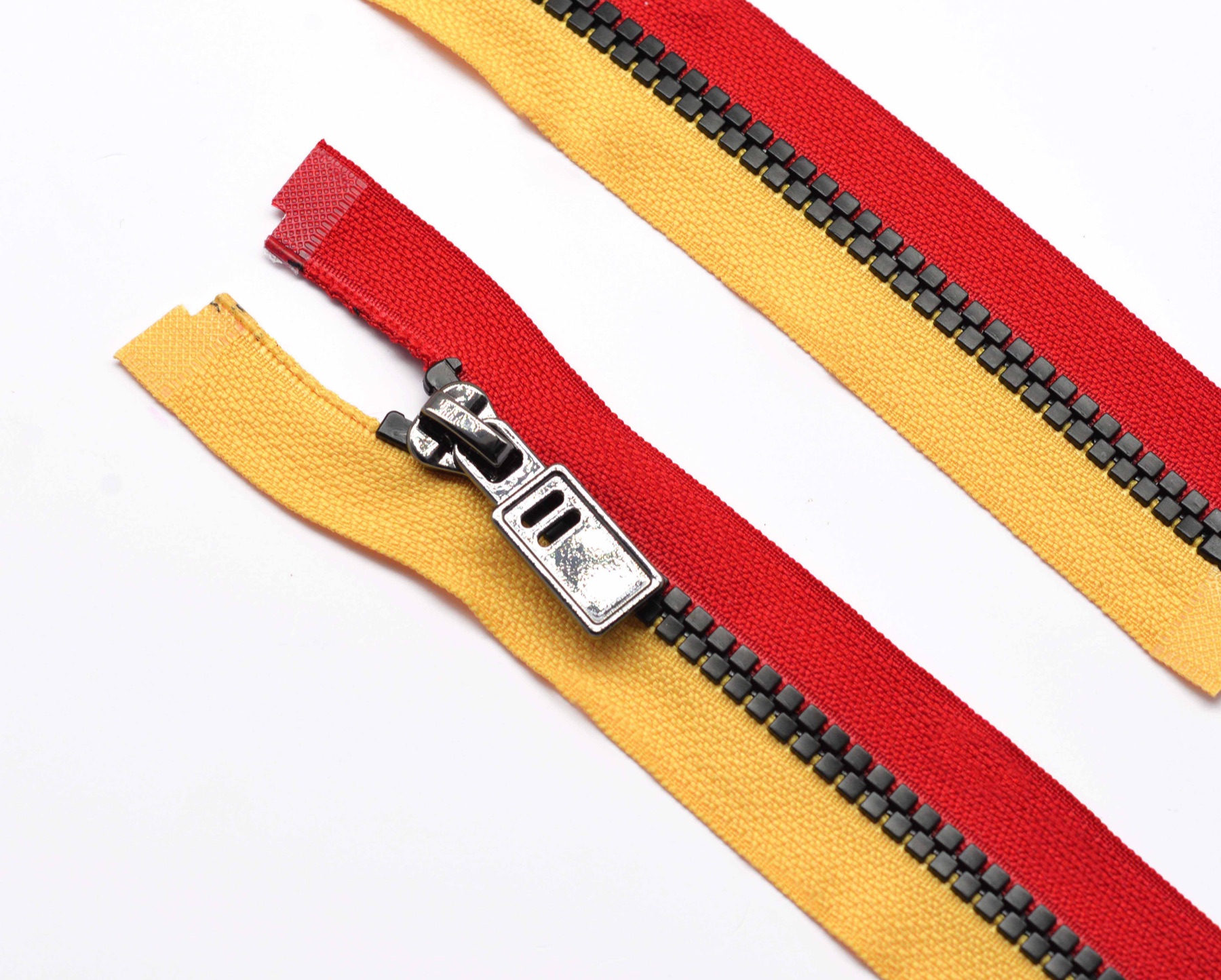
The two-color tape is a presentation choice that makes comparison easier. Production can use the same color on both sides or a deliberate contrast; color changes appearance only, not the engagement structure. Note, however, that tapes of different colors from different lots may differ in shrinkage and colorfastness. After sewing, one side can end up longer than the other, so a two-color program should include tape performance in approval.
Sizes and Applications
Size 5 is a medium specification, with a chain and slider envelope suited to medium-weight fabrics. Typical uses include center fronts on jackets and workwear, sports outerwear, one-piece garments, main openings on backpacks and waist bags, detachable hood edges or components, and plackets or pocket openings where the zipper is meant to be visible. The regular lines of square teeth work well with webbing, color blocking, and topstitching, giving a clean style a visual focal point.
On light fabric, the size 5 square chain looks heavy and can press a hard edge. On heavy fabric, confirm that seam allowance, slider envelope, and the end step are sufficient. For curved openings, square teeth are more rigid than coil, so the operating feel after bending should be confirmed first. For load-bearing areas that are opened forcefully and often, evaluate a larger size or a different profile instead of choosing by appearance alone.
Selection Checklist
- Verify interlocking fit: Install the slider on the complete chain and run it end to end, checking that engagement stays continuous at bends and near the ends.
- Match tooth profile and slider: Square corners must suit the slider channel. When changing a slider, test it again rather than assuming compatibility from the nominal size.
- Decide the tape color program: A single color looks more unified, while contrast is more expressive. For two colors, confirm colorfastness, shrinkage, and left/right orientation.
- Confirm ends and length: Closed-end, open-end, and separable designs use different stops. For a long opening, confirm the strength and position of the bottom stop.
- Retain an appearance sample: Record tooth color, tape colors, slider finish, and the front profile of the square tooth, then check bulk output for color variation and line continuity.
Sewing and Use Precautions
- When sewing the tapes separately, confirm orientation first so the two-color tapes are not reversed; temporary marks on the back can help.
- Use a foot that passes the square chain reliably, keep the needle in the stitching area, and avoid the tooth root or square corners.
- Keep feed tension equal on both sides. With two-color tapes, watch for one side becoming longer; baste and position first if necessary.
- Slow down at the slider and ends to prevent the needle from striking hard teeth, and check that the slider runs freely along the whole chain afterward.
- Avoid direct high heat on the chain during pressing, and do not remove debris from the tooth gaps with a sharp tool that could damage the corners.
Common Questions
Does two-color tape affect zipper smoothness
Color itself does not affect engagement, but if the two tapes shrink differently, their lengths after sewing may diverge and change the load on the chain. Check shrinkage at incoming inspection and run a sewn-sample test to confirm that neither side is pulled tight.
How do square teeth differ from ordinary molded teeth
The main differences are the tooth outline and the closed line. Square teeth have a flatter face and straighter corners and form a grid-like rhythm when closed; round teeth feel softer and more rounded. Both must match their own slider and cannot be interchanged on appearance alone.
Can I replace only one tape on an interlocking zipper
Replacing one side at the finished-goods stage is not recommended. The structure, shrinkage, and thickness of both tapes need to match, and a single replacement can disturb tooth pitch and the closing line. Make color adjustments at the sampling stage, with both tapes and the chain approved together.