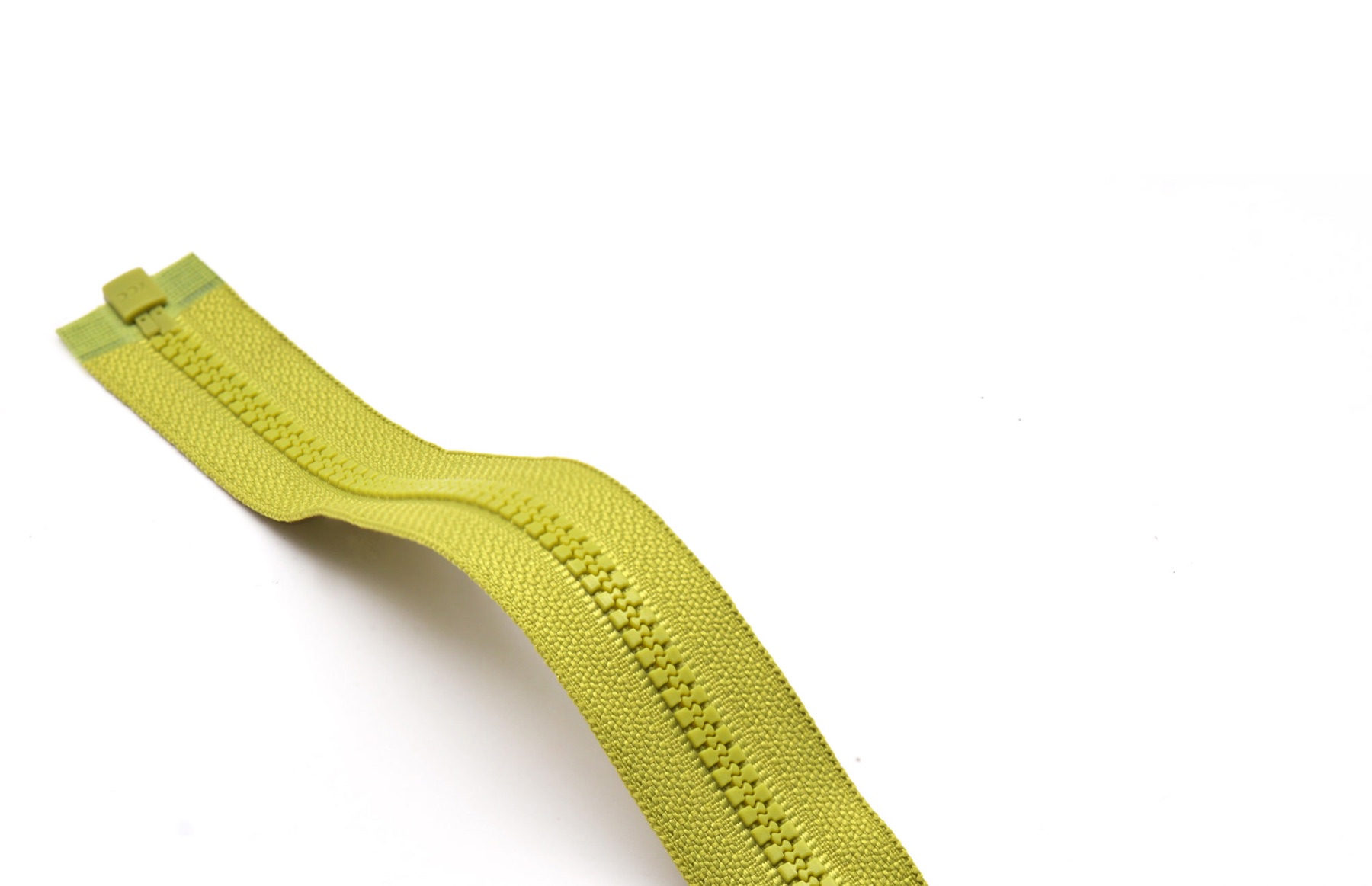
A zipper size number is a useful starting point, but it is not a complete specification. Sizes 3, 5, and 7 generally distinguish chain proportions, while actual tooth width, tape width, slider dimensions, and end fittings may vary with tooth type and product construction. Ordering only by a number such as 5 or 7 can lead to slider mismatch, insufficient placket space, or an unsuitable visual scale. A reliable specification combines the size designation with tooth construction, measured dimensions, opening type, and the intended application.
What a Size Number Represents
The number is commonly associated with the width class of the closed tooth chain and is often explained using an approximate millimeter scale. However, different constructions should not be forced into one assumed measurement. Continuous nylon teeth, individually molded teeth, and metal teeth have different geometry. Even at the same nominal size, chain thickness, flexibility, and the internal slider channel may differ. The number is therefore a series identifier rather than a substitute for drawings or physical measurement.
For measurement, close the zipper and lay it naturally flat without stretching the tape or compressing the teeth. Use a suitable gauge to record the closed chain width, then measure each tape, the total width, slider outline, and space occupied by end fittings. Retain the sample together with the measurement method and readings so that development, sourcing, and production teams do not measure different locations.
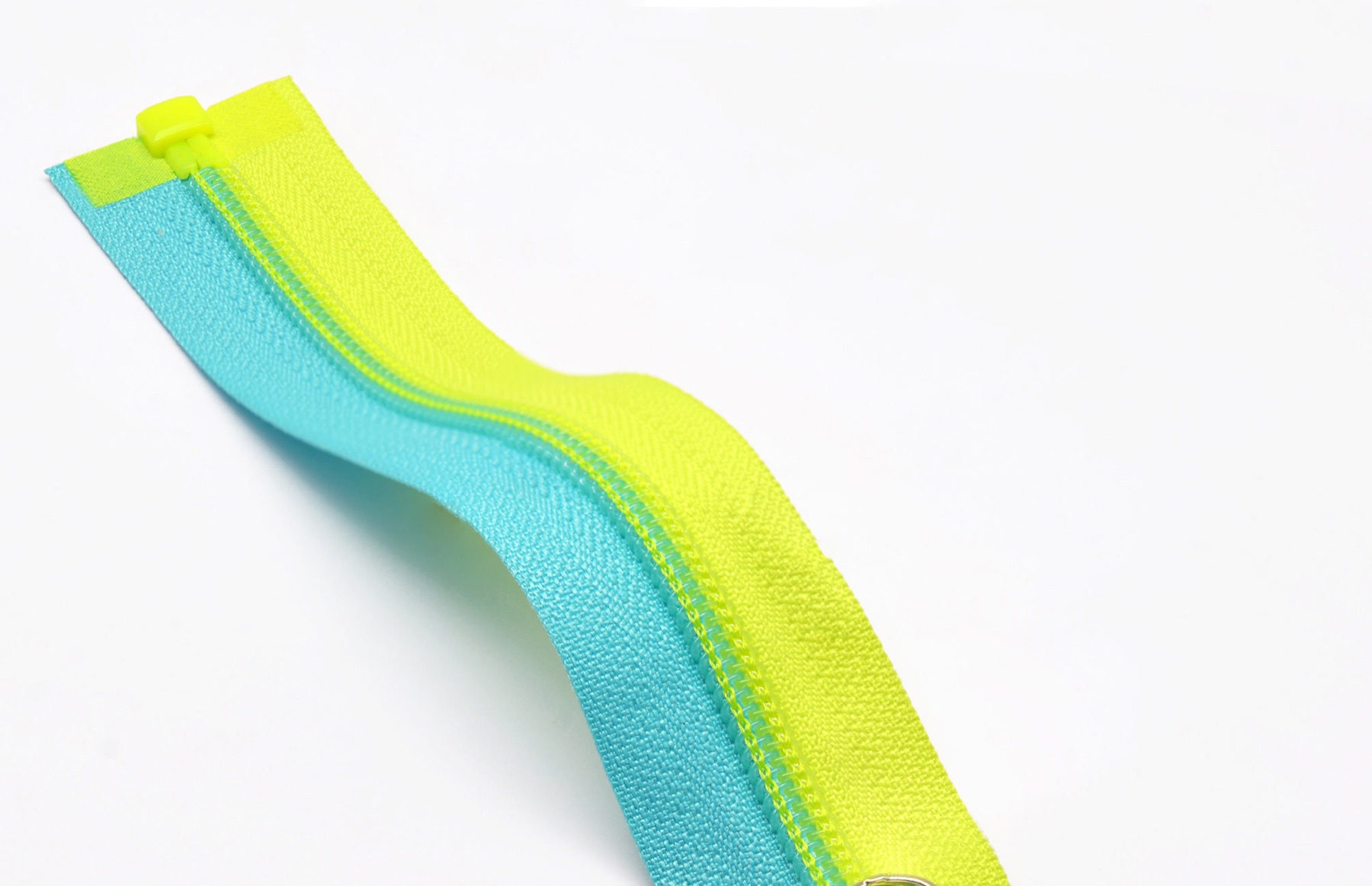
Choosing among Sizes 3, 5, and 7
Size 3 often has a smaller visual footprint and is a common candidate for skirts, lighter tops, and compact pocket openings. Size 5 is frequently considered for jackets, trousers, bags, and general closures. Size 7 provides a more pronounced chain and can suit larger openings or designs that deliberately emphasize the zipper. These are design tendencies, not fixed product assignments, and none of the numbers directly establishes a strength rating.
Fabric thickness, seam allowance, lining, and garment movement all influence suitability. Thick fabric does not automatically require the largest size, and lightweight fabric is not restricted to size 3. A size 7 chain may be chosen specifically as decoration, while a narrow opening in thick fabric may still require careful examination of slider and tape clearance. Evaluate the complete assembly rather than following a single rule.
Specifications beyond the Number
- Tooth type and material: Nylon, molded, and metal chains differ in flexibility, appearance, and sewing requirements even at the same nominal size.
- Opening construction: Specify open-end, closed-end, two-way, or other construction, including pin-and-box handing and effective opening length.
- Slider and pull: Check internal fit, external dimensions, locking needs, and finger clearance rather than approving only a surface color.
- Tape and end fittings: Confirm stitchable area, total tape width, stops, and end treatments against the pattern.
- Use and care: Include rubbing, bending, washing, pressing, and realistic loading in sample evaluation.
Where one style uses several sizes, maintain a separate sample record for each. The test result for one size should not automatically cover another. A change in tooth type or slider also requires new operation and sewing trials even if the size number remains unchanged.
Verification from Pattern to Finished Article
Mark the effective opening, fitting positions, tape stitch lines, and slider operating space on the pattern, then compare these locations with the physical zipper. The sewn sample should include the actual shell, lining, interfacing, and neighboring construction. Check placket flatness, exposed chain width, and whether fabric or trim obstructs the pull. For curved openings, operate the slider through its complete travel while the sample remains curved.
If the article will be washed or pressed, process the zipper together with the garment materials and measure again. Inspect the chain, tape, stitching, and garment dimensions rather than evaluating the zipper alone. If resistance increases, investigate tape shrinkage, trapped seam allowances, chain distortion, and slider fit before assuming that the size number was wrong.
Common Questions
Does every dimension of a size 5 zipper equal five millimeters
No. The designation mainly identifies a chain-width class. Tape, slider, thickness, and fittings do not all share that measurement, and tooth constructions may measure differently. Use an approved physical sample and construction data.
Is a larger size always stronger
A larger size often provides a larger tooth chain, but real durability also depends on material, construction, slider, stitching, and use. Do not make an absolute strength judgment from the number without relevant tests.
Can sliders of the same nominal size be interchanged directly
They should not be swapped without verification. The internal channel must suit the tooth geometry and chain, and a similar outline or size number does not guarantee smooth operation. Recheck locking requirements, full travel, curved operation, and sewing clearance after any substitution.