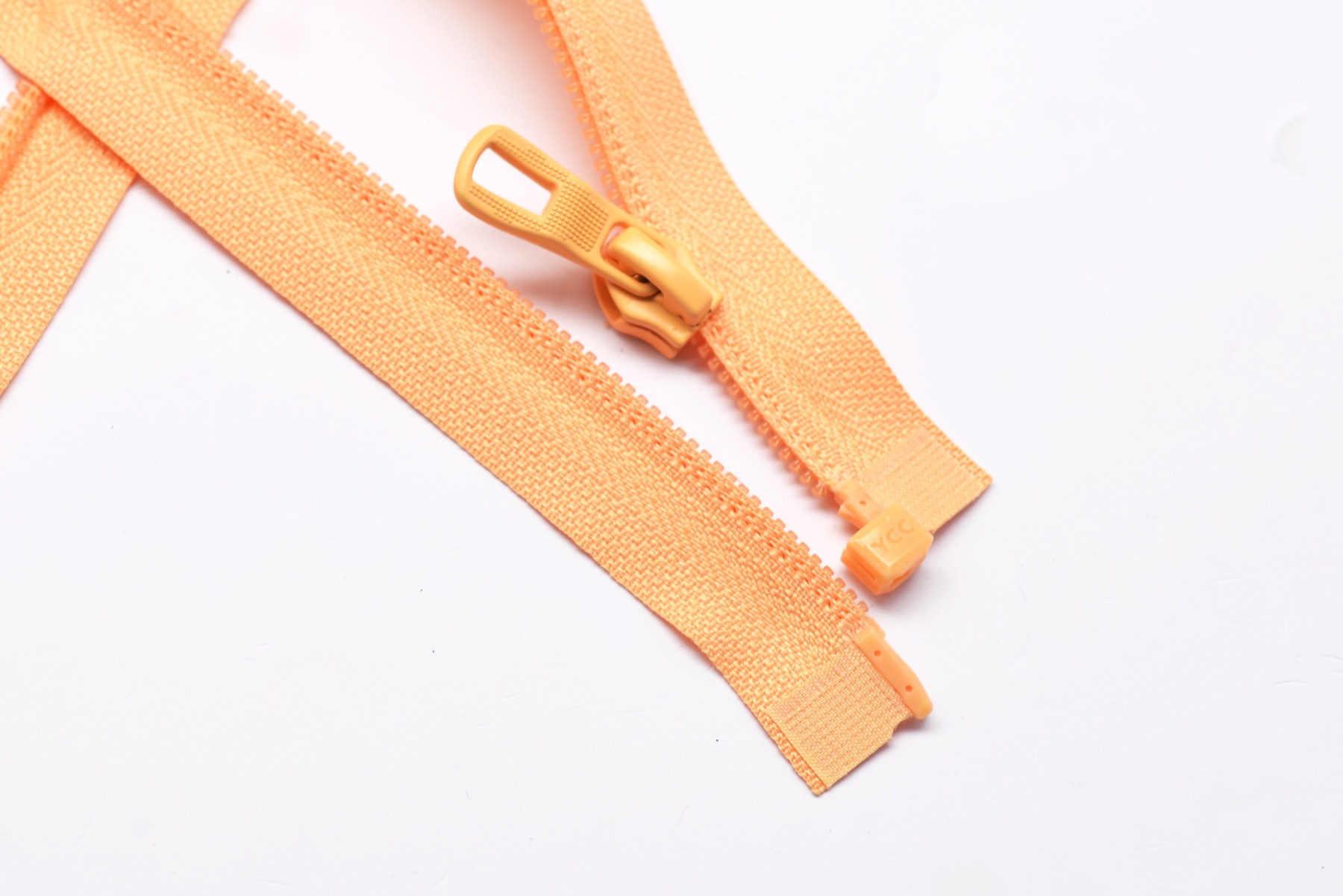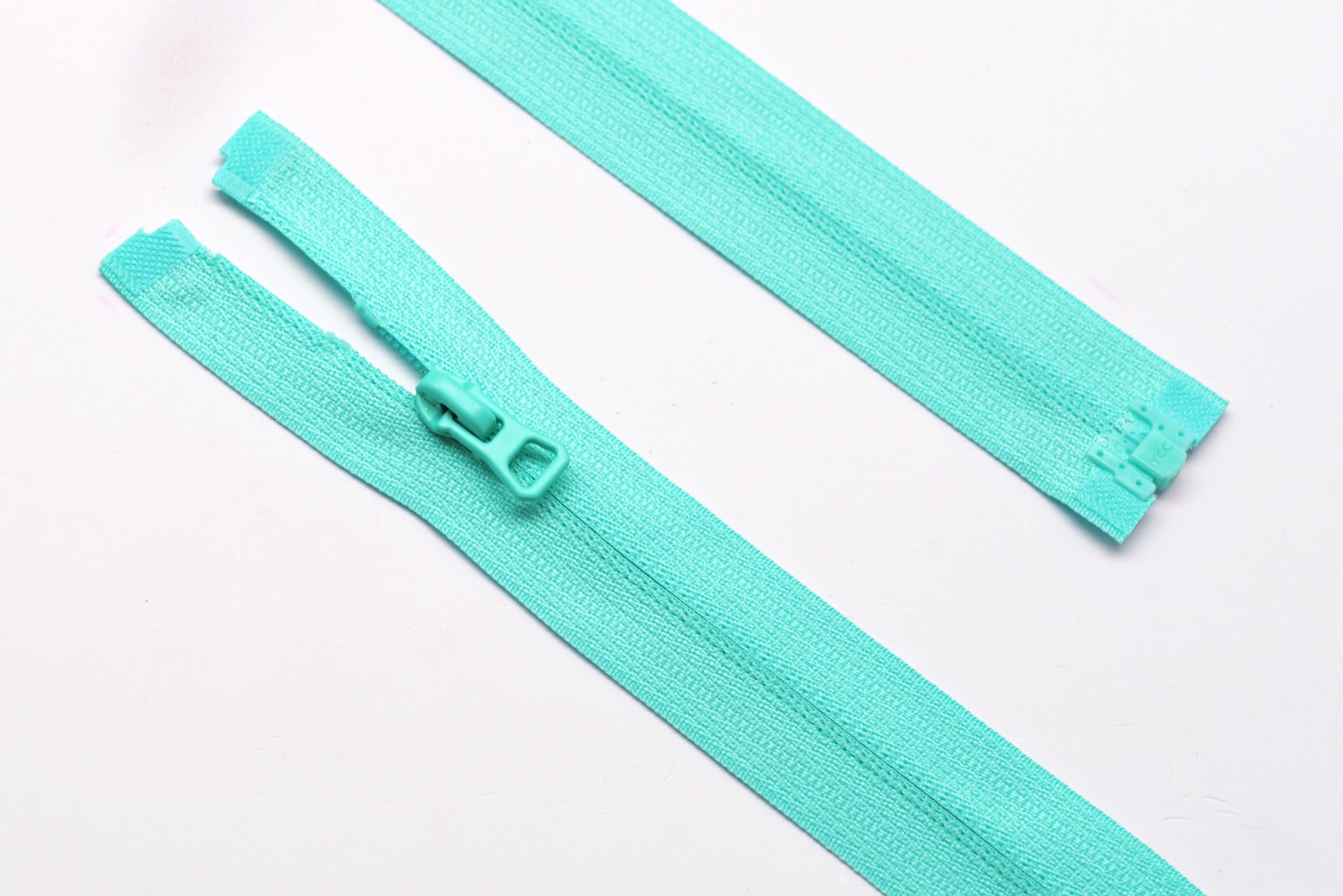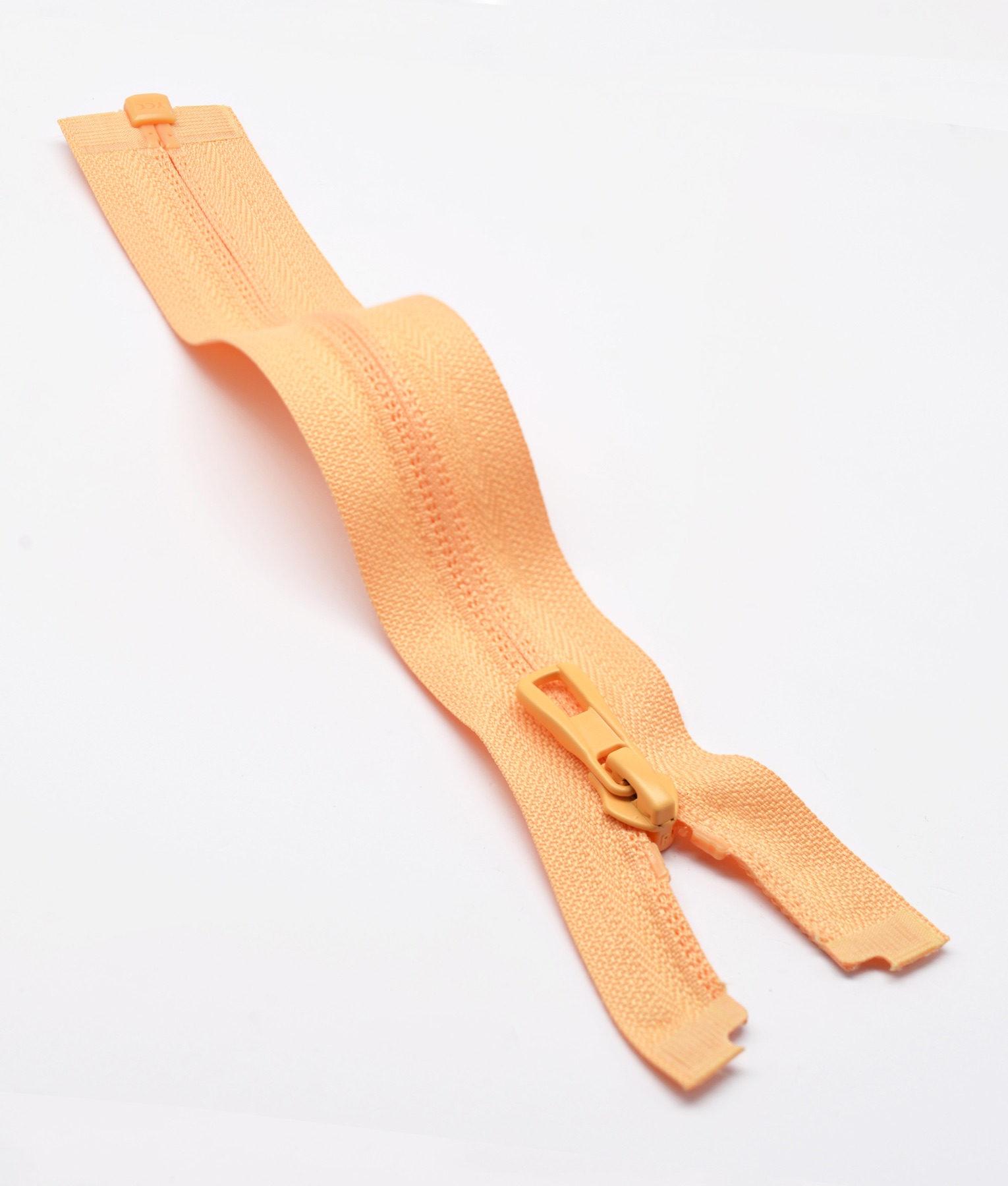
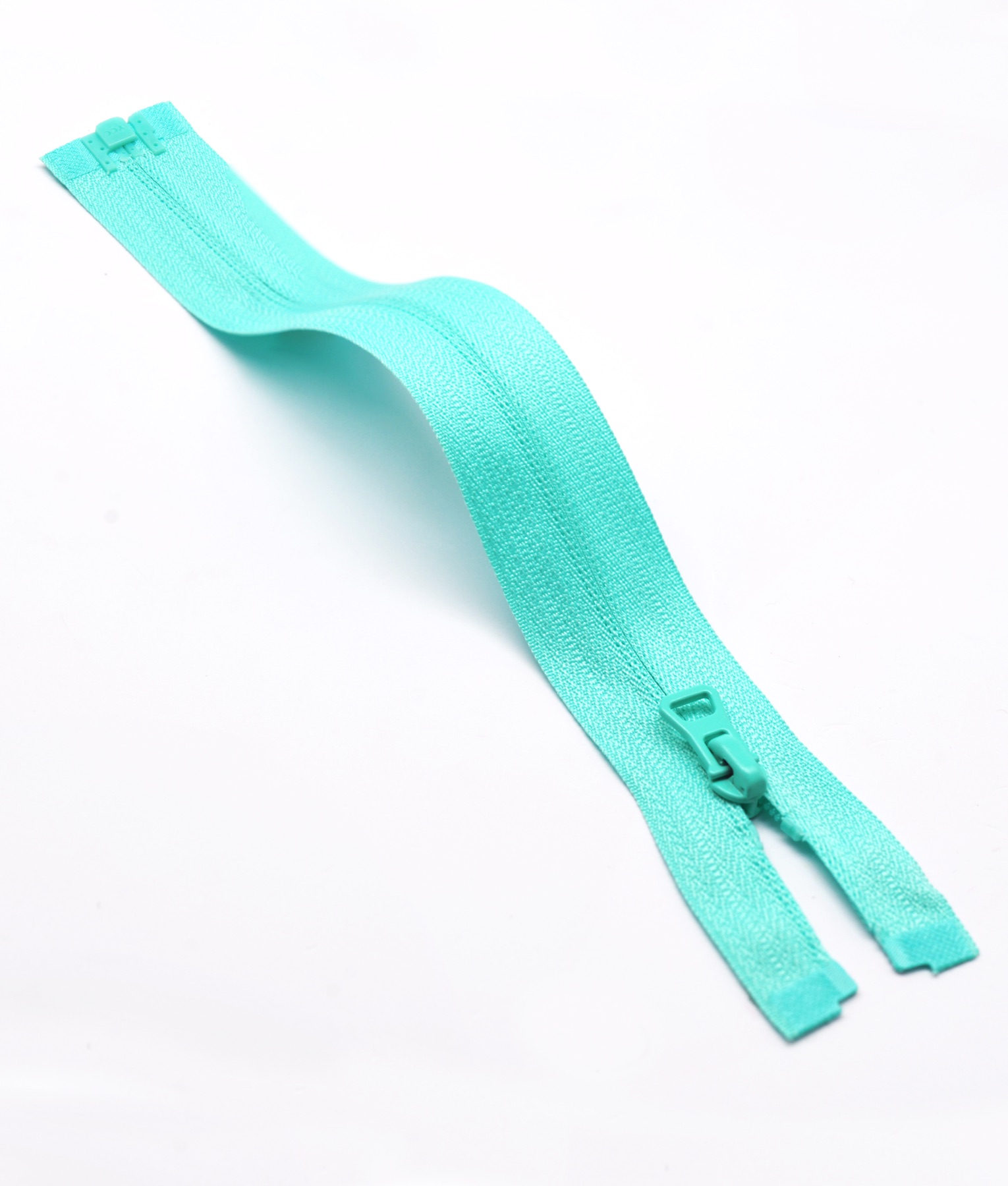
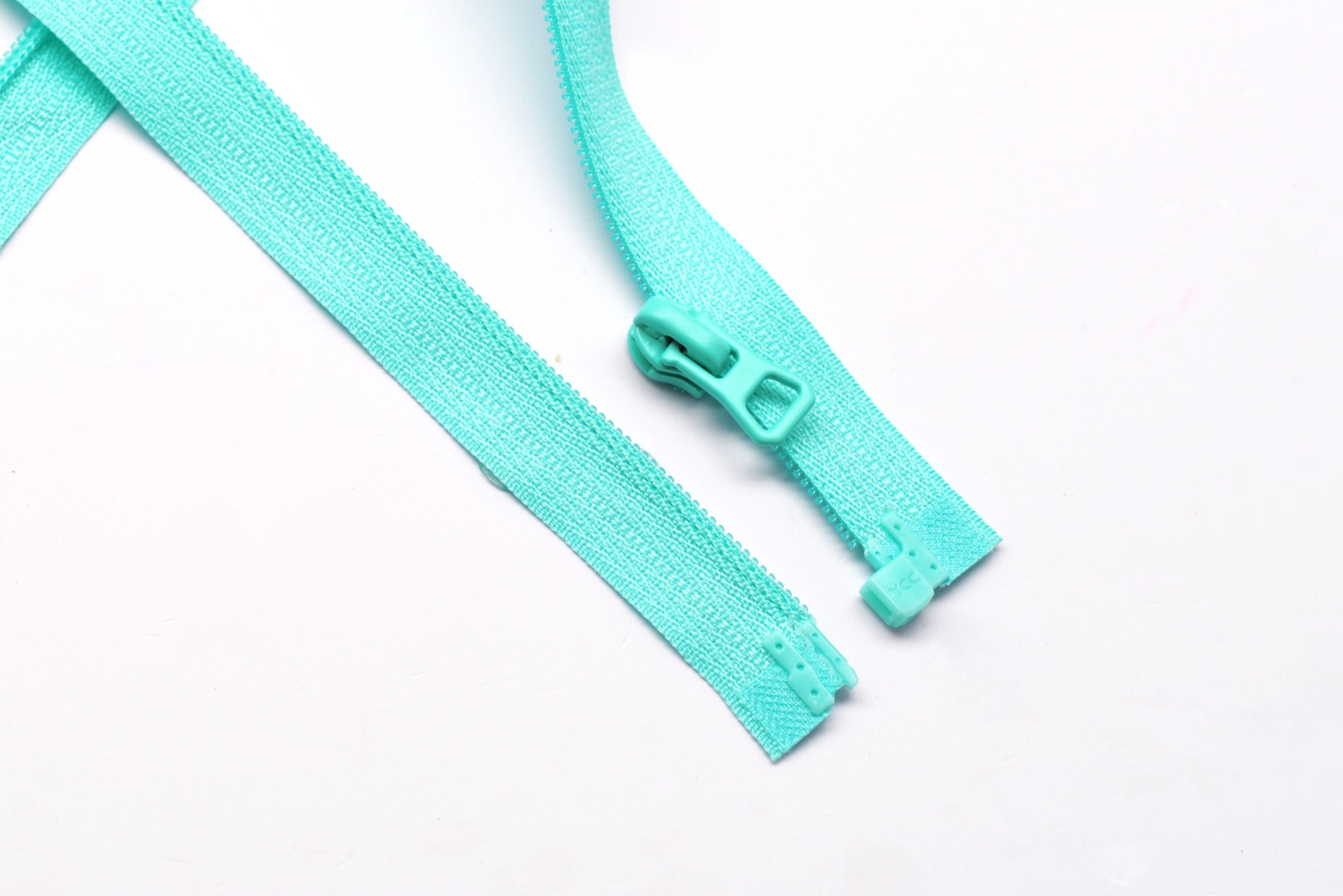
A nylon reverse zipper orients the nylon coil opposite to a conventional exposed arrangement and uses a corresponding slider, so the outside of a garment presents more tape texture and fewer prominent elements. Sizes 3 and 7 suit garments and bags seeking a clean, low-profile closure. Importantly, “reverse” describes coil orientation and component coordination. It does not automatically mean a double-sided zipper that can be operated from both faces, nor does it imply waterproof performance. Selection must confirm face, slider, ends, and operating direction.
Structure and Process Characteristics
Continuous nylon elements interlock to form the closure. Reverse construction changes coil presentation relative to the tape and finished outside. The slider guides the two sides into engagement or separation along a defined path, so its shape and installation direction must match the reverse construction. Size alone does not make a conventional slider interchangeable.
A clean appearance does not remove the need to manage face and back. Confusing the panel, tape, or pull orientation can place the pull on the unintended side, reverse the front opening, or produce abnormal operation. During sampling, photograph both the outside and inside of the finished article, then inspect engagement and slider travel over the full length and in curved conditions.
Sizes and Applications
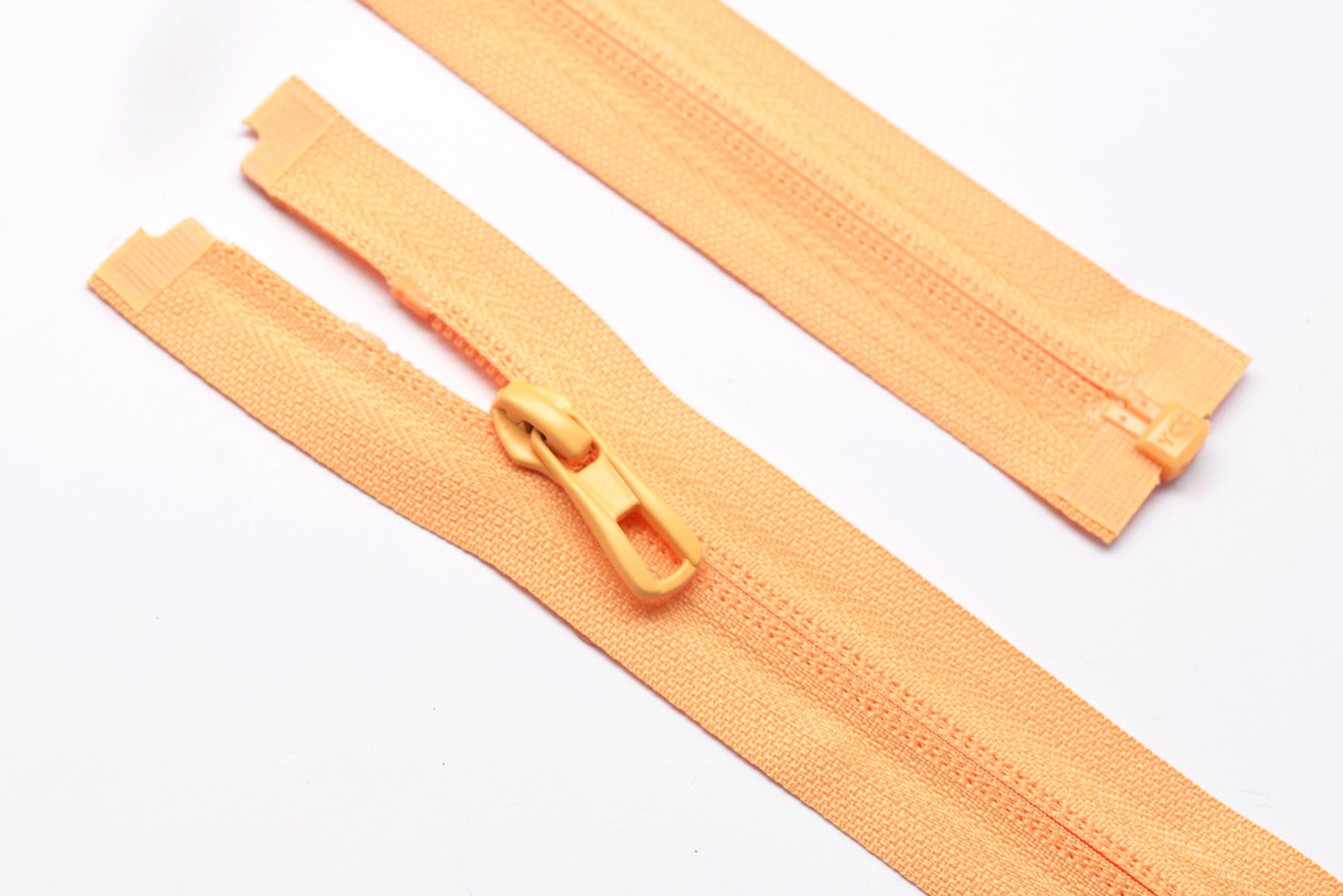
Size 3 suits locations requiring lightweight components and a finer closure line. Depending on fabric thickness and pattern, it can be considered for lightweight garments, pockets, inner openings, or small bags. Size 7 has a more substantial visual presence in its tape and coil and may be considered for casual jackets, fronts, or wider bag openings where a clear operating area is desired. Size does not directly establish the load capacity of a finished garment; fabric, opening length, frequency of use, and available space also matter.
Reverse construction can conceal or soften the appearance of the coil, but tape edges, stitches, and end components still need to be included in the pattern. Make a sample for curved fronts and soft fabrics to confirm that feeding or tension does not create a wavy closure line.
Selection Checklist
- Define face and back: Mark the finished outside, coil orientation, pull position, and closing direction on the sample instead of relying on the word “reverse” to communicate every requirement.
- Match slider and coil: Check size, construction, and sliding direction together, then test the full travel. Do not assume that a conventional slider of the same size is interchangeable.
- Specify the opening: Confirm open-end or closed-end construction, effective length, stops, pin-and-box or other end components, and left- or right-hand operation against the pattern.
- Sample with actual fabric: Sew the intended fabric, interlining, and seam allowance together, checking appearance and feel while flat, curved, and hanging.
- Separate appearance from function: Reverse construction mainly changes presentation. If water shedding or double-sided use is also required, select the appropriate construction and validate it separately.
Sewing and Use Precautions
- Mark face, back, and upper and lower ends on both panels and samples before sewing. Confirm the final pull position before placing the tape against the garment panels.
- Use a presser foot that clears the coil and slider. Keep stitches in the tape sewing area at an even margin, preventing the needle from contacting the elements or end components.
- Feed both layers together without stretching the nylon tape. Position curved and soft fabrics in stages first to prevent twisting or waviness along the reverse closure.
- Use a press cloth and protect the coil, slider, and molded ends during ironing. Do not use high heat and heavy pressure to force a direction change; validate cleaning and drying on a sample.
- If the slider becomes difficult to move, stop and check for trapped fabric, incorrect orientation, or misaligned ends. Do not force the pull backward or drag it aggressively.
Frequently Asked Questions
Is a reverse zipper necessarily a double-sided zipper?
No. Reverse describes coil orientation. Double-sided use also requires suitable slider, pull, and end-component configurations, which must be confirmed from the actual construction and operating tests.
Can size 3 and size 7 sliders be interchanged?
They should not be interchanged on the basis of a similar series or appearance. A slider must match the size, coil construction, and reverse orientation; an incorrect replacement may cause sticking or poor engagement.
Does a nylon reverse zipper inherently provide waterproof performance?
No such assumption should be made. Changing coil orientation does not create a water-resistant seal, and needle holes and garment seams remain. Where water shedding is required, choose an appropriate construction and test the finished article.