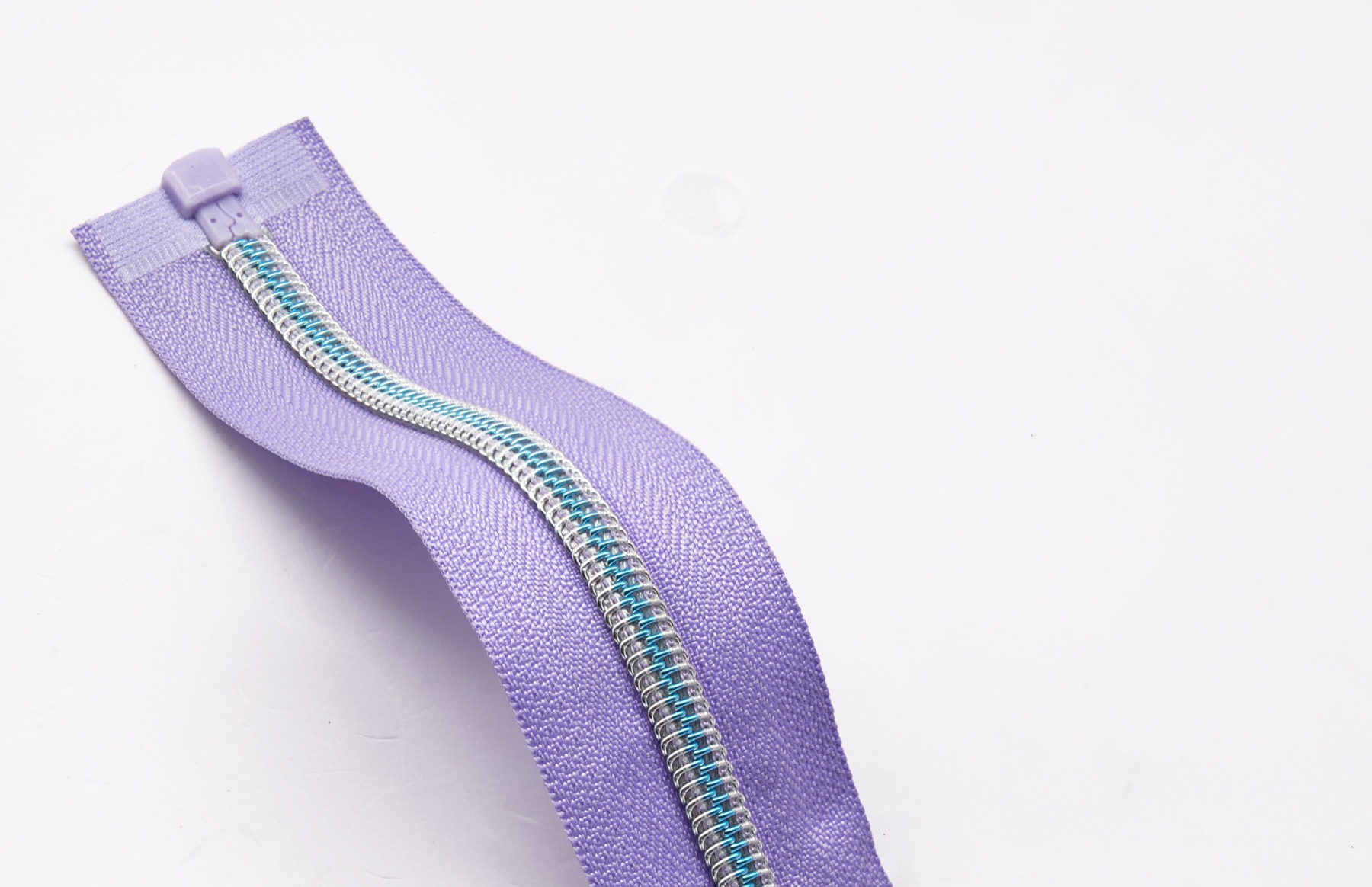
A size 7 two-tone plated nylon zipper creates an alternating color rhythm along a nylon tooth chain. The closed zipper can read as a decorative line from a distance and reveal a more detailed color sequence at close range. The metallic-looking finish is a surface appearance; it should not be mistaken for a chain made from solid metal teeth. Gloss alone also says nothing reliable about abrasion resistance or colorfastness, so construction and use testing remain essential.
Tooth Chain and Visual Character
As the nylon teeth engage, their contrasting finishes form a repeated visual sequence. Depending on the sample, the effect may be a simple two-color alternation or a more varied interval. The exact order, proportion, and repeat should be based on an approved sample. A useful specification identifies the principal tooth colors, tape color, and a clear visual reference instead of merely saying two-tone.
Lay the closed zipper flat and inspect continuity and chain alignment. Move the slider slowly through the full length to detect any localized resistance associated with the finish. Repeat the test with the chain gently curved and inspect for scratches or sudden color changes. Durability claims should come from tests representing actual wear and care, not from a short demonstration under showroom conditions.
Size 7 and Color Coordination
The pronounced chain of size 7 can suit garments and bags where the zipper is intentionally exposed. Its suitability for a placket, pocket, or other opening still depends on measured chain, tape, slider, and end-fitting dimensions. Open-end and closed-end requirements must be specified separately. For a fully separating front, pin and box orientation also belongs in sample approval.
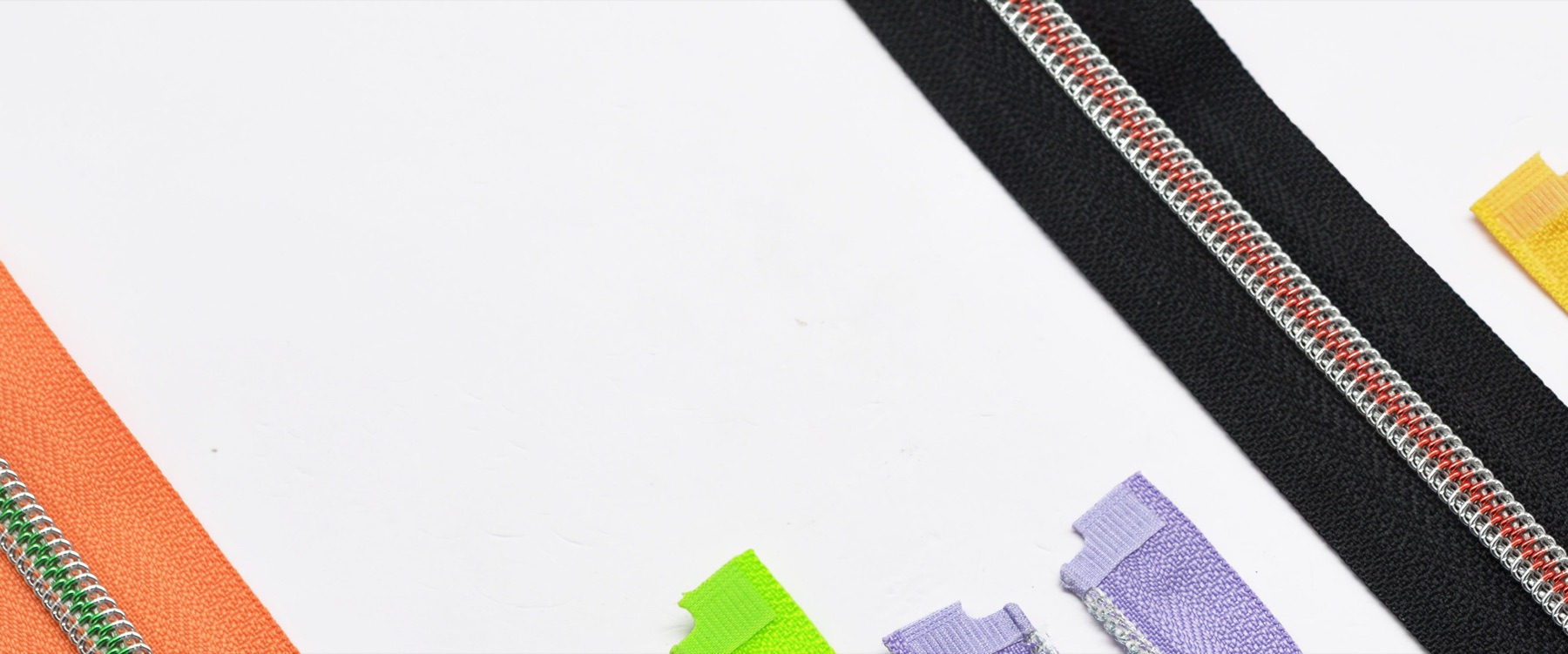
Tape can either echo one of the tooth colors or create a deliberate contrast. Light tape emphasizes the chain outline, dark tape can intensify bright finishes, and saturated tape produces a more expressive result. Make the final decision beside the actual garment fabric. Review the slider, pull, and nearby hardware at the same time so that a carefully planned two-tone chain is not undermined by an unrelated metal tone.
Selection and Acceptance Checklist
- Approve the color sequence: Retain a physical sample or detailed image showing the intended order and define acceptable visual variation.
- Test basic operation: Run the slider through the complete chain in straight and gently curved positions.
- Verify slider compatibility: Surface color and internal fit are separate issues; a new slider shape still requires an operation test.
- Evaluate the finish under use: Apply relevant rubbing, washing, pressing, and repeated-operation tests to a sewn sample.
- Review the assembled article: Check lining clearance, placket flatness, and coordination with neighboring components rather than approving the zipper alone.
Sewing and Use Precautions
Use a zipper foot that clears the teeth and keep the needle within the stitchable tape. Contact with teeth can damage both the needle and the visible finish. Feed both tapes evenly without stretching them to force a flat result. Stop and reposition the slider when necessary instead of sewing across it. After stitching, remove loose threads and keep lining and decorative layers outside the slider path.
Test pressing and cleaning on a sewn sample and avoid prolonged direct heat on the tooth surface. Untested solvents, stiff brushes, and abrasive cleaners may alter the finish. If operation becomes difficult, inspect for trapped fabric or debris first. Pulling harder in an attempt to smooth the chain may damage the surface, teeth, or slider.
Common Questions
Are two-tone teeth made by joining two kinds of metal teeth
The product name refers to a two-tone finish on nylon teeth, not necessarily to solid metal components. Confirm material and process information separately; metallic reflectance does not establish tooth composition.
Will the colors always repeat in an assumed fixed sequence
Use the approved sample as the reference. Tooth geometry, color arrangement, and production variation may affect the perceived repeat. Define the reference and acceptable variation instead of assuming a sequence from the product name.
How should finish durability be assessed
Use rubbing, operation, washing, and pressing tests that represent the intended article, then compare the tested sample with an unused reference. A short unstandardized trial only describes immediate operation and cannot establish long-term durability.