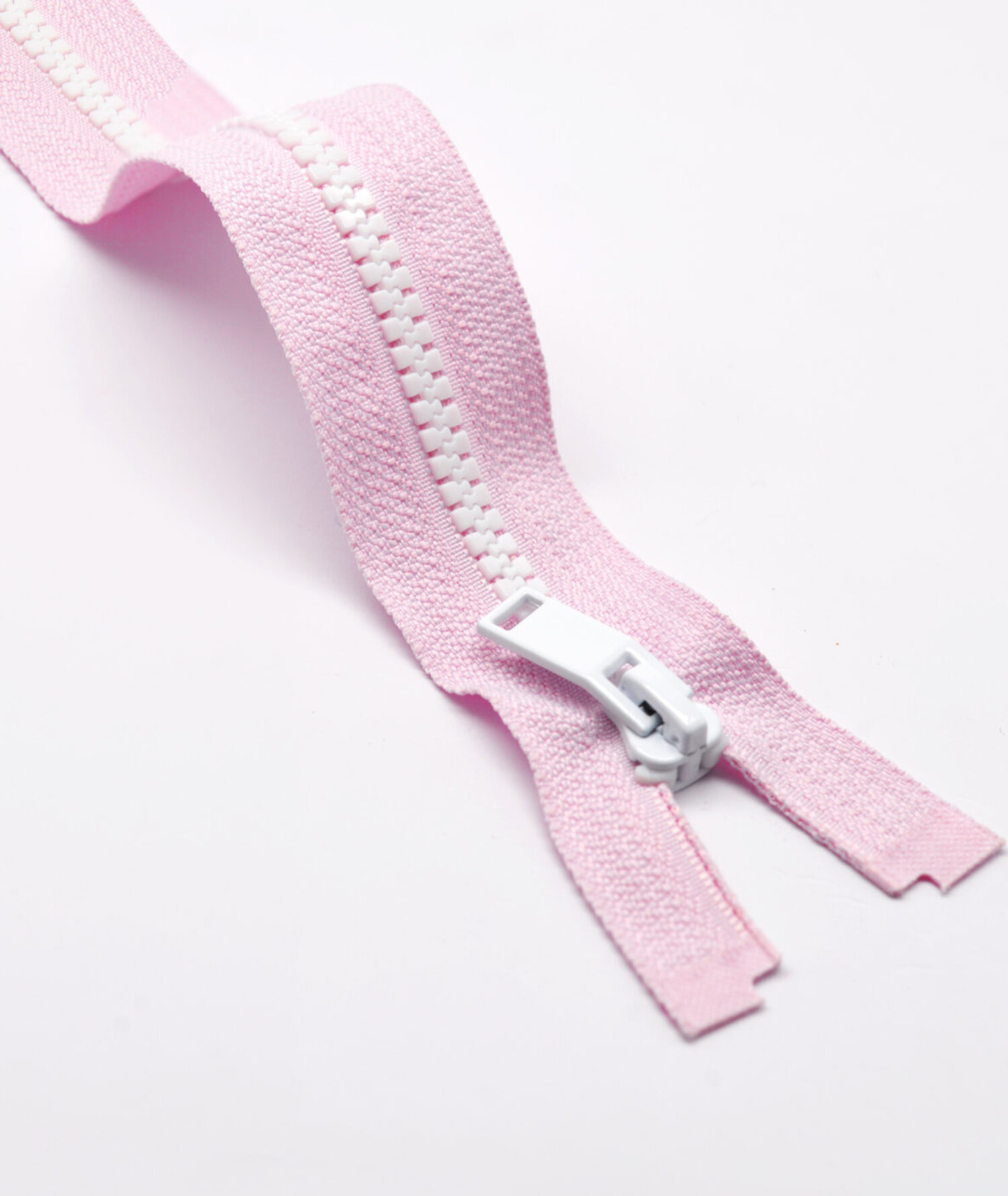
A placket that waves, snakes, or arches after a zipper is sewn in is a familiar problem in outerwear and trouser production. The size 5 anti-arch molded zipper is designed with this issue in mind: it adjusts the relationship between tape and chain so that the zipper's length changes after sewing, washing, and pressing are more predictable. Understanding what actually causes arching matters more than simply switching to another zipper.
Construction and Process Features
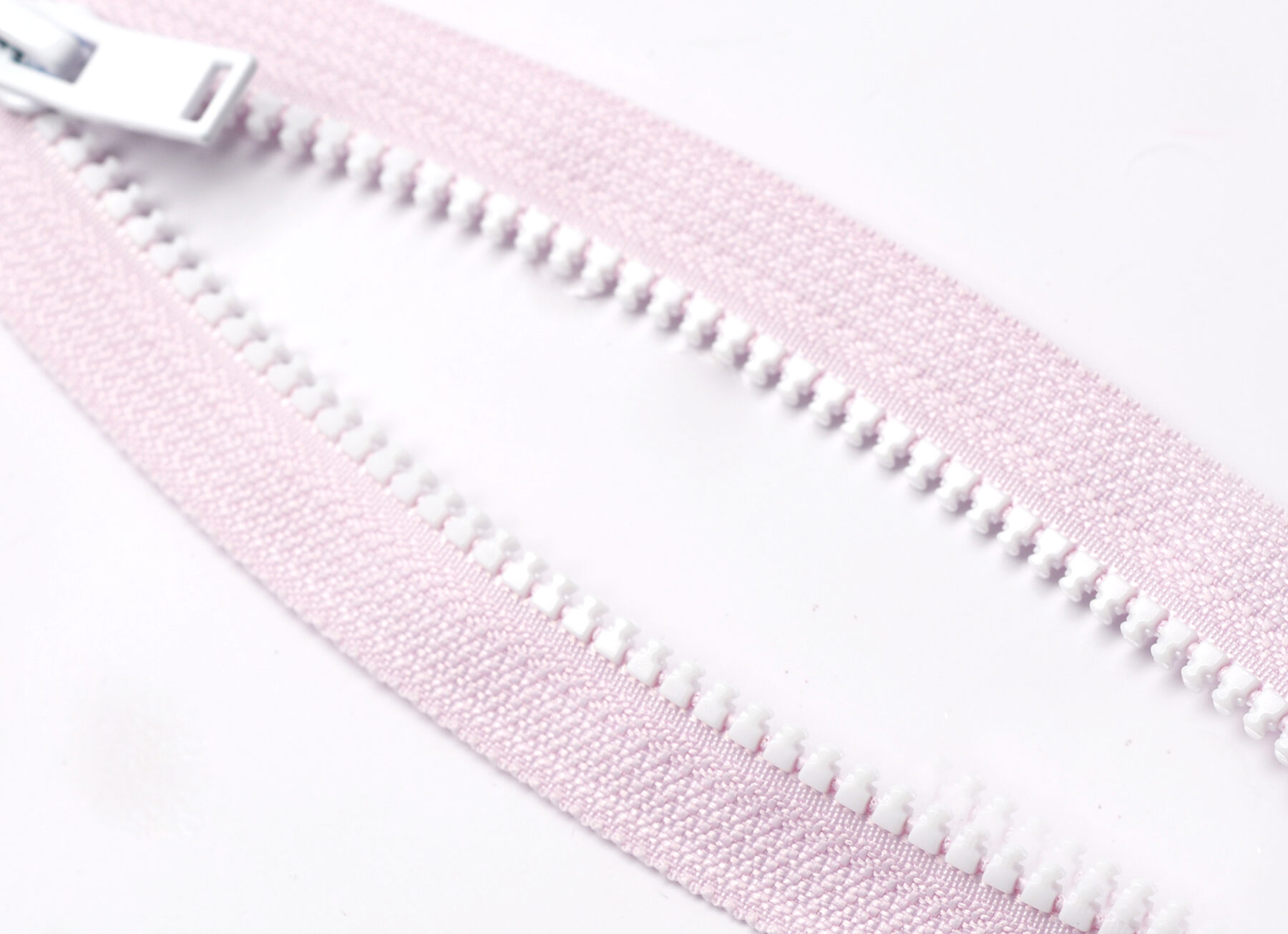
Molded zipper teeth are injection molded from engineering plastic, with the tooth root wrapping the tape edge to form a stable, interlocking chain. Anti-arch design usually concentrates on the tape: a flatter weave, controlled thermal shrinkage, and improved dimensional stability at the tape edge, so that the zipper does not stretch or recover unevenly under tension or moisture. Uniform pitch and consistent tooth-root height allow the two tapes to meet smoothly instead of one side being pushed upward.
It is important to treat anti-arch construction as risk reduction, not a guarantee. Fabric shrinkage, whether the placket is interlined, the way the operator feeds the tapes, and the pressing method all change the final appearance. The same zipper can behave very differently across fabrics and sewing processes.
Specifications and Applications
Size 5 is a medium chain specification: substantial enough to be visible without looking heavy, and suited to medium-weight fabrics such as jackets, padded coats, trench coats, casual trousers, childrenswear, and loungewear. The center-front placket is the most typical position, but it is also used at hood openings, liner connections, and pockets. Closed-end versions suit pocket mouths, open-end versions suit front openings, and two-way versions suit long coats.
The thinner and more extensible the fabric, the higher the risk of arching. When size 5 must be used on light fabric, an interlining or stay tape is usually needed to control elongation; with heavy coated fabrics, the priority shifts to chain stiffness and smooth slider travel.
Selection Guidelines
- Check tape shrinkage: Obtain thermal and laundering shrinkage data for the tape and compare it with measured fabric values; where the gap is large, run a trial first.
- Inspect chain consistency: Look at pitch, tooth-root height, and edge straightness, since an uneven chain pushes the tape into waves when closed.
- Confirm the end construction: Open-end, closed-end, and two-way versions are sewn differently, and a closed sample cannot simply replace an open-end one for a front placket.
- Match the slider: Locking and non-locking sliders differ in travel and grip, and each must be matched to the tooth profile in the same lot to avoid looseness or jamming.
- State maintenance conditions: Put the planned washing temperature, drying method, and pressing process into the technical file as the basis for approval and testing.
Sewing and Use Precautions
Before sewing, pre-shrink or wet the zipper tape according to fabric shrinkage so that zipper and fabric enter the machine in the same state. Use a walking foot or a feed-dog foot and feed both tapes evenly; do not stretch the tape to align the placket. A stretched tape recovers after washing, and that recovery is the direct cause of a wavy placket.
A thin interlining or stay tape can stabilize the placket length, but its thickness must suit the chain; an overly thick interlining makes the placket rigid. Stitches must not cross the tooth root, and the start and finish of the seam should stay clear of slider travel. Finish with steam rather than pulling the placket sideways with an iron, and hang garments to dry instead of wringing them, which reduces the chance of the wave returning.
Common Questions
Is a wavy placket a zipper quality problem
Not necessarily. Arching usually results from a combination of tape shrinkage, fabric extension, sewing tension, and pressing. Measure the length difference between zipper and fabric before and after sewing to locate the cause instead of changing suppliers immediately.
Does an anti-arch zipper need pre-shrinking
Pre-shrinking under the garment's washing conditions is advisable, particularly when the zipper is combined with a high-shrinkage fabric. It lets the zipper complete its dimensional change early and reduces the mismatch after the finished garment is washed.
Can size 5 be used on elastic knits
It can, but the stretch and recovery of the fabric must be assessed. On elastic fabric a medium chain can make the placket lose its stretch, so seam allowance, stay tape, or a softer chain construction usually needs to be reviewed.