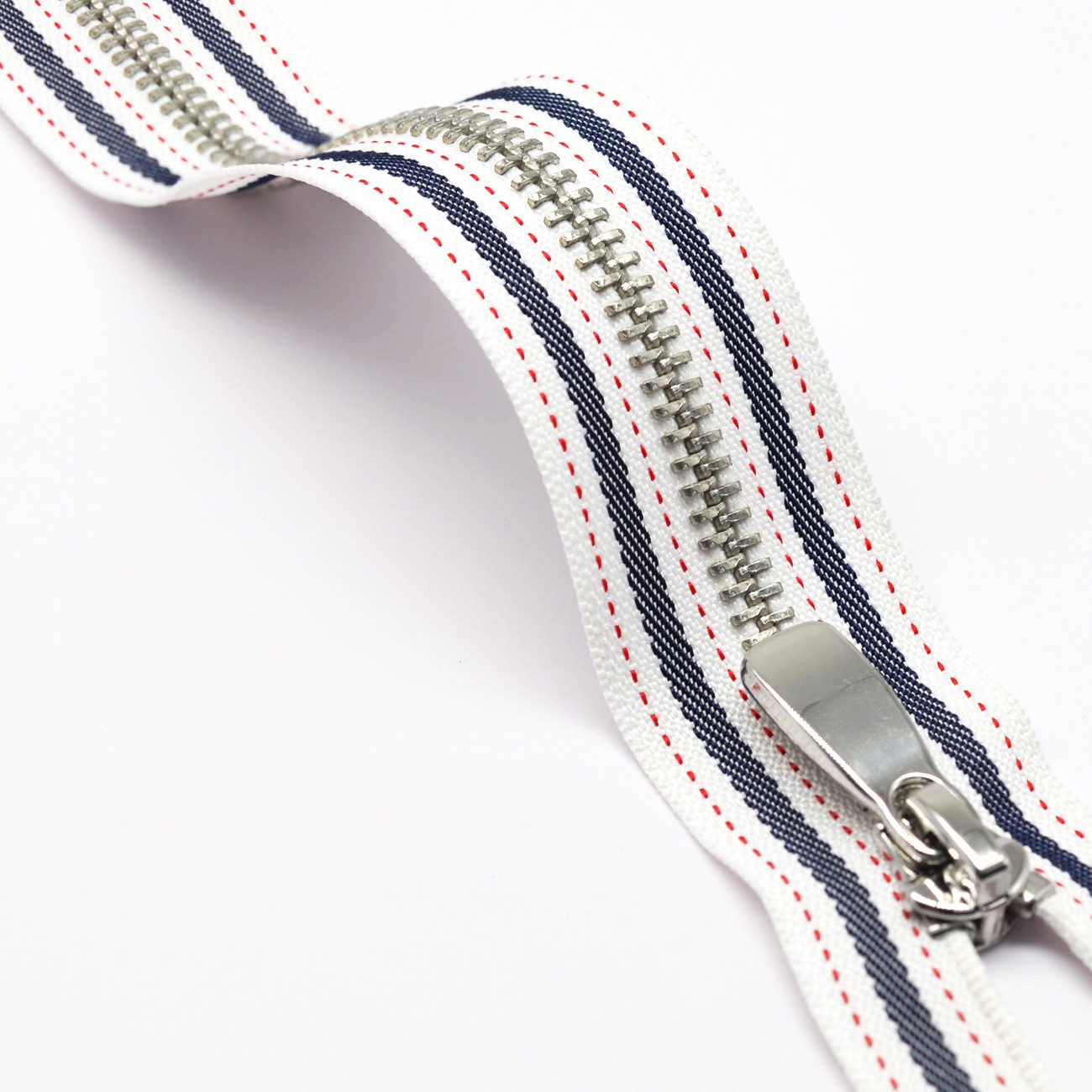
Yarn-dyed tape carries color in the yarn itself rather than being dyed after weaving. That process difference gives the tape a clear warp-and-weft texture, allows stripes, edge lines, and small accent patterns to be woven in directly, and makes the edge less likely to reveal a white core through abrasion. Combined with size 5 metal teeth and a choice of bright silver or rose gold, the result feels closer to a garment component than a basic trim. It is meant to be seen, which also means design and sewing have to pay more attention to color planning and stripe matching. This article covers weaving, sizing, color selection, and care.
Structure and Construction
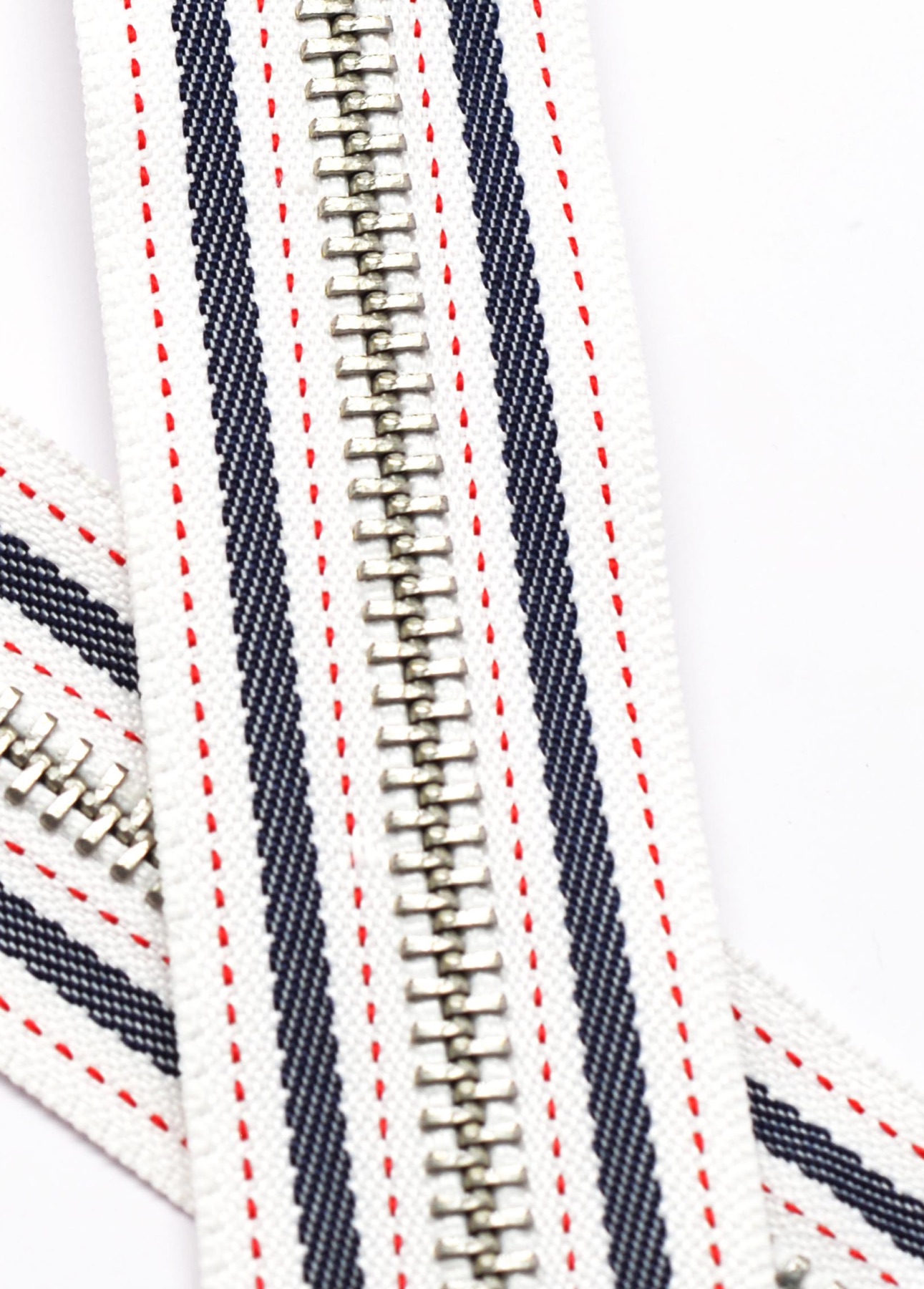
The color of yarn-dyed tape comes from dyed yarns arranged during weaving to form stripes, insert lines, or fine patterns. Compared with tape that is woven first and dyed afterwards, the pattern is sharper, color boundaries are cleaner, and repeated washing is less likely to leave uneven fading along the length. The trade-off is usually a higher minimum order and longer lead time, and color changes are less flexible than with piece dyeing. Tape thickness and density affect how firmly the teeth are anchored, and size 5 metal teeth need a tightly woven tape to withstand opening tension.
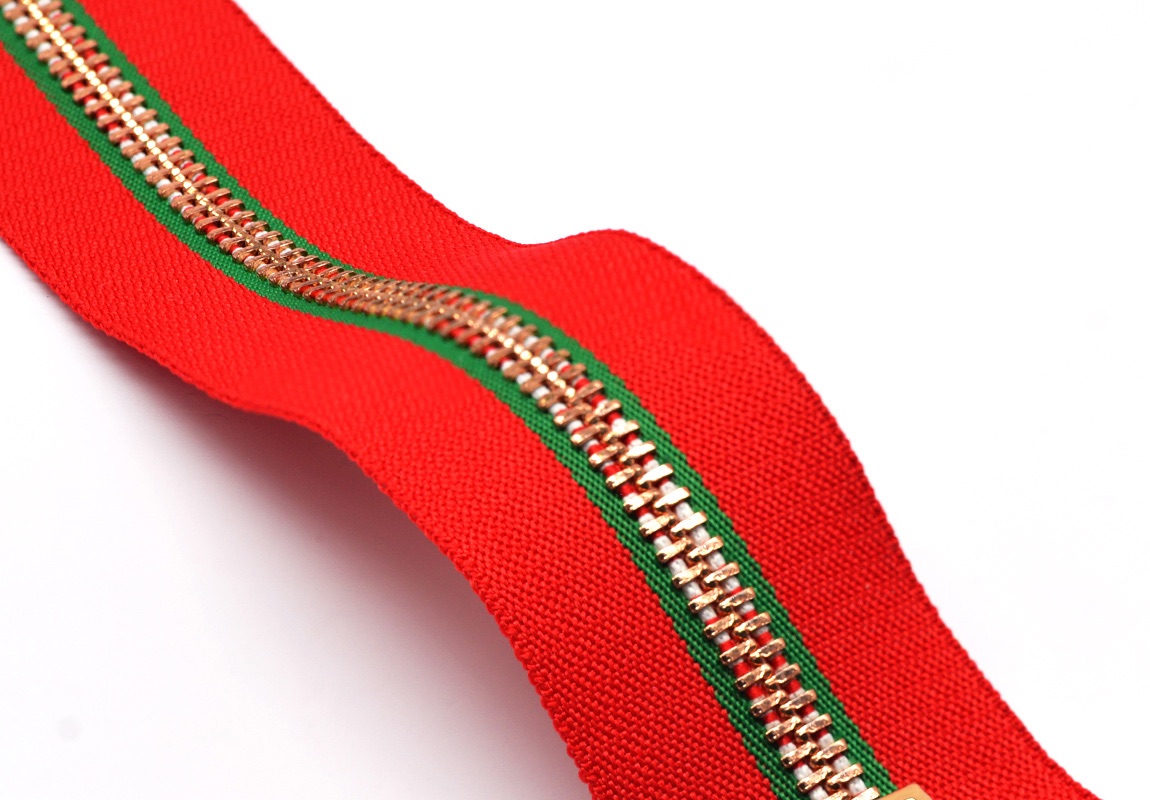
Tooth color is the second variable. Bright silver is cool and highly reflective, so on off-white, navy, or gray-blue tape the metal line stands out from the stripes and forms a clear structural line. Rose gold is warmer and lower in saturation; it harmonizes with brick red, wine, bottle green, and beige tapes and reads almost like jewelry. Both finishes can be polished or matte, and changing only the tooth color on the same tape noticeably changes the overall style.
Sizes and Applications
The size 5 chain suits medium-weight fabrics such as varsity jacket fabric, sweatshirt fleece, workwear canvas, coated nylon, denim, and light wool. Typical placements include the center front of sports jackets and varsity styles, workwear plackets, hoodie main zippers, bag openings, caps and headwear, and detachable liner connections. Because the tape is decorative in itself, these zippers are often designed as visible elements on the front, sleeve side, or pocket edge.
Open-end and closed-end versions follow the design. A front that must separate completely uses an open end with pin, box, and slider direction checked; pockets and inner bags use a closed end. If the stripes run across or diagonally, the way the pattern meets after separation directly affects appearance, so the matching reference for left and right panels should be confirmed at the sample stage.
Stripe width and spacing should relate to the garment’s seams, ribbing, or webbing instead of existing independently. Sporty styles can match the tape stripe to the cuff rib width, while workwear styles can let the tape be the only pattern on the garment.
Selection Checklist
- Choose the tape pattern before the tooth color: stripe density and color set the overall character; cool stripes with bright silver and warm stripes with rose gold are usually the safer combinations.
- Confirm the stripe-matching reference: establish whether stripes run along the tape or across it, and define how left and right panels should align to avoid mismatched stripes on the finished garment.
- Check batch and dye lot: yarn-dyed color comes from yarn, and different lots can vary slightly, so bulk orders should be matched within one lot.
- Inspect tape edges and thickness: edges should be flat with no loose yarn, and the tape must be thick enough to hold size 5 teeth; tape that is too thin stretches during opening.
- Select the finish by style: bright silver emphasizes a structural line, rose gold suits fashion and retro directions, and a matte finish resists scratching better.
Sewing and Use Precautions
- Yarn-dyed tape is sensitive to stitch length and thread path. Test on the same material first to confirm that the stitch does not split the stripe or cause skipped stitches.
- For styles that require stripe matching, mark reference lines during cutting and attach the zipper before closing the side seams to avoid repeated adjustment that stretches the tape.
- Use a zipper foot and keep stitching within the usable area at the tape edge; do not sew over raised stripe areas or touch the teeth.
- Keep seam allowances equal on both sides of the placket and avoid stretching during feeding; thin yarn-dyed tape can be stabilized with a light interlining within the pattern allowance.
- Turn garments inside out and use a laundry bag to limit rubbing against hard pulls and metal buttons; tapes with red or dark stripes should be tested separately for color transfer.
Common Questions
Does yarn-dyed tape fade faster than ordinary tape
Because the color is in the yarn, overall fading is usually slower than with surface dyeing, but contrast stripes can still show slight color transfer after repeated washing. Test samples under the garment’s actual washing conditions, especially with red and blue stripes.
Can bright silver and rose gold teeth be mixed on one zipper
Technically yes, but the two color temperatures differ strongly and the mix turns the zipper into a prominent decorative element. If a two-tone effect is intended, give each color a clear zone rather than alternating randomly.
Is a size 5 yarn-dyed tape zipper suitable for lightweight garments
Both the size 5 chain and the yarn-dyed tape have noticeable thickness, so on very light fabrics the zipper feels heavy and can create a hard edge at the placket. For lightweight styles, consider a smaller size or use this type only at pockets and hood openings.