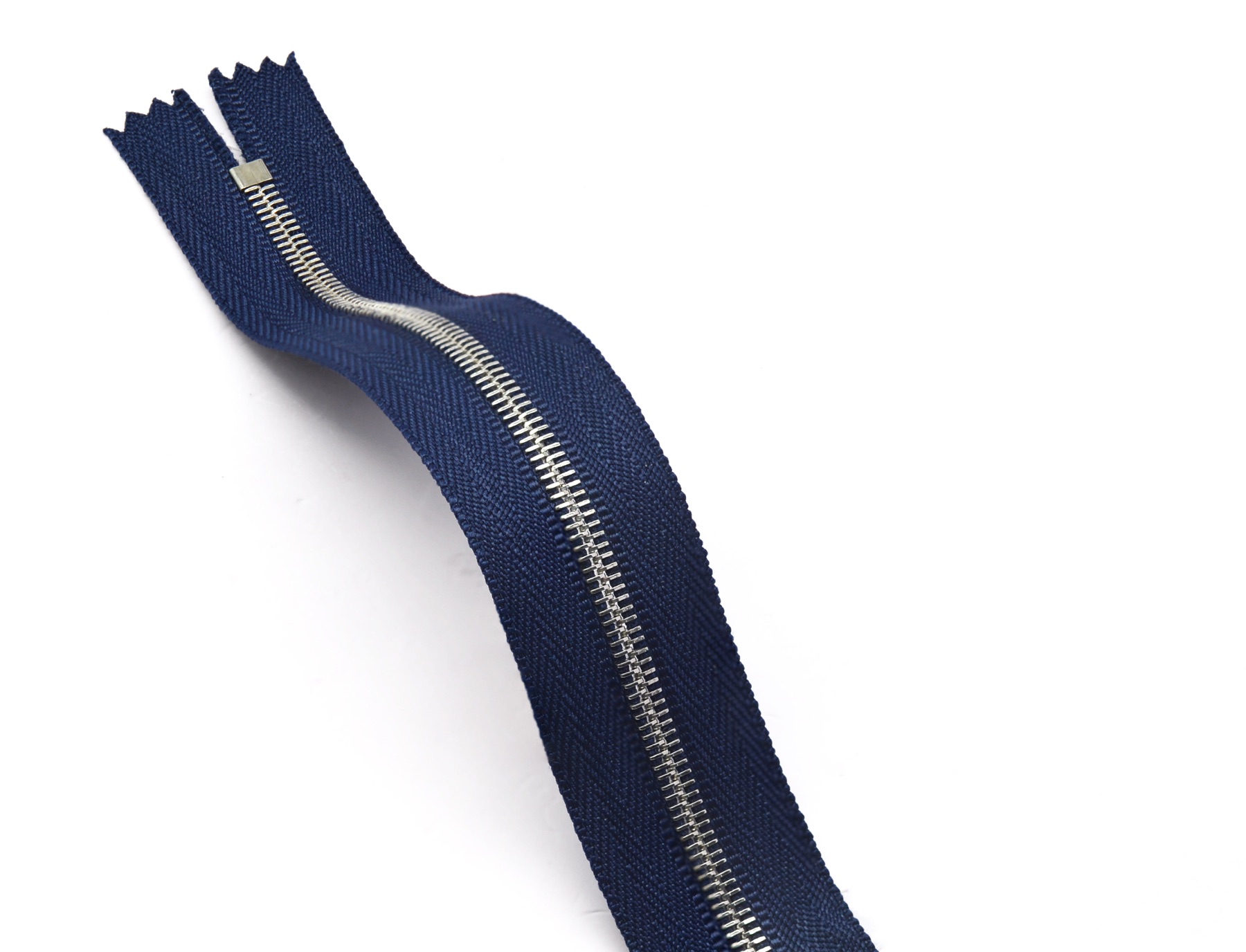
A size 3 metal zipper with Euro-style teeth combines a refined tooth line with a decorative surface. It is useful where a garment needs both a functional closure and a visible hardware detail. The term Euro-style describes a tooth profile and appearance; it does not establish a universal dimension, place of manufacture, or performance rating. Buyers and designers should still verify tooth pitch, chain width, slider compatibility, tape construction, and end fittings on physical samples.
Tooth Profile and Overall Construction
The main components are the textile tapes, metal teeth, slider, and top and bottom stops. The visual character of this style comes from the outline of each tooth and the continuous line formed when the chain is closed. Silver-colored teeth create a crisp contrast against navy or black tape, while gold-colored teeth can provide a warmer decorative effect on pale or colored tapes. Appearance should be evaluated with the zipper fully closed, not only from an open sample laid flat.
Run the slider through the complete chain several times and note whether resistance remains consistent. Then inspect the chain in a gently curved position, because a garment rarely keeps every closure perfectly straight. A tooth line that looks regular but catches at one point requires further checking rather than acceptance based on appearance alone.
Metal teeth stand above the tape surface, so seam allowances, facings, and linings must leave enough clearance. A narrow placket may allow the teeth to push against the fashion fabric. A lining placed too close to the chain may enter the slider path. Confirm these allowances with the actual zipper and pattern instead of relying only on the nominal size.

Size 3 and Suitable Applications
Size 3 is commonly considered for relatively lightweight jackets, skirts, trouser flies, pockets, and decorative openings where bulky hardware would be undesirable. These are starting points rather than absolute rules. Size naming does not guarantee identical dimensions across suppliers, so measure the physical chain and slider before finalizing a pattern.
A jacket front that must separate completely needs an open-end construction with the correct pin, box, and slider orientation. A pocket, skirt, or trouser opening that remains joined at one end normally uses a closed-end construction. Selecting the wrong termination cannot be corrected by changing the tooth color or slider pull.
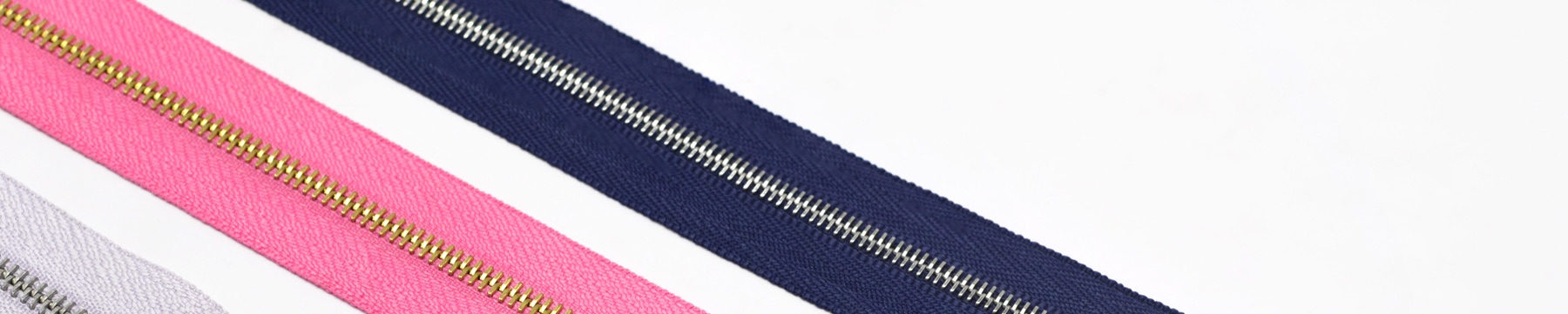
Tape color is part of the design decision. Dark tape emphasizes a silver chain, while white, pink, or other light colors make the tooth finish more prominent. Place tape, teeth, slider, pull, and garment fabric together under the intended lighting. If gold-colored teeth are specified, compare them with nearby snaps, buttons, and other hardware to avoid an unintended mixture of metal tones.
Selection and Sampling Checklist
- Confirm the construction first: Identify open-end or closed-end requirements, slider direction, and termination details before comparing decorative finishes.
- Measure the actual sample: Record chain width, tape width, slider envelope, and end-fitting dimensions when setting seam allowances.
- Test the full travel: Evaluate resistance on a straight chain and in a gentle curve rather than checking only the stationary appearance.
- Coordinate all colors: Review tape, teeth, pull, fabric, and adjacent hardware together under relevant light sources.
- Test a completed garment sample: Recheck color, operation, and pucker after the washing, pressing, or finishing processes planned for production.
Sewing and Pressing Precautions
Check zipper direction and left-right placement before stitching. This is especially important for an open-end zipper, where the pin and box must remain on the intended sides. Use a zipper foot that provides adequate clearance for the metal chain. Keep the needle within the stitchable tape area and never force the machine across teeth or the slider. Move the slider past the sewing area when necessary.
Maintain equal seam allowances and balanced fabric tension on both sides of the opening. Do not stretch the tape while feeding it through the machine. Lightweight fashion fabric may need a suitable stabilizer within the placket, provided that the stabilizer does not enter the slider channel. Inspect both the public side for flatness and the reverse side for lining clearance.
Confirm the heat tolerance of the tape, surface finish, and garment fabric before pressing. Use a test sample and protect the teeth and pull from prolonged direct contact with a hot iron or heavy pressure. If the garment will be washed, dry-cleaned, or specially finished, expose a sewn sample to the same process and inspect the result before bulk production.
Common Questions
Are Euro-style teeth automatically more durable than other metal teeth
No durability conclusion can be drawn from the style name alone. Material, tooth forming, attachment, slider fit, sewing quality, and use conditions all affect service life. Evaluate operation, expected load, and planned finishing on physical samples.
Can gold and silver teeth share the same slider if their size number matches
A shared size number does not prove compatibility. The slider must match the tooth profile, pitch, chain dimensions, and end construction. Matching color is separate from matching internal geometry, so test the actual combination through its full travel.
What reduces pucker around a metal zipper placket
Check unequal seam allowances, stretched tape, tight lining, and differences in shrinkage between tape and fashion fabric. Stable cutting, even feeding, appropriate stabilization, and controlled pressing usually work together. Simply increasing stitch length does not address the underlying causes.