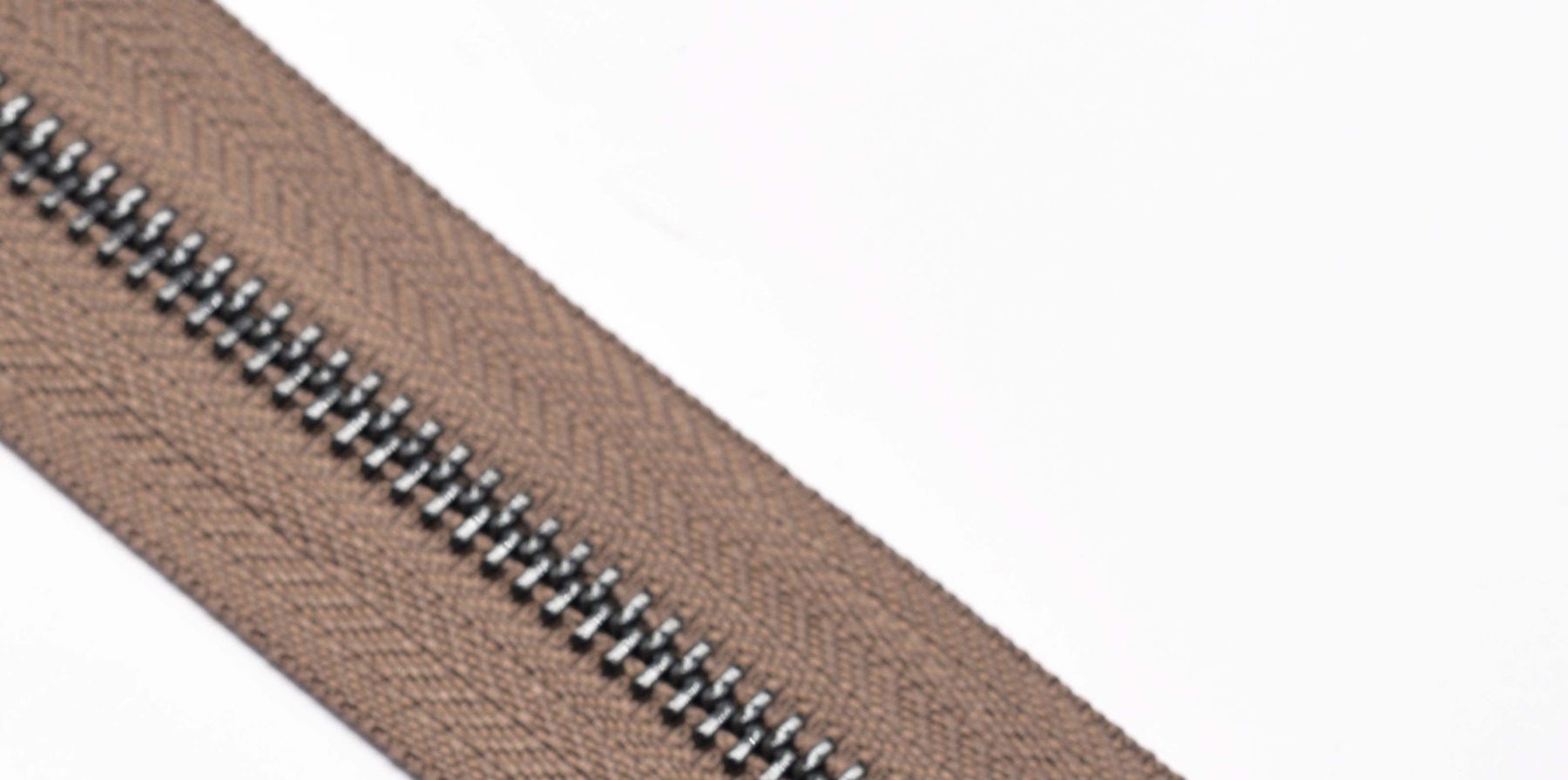
Black nickel is a cool, dark gray finish with less gloss than bright silver. It reads as gunmetal or charcoal and usually shows a soft reflection rather than a mirror image. Applied to size 5 metal teeth, it avoids a harsh highlight on dark fabric while still revealing the thickness and outline of the metal, which is why it appears on leather jackets, workwear, padded outerwear, and bags. It looks easy to combine with anything, yet it is quite sensitive to shade variation and surface condition: if the chain, slider, and stops on one zipper differ in depth, the mismatch is immediately visible. The sections below cover appearance, sizing, purchasing, and sewing.
Structure and Construction
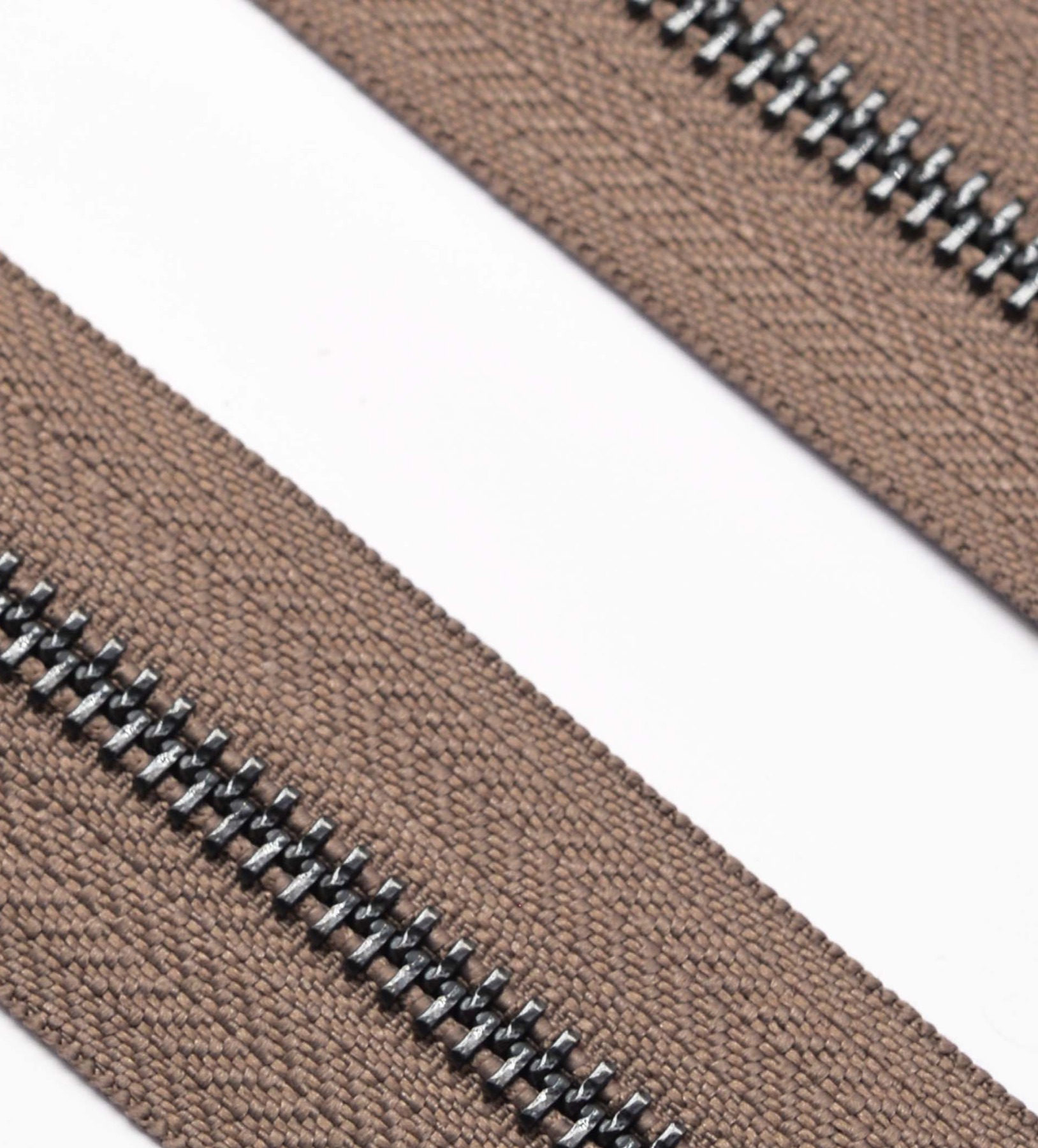
Black nickel teeth are usually formed from a copper alloy by stamping or die casting and then plated to obtain the dark surface. The color depends on pre-treatment cleanliness, current density, bath composition, and plating time. Dark coatings are particularly sensitive to thickness: a thin layer looks gray, a heavier layer looks blue-black, and areas of concentrated current can develop bright edges. Some tonal transition within a batch is therefore normal. What matters is whether the chain is uniform along its length and whether the slider and stops match the teeth.
A size 5 chain is wider and taller than size 3, so the closed chain is thicker and the metal presence stronger. The dark finish softens the edges of each tooth: from a distance it reads as a continuous dark line, and only up close can individual teeth be distinguished. The tape is usually woven polyester, with black, charcoal, dark olive, and dark brown as common partners.
Component finishing has to be synchronized. If the slider, pull, and stops come from different plating batches or surface processes, one zipper can end up with a bluish chain and a blacker slider. At the sample stage, line up all parts under the same light instead of examining them one by one.
Sizes and Applications
Size 5 suits medium to heavy fabrics such as leather and synthetic leather, coated fabric, denim, canvas, padded outerwear fabric, and fleece laminates. Typical placements include the center front of leather and biker jackets, workwear plackets, the main zipper of padded coats, bag openings, boot zippers, and detachable hood openings. The chain has enough strength for daily opening while adding less weight than larger sizes.
Closure type follows the design. A jacket front that must separate completely uses an open end with the pin and box on the correct sides; bags and pockets generally use a closed end.
The relationship between dark fabric and black nickel needs to be judged case by case. Black fabric with black nickel creates a quiet tonal layering that suits minimal or technical styles, while dark brown or bottle green fabric provides enough contrast for the chain to read as a structural line.
Selection Checklist
- Compare the whole set, not single parts: line up chain, slider, pull, and stops under one light and check whether the shade transitions smoothly.
- Confirm batch and dye lot: dark plating varies noticeably between batches, so bulk orders should be supplied as one matched batch with an agreed tolerance in the contract.
- Inspect edges for show-through: focus on tooth tips, tooth roots, and slider edges, where the coating is thinnest and reddish or yellowish base metal can appear.
- Test surfaces according to use: leather goods and bags need friction and scratch checks, outdoor garments need perspiration and washing checks, and test conditions should match real use.
- Judge chain size against fabric weight: size 5 balances heavy fabrics well; for light fabrics consider a smaller size so the hardware does not overpower the material.
Sewing and Use Precautions
- Black nickel scratches easily. Clean the worktable before sewing and keep metal chips and hard tools away from the chain surface.
- Use a zipper foot and keep stitching inside the usable tape area. Move the slider out of the way rather than stitching over it.
- Needle holes in leather and coated fabric are permanent. Test on the same material first to confirm stitch length, foot pressure, and feed dog marks.
- Press with a cloth at a lower temperature. Dark coatings can turn white or show a rainbow effect after heat exposure, and heavy pressure on the chain should be avoided.
- Park the slider at the end stop before washing to avoid repeated impact with the drum and other hardware; leather items should be dry-cleaned or wiped according to the material.
Common Questions
Will black nickel teeth lose color over time
Plating can wear through after prolonged friction and reveal the base metal, but the rate depends on coating thickness, use intensity, and contact surfaces. High-friction areas such as bag openings and jacket plackets deserve particular attention, and a reciprocating abrasion test at the sample stage is advisable.
Is it normal for the chain and slider to differ in color on one zipper
Dark coatings tend to reveal batch differences, but a single zipper should be as consistent as possible. If the difference is visible to the eye, request parts from the same batch or choose a design with stronger intentional contrast.
Can black nickel be used with light-colored fabric
Yes, but the contrast is strong and the zipper becomes a focal point. For a quieter look, choose a tape close in lightness to the fabric or a matte finish; for a deliberate structural line, black nickel on a pale tape works directly.