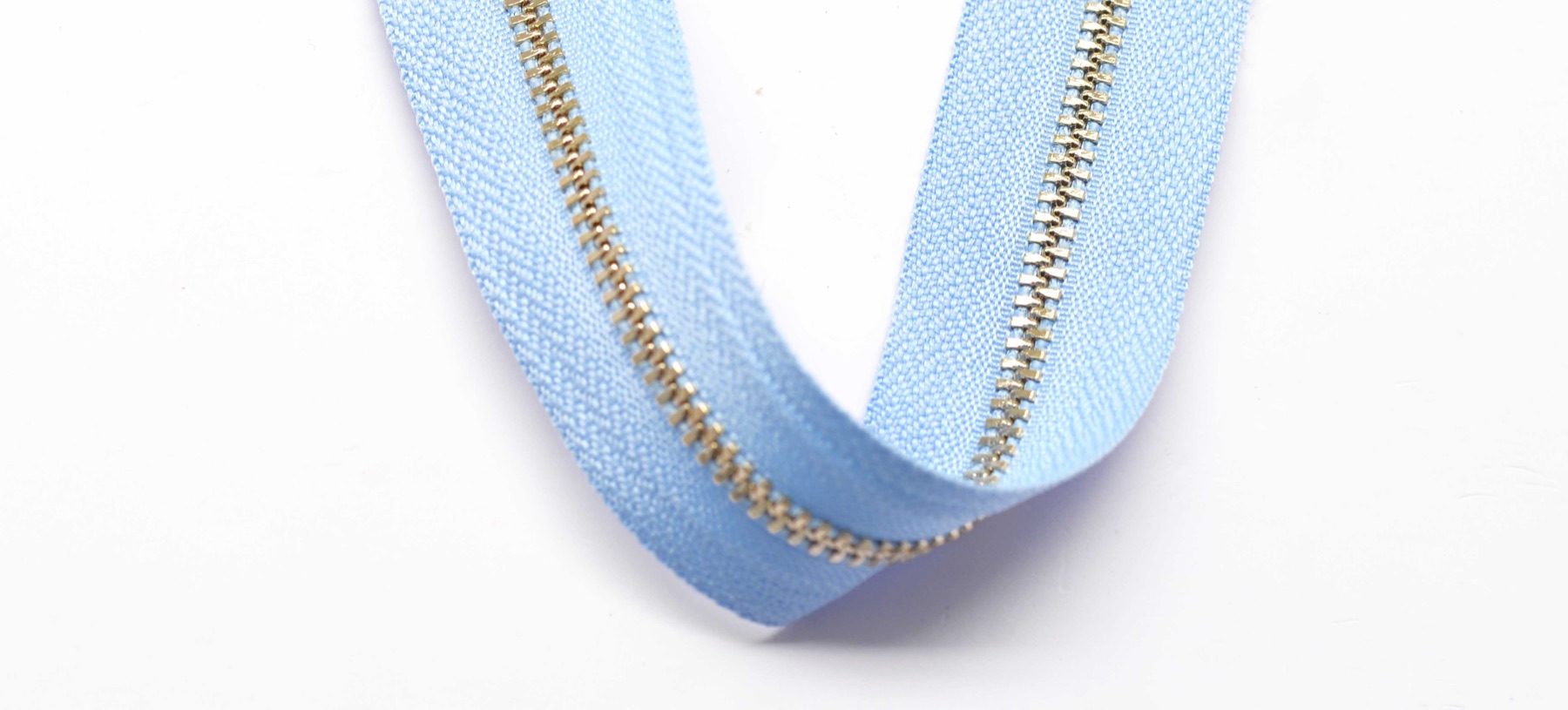
Light gold sits between champagne and pale gold. Its saturation is lower than the bright golds usually seen on hardware, and its reflection is softer, so it does not look out of place on pale or low-saturation fabrics. A size 3 metal zipper with this finish is a fine-tooth product built around that appearance: the chain is small and the line is thin, and the metal presence comes from gloss rather than bulk. It suits lightweight garments that need a precise, decorative finish. Because the zipper is both functional and visible, color, plating, and stitching accuracy have to be judged together. This article covers construction, sizing, selection, and sewing.
Structure and Construction
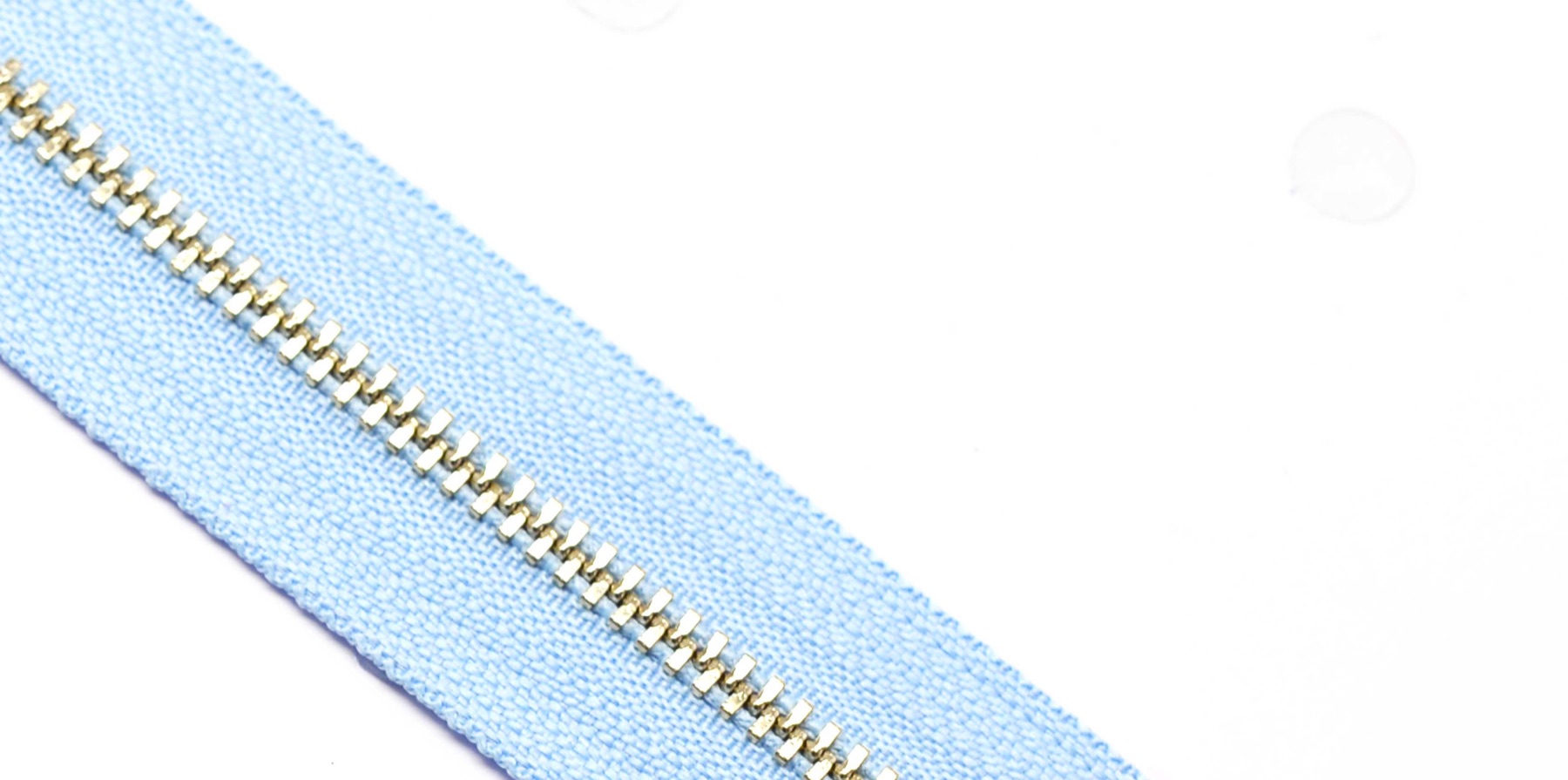
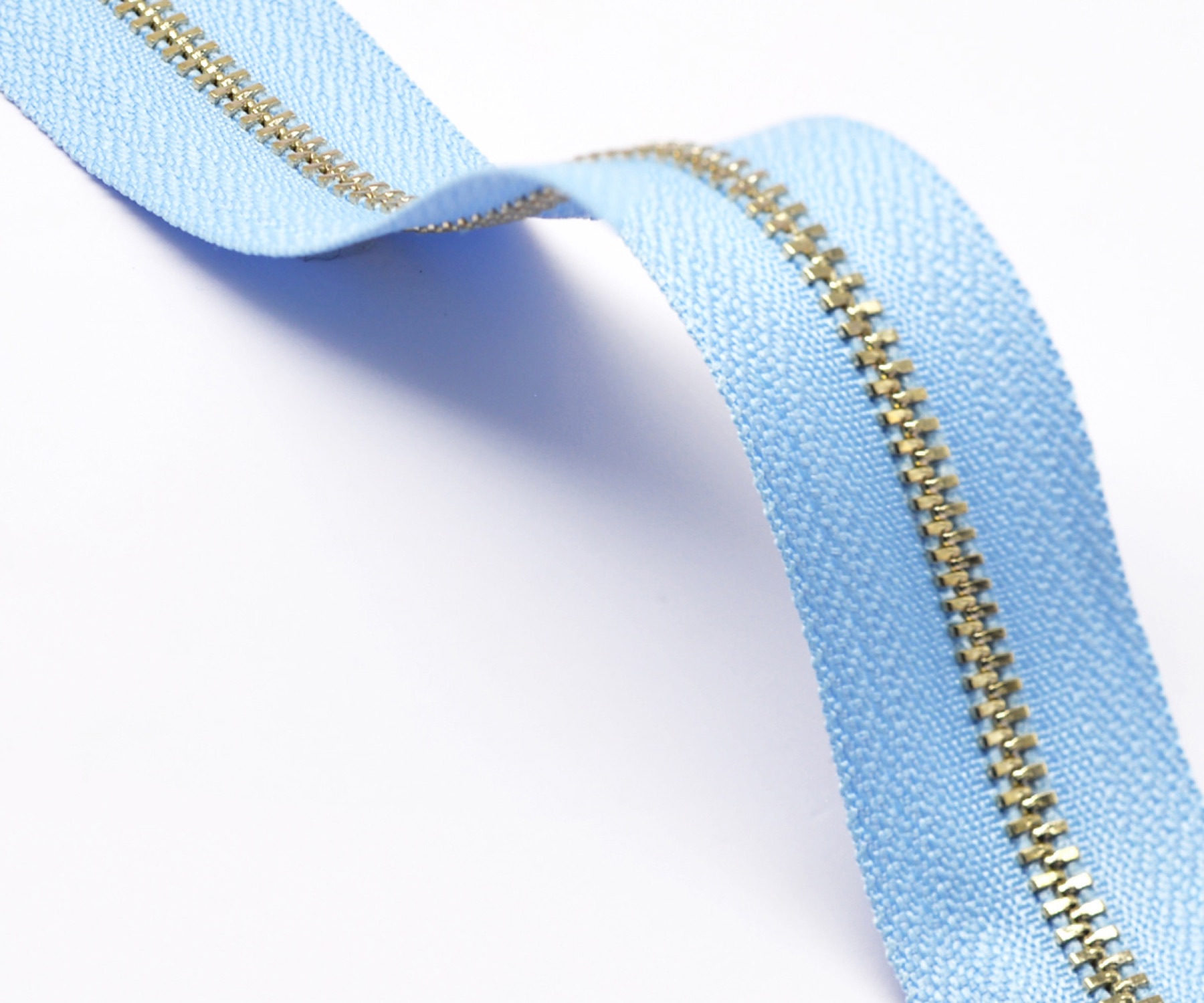
A metal zipper consists of tape, metal teeth, a slider, and top and bottom stops. The light gold appearance comes from plating on the tooth surface, usually over a copper alloy base that is formed first and plated afterwards. Plating color shifts with pre-treatment, current density, and bath condition, so variation between batches — and even within one batch — can lean yellow, pink, or gray. This is why light gold is harder to match across batches than bright silver. The tooth profile is normally a standard square or rounded tooth; at size 3 both tooth width and height are small, so the closed chain forms a fine, continuous line.
The tape is usually woven polyester and is available in a wide color range. Light gold works with off-white, ivory, pale pink, mist blue, and light gray tapes to create a warm, gentle look; against black or deep navy it produces a clear contrast and a stronger metallic impression.
Sizes and Applications
The size 3 chain is fine and suits light to medium weights: shirt jackets, light jackets, dresses, skirts, light wool coats, cotton and linen tops, as well as bags and decorative openings. It should not carry the main closure of a heavy coat or a workwear front that sees high opening force, because the contact area of a fine tooth is small and long use can lead to chain misalignment. A front that must separate completely needs an open-end construction with the pin checked for direction; skirt sides and pockets, which stay joined at one end, use a closed end.
Selection Checklist
- Judge the plating, not only the color card: view the sample in daylight and under warm indoor light, confirm there is no obvious red, green, or gray cast, and request same-batch samples.
- Coordinate the hardware: place slider, pull, stops, buttons, and eyelets together. Light gold reveals tonal differences very easily.
- Match size to fabric weight: size 3 suits light to medium fabrics; for heavy materials evaluate a larger size instead of sacrificing opening strength for appearance.
- Confirm the end construction: on open-end versions check pin direction and length; on closed-end versions confirm stop positions so that correct teeth can actually be assembled.
- Plan abrasion and corrosion testing: arrange friction, perspiration, or washing tests that reflect the intended use, then check whether the plating is worn through or discolored.
Sewing and Use Precautions
- Fine teeth are very sensitive to the needle. Use a zipper foot and keep stitching inside the usable tape area; a single stitch into a tooth can chip the plating.
- Light fabrics tend to pucker at the placket. Keep seam allowances equal on both sides, avoid stretching the tape, and add a thin stabilizer within the pattern allowance where needed.
- Attach the zipper before closing the side seams; this reduces handling and the chance of scratching the chain.
- Press with a cloth and control the temperature. Do not place the iron directly on the light gold chain, because heat accelerates loss of gloss.
- During wear and cleaning, avoid repeated rubbing against hard zipper pulls and metal buttons; turn garments inside out and use a laundry bag.
Common Questions
Does light gold fade faster than bright silver
A pale plating shows base metal more obviously once it wears, but fading depends on the plating process and use conditions rather than color alone. Run friction and washing tests on a garment sample before deciding.
Can size 3 light gold be used on a heavy coat
It is not recommended for the main closure of a heavy coat. The fine chain has a small contact area, and heavy fabric puts more lateral load on the teeth during use, which can cause misalignment or jamming over time. Heavy fabrics generally call for size 5 or larger.
What if light gold teeth do not match gold buttons
First check whether they belong to the same color family, then compare lightness and warmth under one light source. If the difference is obvious, adjust the button or slider finish rather than changing only the tape color, because the deviation comes mainly from the metal parts.