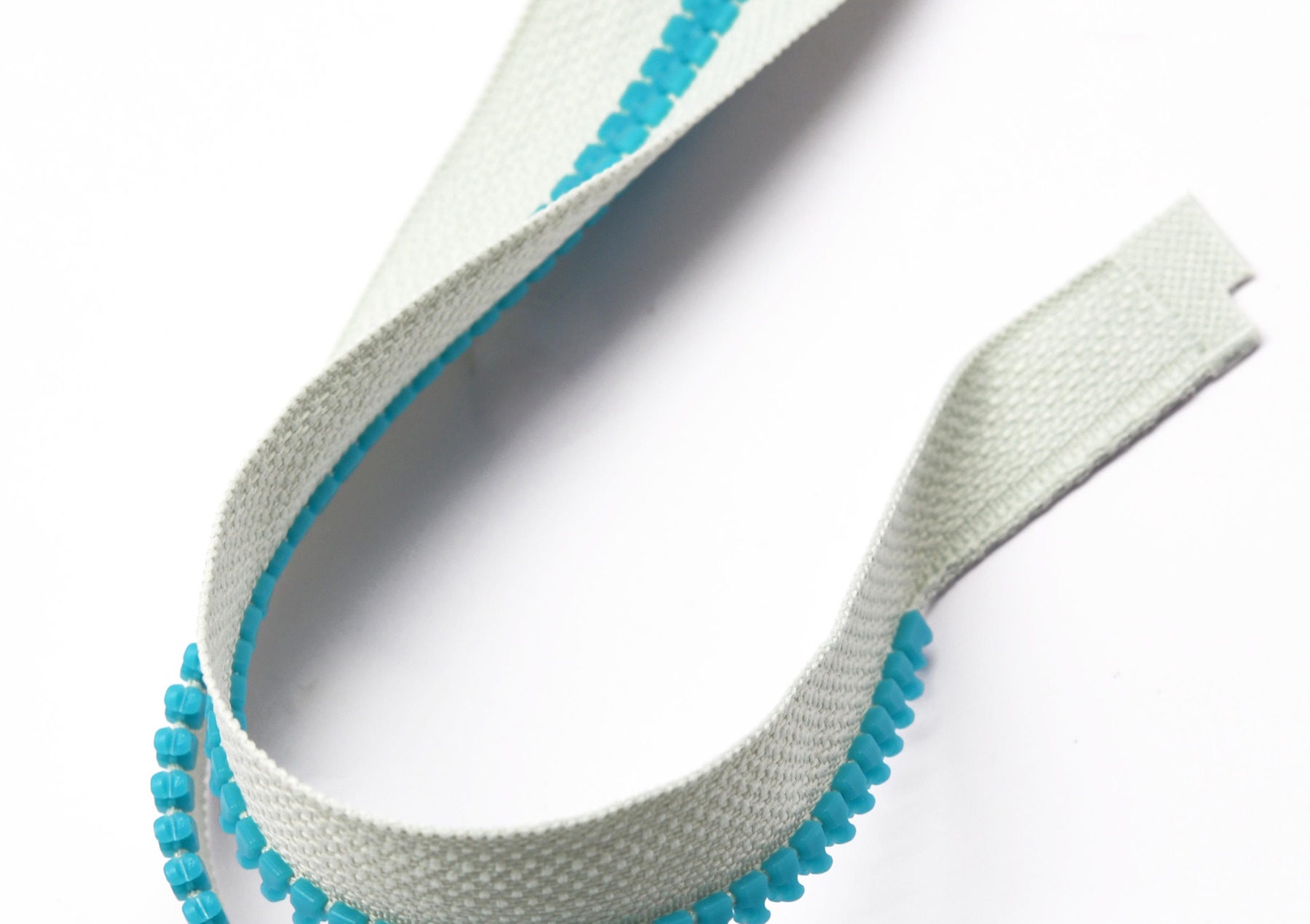
A size 5 plastic quick-release zipper combines two requirements: the closure should feel natural in daily use, and it should open fast when the situation demands it. The teeth are injection-molded from a thermoplastic material, so they feel smooth and hold color consistently. What actually makes the zipper “quick-release” is the slider. When needed, it lets the two chains disengage at any point, so the two garment panels separate within seconds without running the slider all the way to the end. For outdoor jackets used with gloves, workwear that may need emergency removal, and children’s coats that are taken on and off frequently, this difference is noticeable. The sections below cover construction, sizing, selection, and sewing.
Structure and Construction
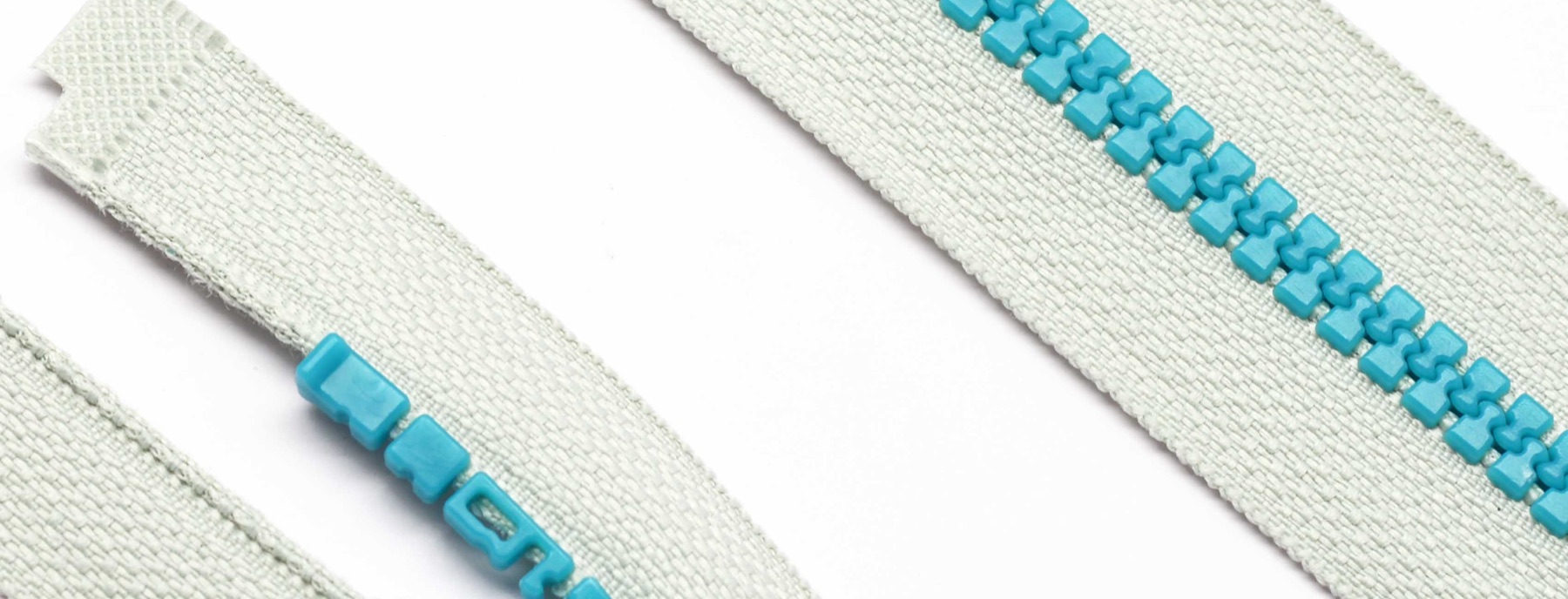
Injection-molded teeth are usually produced from acetal or nylon-type materials, with each tooth molded directly over the cord at the tape edge to form a regular chain. Compared with metal teeth, the molded edges are rounder, so they do not scratch skin and do not feel as cold in low temperatures. Compared with nylon coil, the individual teeth are fuller and the pitch is larger, which gives a more defined engagement feel. Size 5 is a mid-range specification: both tooth height and width are greater than size 3, which suits the opening force of a jacket front.
The quick-release function comes from the internal geometry of the slider. A conventional slider confines both chains in a single channel, so the only possible movement is along the track. A release slider adds a position in which that constraint is removed. Pulling the tab or moving a release element frees the channel, and the two sides can be separated where they are. Trigger methods differ considerably between designs, and so do the direction of operation and the force required. Samples must be handled in person; the product name alone is not enough.
Sizes and Applications
The size 5 chain suits medium to heavy fabrics such as fleece, softshell, coated fabric, denim, padded outerwear fabric, and some laminated materials. Typical placements include the center front of a jacket, hood openings, detachable liner connections, large pockets, hems, and removable cuffs. Bags, protective gear, and children’s outerwear also use this size because it provides opening strength without adding much weight.
Selection Checklist
- Confirm the release method first: establish whether the tab triggers the release or a separate lever does, then check the operating direction, the force required, and whether it can be done with one hand. Ask users with different hand sizes to try it.
- Measure the actual size 5 sample: record chain width, tape width, slider envelope, and end-fitting length, then set the placket and facing allowances from those measurements rather than the nominal size.
- Separate open-end from closed-end: a center front that must open completely needs an open-end construction with the pin and box on the correct sides; pockets and inner bags normally use a closed end.
- Check retention after repeated release: operate the release dozens of times, then confirm that the chain still engages smoothly, the slider has not deformed, and the tooth surfaces show no obvious wear marks.
- Match colors and components: keep tape, teeth, slider, and stops from the same production batch to avoid visible color differences on one garment.
Sewing and Use Precautions
- Use a zipper foot and keep the needle inside the stitchable tape area. Do not let the needle touch the teeth, and never force the machine through the slider.
- A release slider is usually wider than a standard slider, so the placket, facing, and lining need enough clearance to keep the slider from being pinched by fabric.
- Keep equal seam allowances and feed tension on both sides of the opening, and do not stretch the tape. Thin fabrics may need a suitable stabilizer within the pattern allowance.
- Molded teeth tolerate less heat than metal teeth. Press with a cloth and keep the iron moving; do not hold it directly on the chain or the slider.
- Park the slider at the end stop before washing or dry cleaning to reduce repeated stress during tumbling, and run a full-condition sample test before bulk production.
Common Questions
Can a quick-release zipper be used as an everyday zipper
Yes, but treat the release as an additional function rather than the normal way to open the garment. Pull the slider along its track for daily use, use the release only when a fast separation is needed, and check the slider channel and chain periodically for deformation or wear.
Which fabrics suit a size 5 quick-release zipper
Medium to heavy fabrics with some body work best, such as fleece, softshell, coated fabric, denim, and padded outerwear fabric. Very thin or highly elastic knits may stretch during release, so validate them on a full garment sample first.
Does the release feature weaken the closed zipper
Holding strength depends on tooth geometry, slider fit, and how firmly the teeth are anchored to the tape, not on the release feature alone. Test both normal closed retention and the condition after repeated release; only when both are stable is the combination suitable.